
Every few weeks, another sports collectible breaks an auction record. Michael Jordan jerseys command seven-figure results, Shohei Ohtani memorabilia accelerates past traditional market ceilings, and Lionel Messi’s World Cup kits transition into museum-grade assets. These headlines suggest that sports collectibles have evolved into a highly institutionalized alternative asset class.
Yet, the core driver of this market remains unchanged: visibility and globalization have simply amplified asset liquidity. Collectors from Tokyo, New York, London, and Berlin now compete in real-time online auctions for identical pieces of sports history.
The Core Driver: Nostalgia Over Statistics
Newcomers often misinterpret the market by focusing solely on statistics. In the memorabilia ecosystem, emotional equity and historical narrative consistently outperform raw athletic data.
- The Premium Demand: Athletes who defined the cultural aesthetic of their era command structurally higher prices than peers with superior statistical records.
- The Sentiment Factor: Roger Federer routinely outpaces Novak Djokovic in memorabilia valuations despite trailing in Grand Slam counts. Similarly, the market for Ken Griffey Jr. or Neymar Jr. assets is sustained by nostalgia and individual branding rather than pure trophy counts.
The memorabilia market does not trade in numbers; it trades in cultural capital. Understanding why specific assets appreciate requires analyzing the intersection of athletic legacy, scarcity, and emotional permanence.
What Is Sports Memorabilia? Definitions & Asset Categories
Sports memorabilia is any physical asset that establishes a direct provenance to a specific moment in sports history. The market does not value the physical object itself; it trades on the historical narrative and cultural significance attached to it.
Over the last decade, the market has shifted from a casual hobby into a highly specialized alternative asset class. Where collectors once sought autographed commercial merchandise, today’s institutional market demands forensic verification, photo-matched equipment, and ironclad provenance.
Misunderstanding the strict hierarchy of these asset categories is the most common mistake newcomers make and it separates a $500 asset from a $50,000 investment.
The Core Asset Hierarchy
To successfully navigate the market and understand valuation models, memorabilia must be divided into distinct, non-interchangeable tiers:
- Signed Memorabilia (Autographs): The traditional entry point. Value is driven by the rarity of the signature, the medium (ball, jersey, photo), and the third-party authentication (PSA/DNA, Beckett, JSA).
- Player-Issued vs. Game-Used: A critical distinction. Player-Issued items were prepared for the athlete but never used in gameplay. Game-Used (or Match-Worn) equipment sits at the absolute apex of the market because it actively participated in sports history.
- Photo-Matched Assets: The gold standard of modern collecting. Using high-resolution photography to match unique scratches, structural wear, or fabric alignments on an asset to a specific game or moment.
What Actually Makes Sports Memorabilia Valuable?
One of the biggest misconceptions in the hobby is that the greatest athlete automatically has the most valuable memorabilia. If that were true, collecting would be incredibly easy. You would simply look at championships, MVP awards or career statistics and buy accordingly. The market has never worked like that.
Take tennis as an example. Novak Djokovic has won more Grand Slam titles than Roger Federer, yet Federer often commands stronger prices for signed memorabilia. The same happens in baseball. Ken Griffey Jr. remains one of the hobby’s favourite players despite sharing the Hall of Fame with countless legends whose memorabilia attracts far less attention. Statistics explain success. They don’t always explain demand.
Soccer might be the best example of all. Every World Cup creates a new superstar. James Rodríguez looked destined to become one of football’s defining names after Brazil 2014. Cody Gakpo generated enormous excitement after Qatar. Every tournament creates another player collectors suddenly want to own. Four years later, many of those names have already been replaced by the next breakout star. Only a handful ever become long-term collectibles.
That’s why I always find Neymar interesting. If you judge his career purely by expectations, many people would say he never quite reached the level predicted during his Barcelona years. Yet Neymar memorabilia continues to sell exceptionally well. The market isn’t always rewarding achievements. Sometimes it rewards personality, popularity and the emotional connection collectors built with a player years ago.
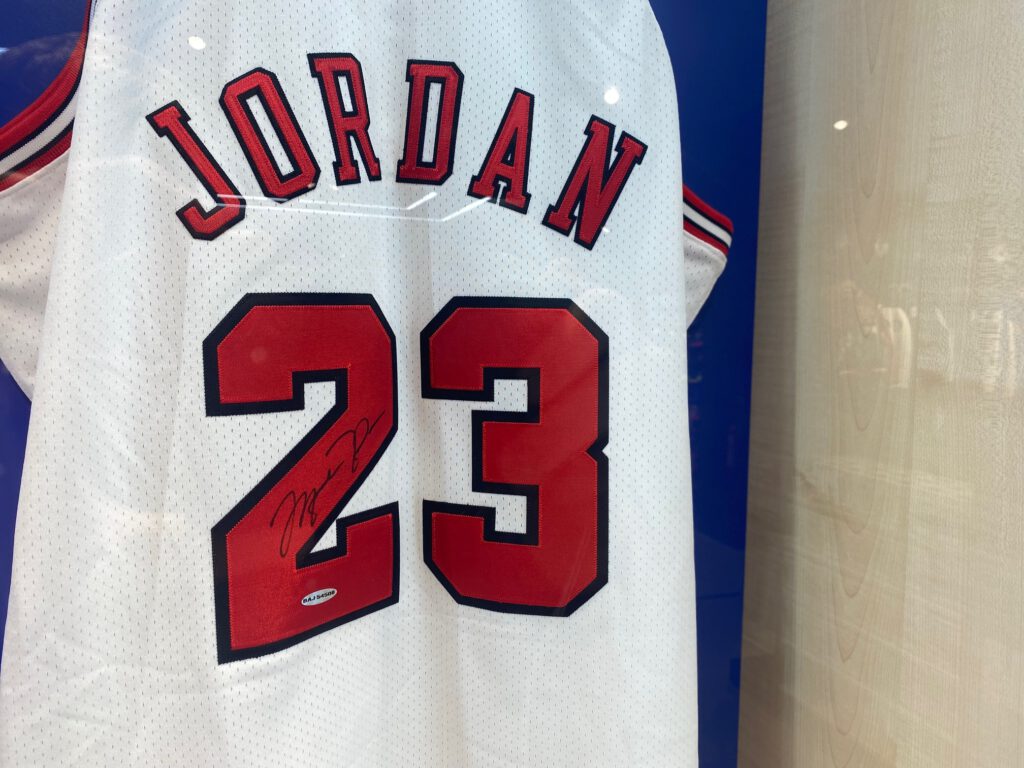
Michael Jordan is another example. Nobody buys a Jordan jersey simply because he won six NBA championships. They buy what he represents. The same applies to Tiger Woods, Muhammad Ali or Lionel Messi. At some point these athletes stopped belonging only to their sport and became part of popular culture. That’s incredibly difficult to measure, but you see it immediately when auction results appear.
Scarcity still matters, of course. There will only ever be one jersey worn during a championship-winning performance. Provenance matters too. A photo-matched shirt will almost always outperform an identical shirt without documentation. But even those factors depend on one thing: people have to care about the athlete in the first place.
That’s probably the biggest lesson I’ve learned after following this market for years. Memorabilia prices don’t move because an algorithm says they should. They move because collectors decide that one player belongs to sporting history while another slowly fades from the conversation. Sometimes they’re right. Sometimes they’re not. But the market has always been driven as much by emotion as by logic.
Risk Mitigation: Buying Without Making Expensive Mistakes
Every collector eventually encounters the cost of market miscalculation. While counterfeit autographs and fabricated provenance remain constant threats, the most financially damaging mistake is simpler: paying peak prices for short-term hype rather than long-term legacy.
Asset valuation spikes rapidly after a breakout World Cup, an MVP season, or a historic playoff run. The core challenge in asset selection is separating genuine, multi-generational legends from temporary media excitement.
Proven Greatness vs. Speculative Hype
To mitigate downside risk, capital is historically safest when allocated toward established, historical significance rather than current speculation.
- Blue-Chip Legacies: Blue-chip assets tied to timeless icons like Babe Ruth or Tom Brady have survived retirements, economic shifts, and generational changes. Their market floor remains structurally secure.
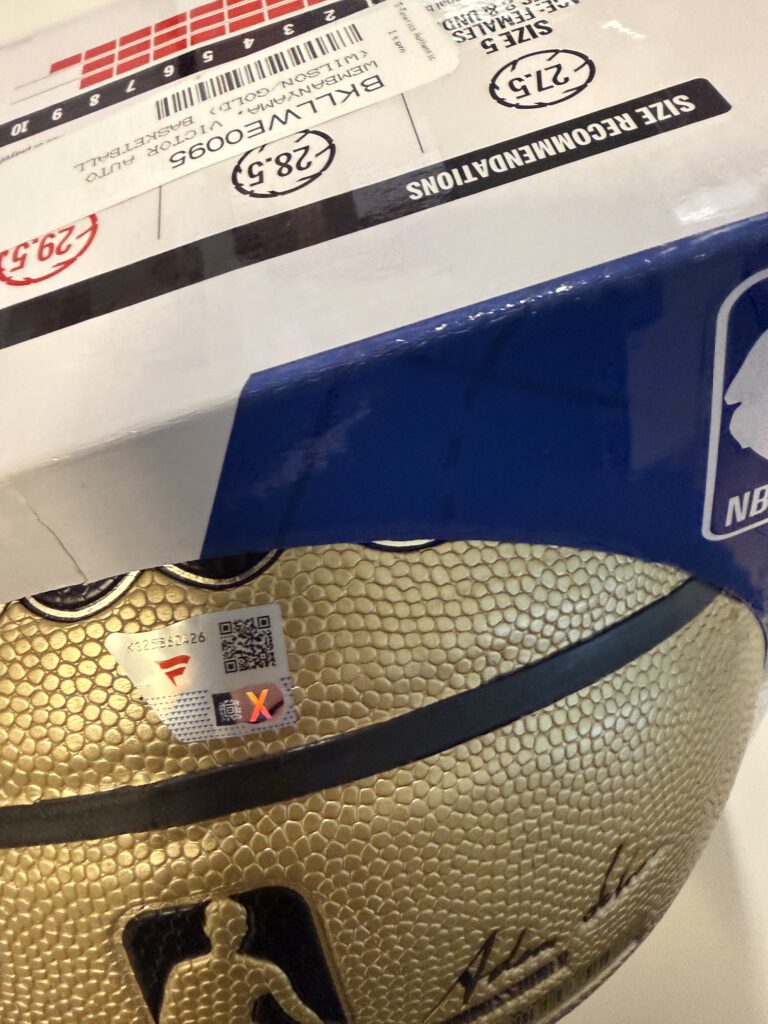
- The Modern Vanguard: Investing in active athletes requires exceptional scrutiny. While superstars like Shohei Ohtani, Carlos Alcaraz, and Victor Wembanyama are building careers capable of defining the next decade, buying strictly due to market momentum rarely yields sustainable long-term value.
The True Cost of Certainty
In the high-end market, economic efficiency is tied directly to verification. If an asset feels underpriced, the market is usually discounting its authenticity.
Paying a premium for third-party verification from leading authorities like PSA Authentication, Beckett Authentication, or JSA Authentication, or acquiring directly through exclusive distributors like Fanatics, is always more cost-effective than absorbing the total loss of an unverified asset.
Portfolio Focus Over Fragmentation
A common error among entry-level market participants is over-diversification—buying scattered assets across multiple sports. The most resilient collections maintain a strict thematic focus.
Concentrating capital on a specific niche, such as high-end Match-Worn Jerseys, a single franchise, or an individual athlete’s career, creates a cohesive portfolio. Ultimately, while institutional data tracks auction records, the intrinsic value of a collection is defined by its curation, historical narrative, and scarcity.
Market Trajectory: Where The Sports Memorabilia Market Is Heading
The sports collectibles market has permanently outgrown its legacy as a regional American hobby. While historically anchored in Major League Baseball, the NBA, and the NFL, market demand has internationalized. Europe has emerged as a high velocity buying region, East Asia has fundamentally restructured baseball asset valuations, and global auction houses now orchestrate cross continental bidding wars.
The Globalization of Athletic Entities
This macro shift is most visible across three major sporting ecosystems, driven by international talent and cross border marketing:
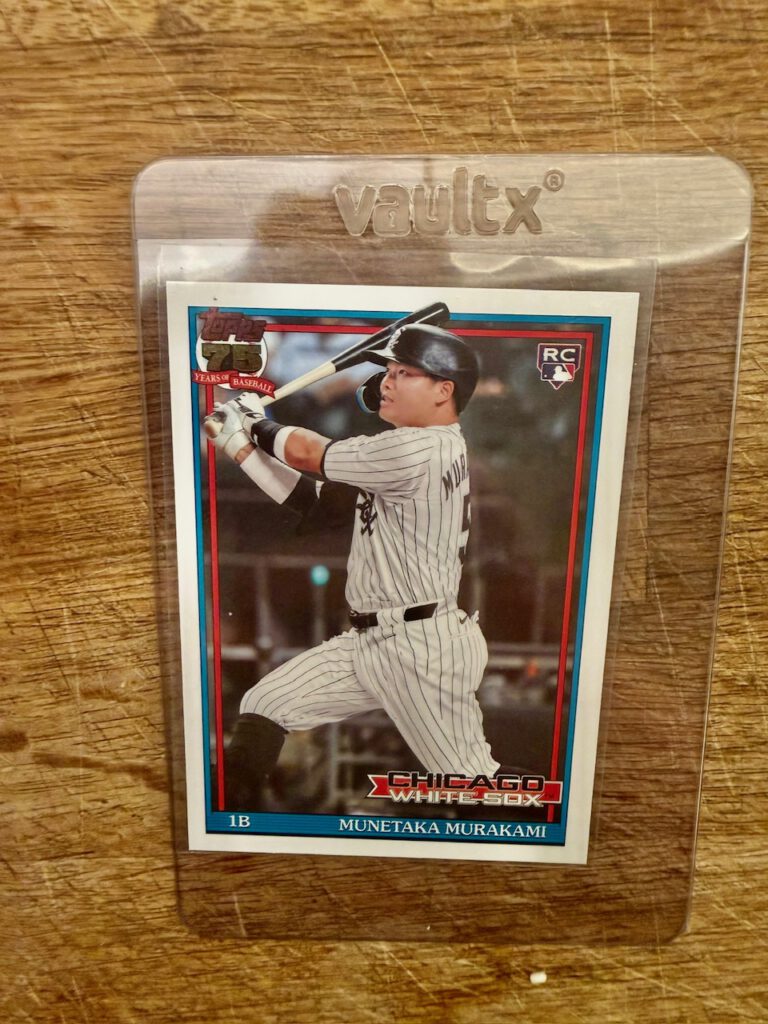
The East Asian Baseball Surge: Twenty years ago, the high end baseball market focused almost exclusively on domestic US talent. Today, the concurrent entry of elite Japanese athletes like Shohei Ohtani, Yoshinobu Yamamoto, and Munetaka Murakami has unified two massive collector markets. This institutional demand has forced card manufacturers like Topps to pivot toward multilingual, international releases to capture global liquidity.
The NFL Footprint: Regular season games in London, Frankfurt, Munich, and Madrid are actively onboarding international fans into the collector ecosystem. While historical icons like Tom Brady laid the groundwork, modern superstars like Patrick Mahomes now command structural demand across Europe, forcing traditional auction houses to list gridiron assets alongside soccer and motorsport.
The Institutionalization of Soccer Kit Collecting: Match worn soccer shirts have transitioned from informal post game player swaps into highly regulated assets. Clubs now systematically retain match kits for commercial monetization. These assets are immediately channeled into specialized auction platforms, heavily reliant on forensic Photo Matching to establish ironclad provenance before entering the secondary market.
Forensic Authentication and The Divergent Market
As capital allocations scale, the standard for risk mitigation has evolved. A legacy paper Certificate of Authenticity is no longer sufficient for high end transactions. The modern market demands digital transparency: high resolution photographic proof, microscopic wear analysis, and an unbroken chain of custody verified by market leaders like PSA Authentication, Beckett Authentication, or Upper Deck for Michael Jordan Autographs.
This technological evolution will not sanitize the emotional core of collecting. Instead, it accelerates a strict market divergence. Armed with unprecedented data, institutional collectors will continue to drive exponential price records for blue chip, museum grade assets, while generic, unverified merchandise faces declining liquidity.
The market is not running out of room. It is simply becoming highly sophisticated. The ultimate winners in this ecosystem will be those who prioritize technical provenance and cultural permanence over short term media headlines.
Cultural Icons: The Athletes Who Define The Memorabilia Market
Every sporting ecosystem eventually produces a singular athlete who transcends the sport itself. These definitive names attract sustained collector demand decades after retirement, outlasting broken records and shifting generational trends.
Within the collectibles landscape, specific names anchor the entire market. Basketball relies on Michael Jordan. Baseball features Babe Ruth and modern phenomenon Shohei Ohtani. American football centers on Tom Brady, golf on Tiger Woods, and tennis on Roger Federer and Novak Djokovic. Soccer is anchored by Pelé, Diego Maradona, Lionel Messi, and Cristiano Ronaldo. None of these figures dominate asset valuations purely based on statistical records. Their market authority stems from the fact that entire generations anchored their cultural identity to their careers.
Emotional Equity vs. Pure Statistics
Athletic achievement alone rarely guarantees long term collector demand. A statistical résumé is secondary to the emotional resonance an athlete commands.
The elite tennis market provides a clear case study. While Novak Djokovic holds the superior Grand Slam record, Roger Federer assets frequently command a valuation premium due to aesthetic legacy and cultural impact. A similar dynamic exists in baseball, where Ken Griffey Jr. memorabilia attracts immense enthusiasm that often surpasses the market traction of Hall of Famers with identical or superior career metrics. Collectors do not buy spreadsheets. They acquire the athlete who defined their generation.
The Speculative Trajectory of New Talent
Every generation introduces breakout superstars, triggering immediate speculation regarding their long term asset viability. The market has witnessed rapid valuation spikes followed by steep corrections before, as seen with Neymar or the sudden global interest in James Rodríguez after individual tournament explosions.
Today, a new vanguard featuring Victor Wembanyama, Carlos Alcaraz, and Jannik Sinner attracts significant institutional and private capital. While these active athletes possess the talent to become defining cultural figures, their current valuations are driven entirely by future expectations. True investment floor security is established decades later, driven by legacy, nostalgia, and permanent historical relevance.
New to the hobby? Start with Sports Cards: The Ultimate Guide.