
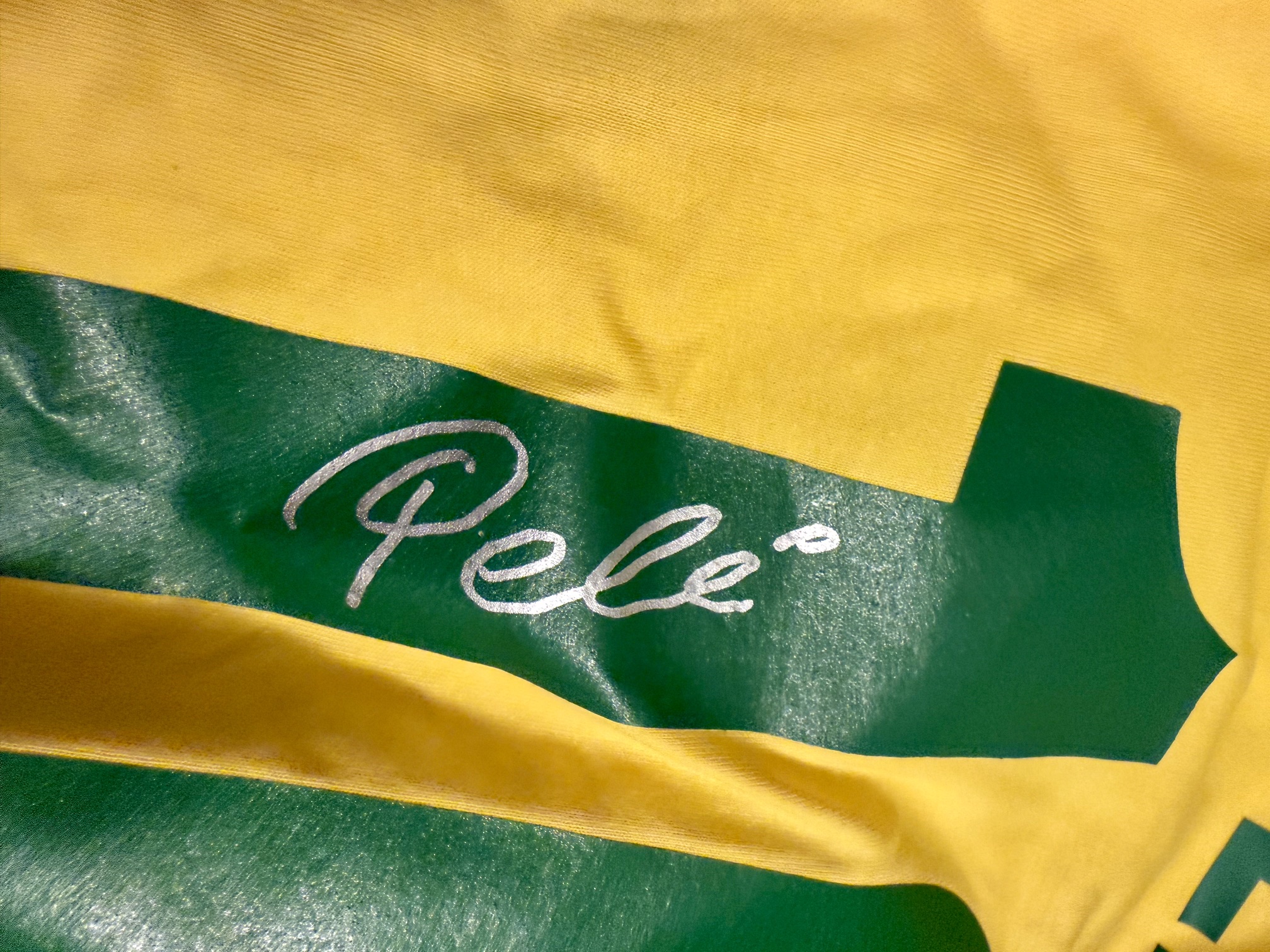
There is something about Neymar that I simply cannot reconcile with the memorabilia market. Watching the 2026 World Cup, you can already feel that Brazil has entered another era. Vinícius Júnior has become the player around whom expectations revolve, younger players are taking over and Neymar suddenly looks like a veteran trying to squeeze one final tournament out of an extraordinary career. Ten years ago that would have sounded absurd.
Back then there was a genuine belief that Neymar would become the natural successor to Lionel Messi and Cristiano Ronaldo, perhaps even the Brazilian who would finally stand in the same historical conversation as Pelé. That expectation was enormous, and I sometimes wonder whether the market is still pricing that expectation rather than the career that actually unfolded.
Because if you look at the prices, they remain astonishing. High-end Neymar cards still sell for well over $40,000, one 1/1 card fetched more than $47,000 in January 2026. Signed shirts command serious money. Premium memorabilia disappears quickly whenever it reaches the market. Every time I see those numbers, I ask myself the same question. Would I rather own a truly exceptional Neymar piece than an equally important Pelé item? For me, the answer is obvious, yet the market sometimes behaves as if those two discussions are much closer together than they really are.
Barcelona Created A Myth That Paris Never Managed To Replace
The strange thing is that nobody can argue against Neymar’s talent. At Barcelona he looked almost unstoppable. Together with Messi and Suárez he formed one of the greatest attacking trios football has ever produced. Some evenings it felt as though football had become too easy for him. The dribbling, the acceleration, the confidence, the improvisation—it was all there. If somebody had told you in 2015 that Neymar would eventually win multiple Ballons d’Or, hardly anyone would have laughed.
Football rarely follows the script people write for it.
Paris Saint-Germain became the turning point, not because Neymar suddenly became a bad footballer, but because the conversation slowly changed. It was no longer only about performances. Injuries became routine. Questions about professionalism appeared almost every season. There were stories about birthdays, fitness, transfers and everything surrounding football instead of football itself. Somehow the image became bigger than the matches. That is dangerous for every great player because collectors eventually stop remembering specific performances and start remembering headlines.
I think the memorabilia market still carries a large part of the Barcelona dream. It still remembers the player everybody believed would dominate the next decade, even though that version of Neymar ultimately existed for a much shorter period than people expected.
Brazil Has Seen This Story Before
Brazilian football has always produced stars who looked immortal in the moment. Go back to the World Cup winners of 1994. Romário was everywhere. Bebeto’s celebration became one of the defining images of the tournament. Dunga lifted the trophy. Cláudio Taffarel became a national hero. At the time it would have been easy to believe that all of them would remain permanent giants of the memorabilia world.
That simply isn’t what happened.
When collectors spend serious money on Brazilian legends today, they usually gravitate toward Pelé, Ronaldinho and Ronaldo Nazário. Ronaldo, in particular, somehow escaped the normal cycle of football memory. The injuries became part of the legend. The comeback became part of the legend. Even people who never watched him play know the name Il Fenomeno. That is what a permanent sporting legacy looks like. It survives generations instead of surviving one tournament.
The others never became unimportant. They simply became historical figures rather than collecting phenomena.
World Cups Create Emotional Markets
One thing I keep noticing whenever a World Cup comes around is how quickly collectors convince themselves that they are watching the birth of the next football immortal. A few outstanding performances, one spectacular goal and suddenly signed shirts, photo-matched jerseys and authenticated memorabilia begin climbing in price because nobody wants to miss the next global icon.
The World Cup is almost designed to create emotional buying. Everything happens within a few weeks. Every conversation revolves around the same players. Every highlight is replayed endlessly. The problem is that football careers continue long after the tournament ends, and four years later the landscape usually looks completely different. Some heroes become legends. Others become answers to football quiz questions.
That is why I have become increasingly careful whenever I see a World Cup premium attached to memorabilia. A photo-matched shirt is still a wonderful object. An authenticated signature is still authentic. But authentication can prove that an object is real. It cannot prove that the player will still matter to collectors thirty years from now.
The Market Does Not Always Price Legacy
Perhaps I am completely wrong about Neymar. Perhaps twenty or thirty years from now his memorabilia will continue climbing because an entire generation grew up idolising him. Football has surprised me often enough that I would never dismiss that possibility.
I think the hobby sometimes confuses influence with expectation. Neymar was expected to become one of the greatest footballers who ever lived, and for a while that expectation was almost as valuable as actually achieving it. Markets are emotional. They remember excitement for much longer than they probably should.
Pelé changed football. Ronaldo changed how people imagined a striker. Ronaldinho changed how people wanted football to look. When I think about Neymar, I still think first about what might have been.
That is not an insult. It is simply a reminder that the memorabilia market does not always reward completed legacies. Sometimes it continues paying for unfinished dreams long after the dream itself has quietly disappeared.
This essay is part of Sports Memorabilia: The Ultimate Guide.