
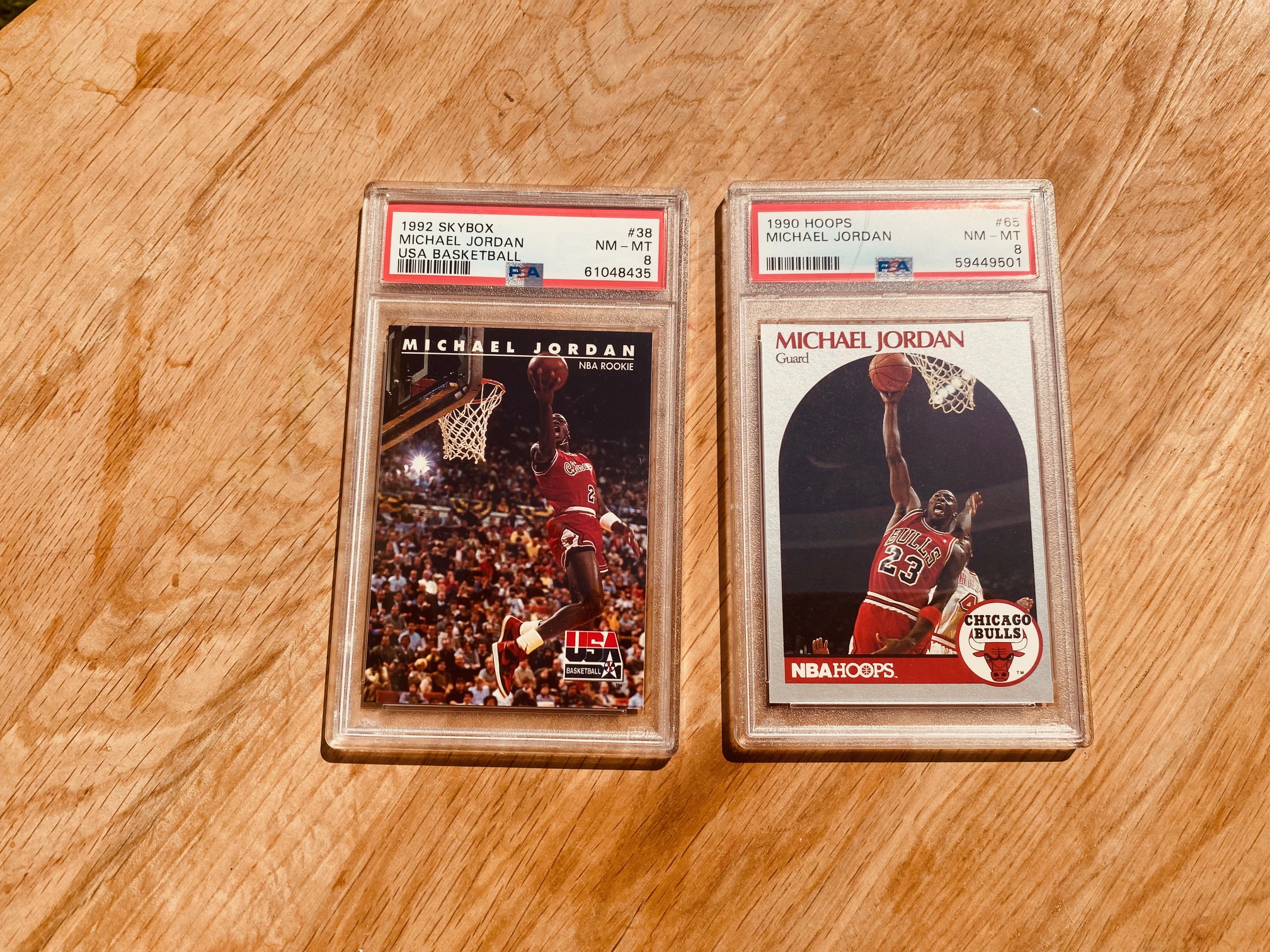
Every dominant company eventually reaches a point where people stop talking about its strengths and start talking about its position. That isn’t necessarily a sign of decline. Sometimes it’s simply what happens when a company becomes so large that everyone measures the rest of the industry against it. PSA has occupied that position for years. If you wanted maximum resale value, the conversation was usually over before it even started. Send the card to PSA, hope for a 10 and enjoy the premium. It was never quite that simple, but for most collectors it was close enough.
Lately, though, I keep noticing something that doesn’t fit that picture anymore. The market still rewards PSA. Auction records continue to support PSA. Dealers still price PSA differently. Yet the conversations collectors are having feel increasingly disconnected from those market realities. I hear far more praise for Beckett than I did a few years ago. More people mention TAG. More collectors openly admit they’re frustrated with PSA’s grading consistency, pricing and turnaround times. None of those observations automatically mean PSA is losing its position, but together they create a question I didn’t find myself asking two or three years ago.
Does the hobby still believe in PSA as much as the market does?
Collectors And Buyers May No Longer Be Saying The Same Thing
The more I thought about that question, the more I realised we often mix up two completely different groups. Collectors and buyers are not always behaving the same way anymore. If someone is grading a card they plan to keep for the next twenty years, their priorities naturally change. They might prefer Beckett’s slab. They may like subgrades because they reveal more about the card. They might even trust Beckett’s grading philosophy more on certain modern issues. None of that sounds unusual anymore. In fact, I hear those arguments surprisingly often.
The calculation changes the moment resale enters the conversation. Suddenly, the discussion isn’t about aesthetics or grading philosophy. It becomes a financial decision. The question shifts from “Which company do I prefer?” to “Which holder will another collector pay more for?” Those questions sound similar, but they lead to completely different conclusions. One reflects personal confidence. The other reflects market confidence. PSA still benefits enormously from the second, even if the first has become much less obvious.
Beckett Might Be Winning The Wrong Competition
If grading companies competed purely on presentation, I genuinely think Beckett would be much closer to PSA than it is today. The slab still looks premium. The subgrades remain popular. A Black Label continues to carry an aura that almost no other grade can match. Even collectors who primarily submit to PSA often admit they would rather display a Beckett card in their own collection. That says something important.
The problem is that collectors don’t grade cards only for themselves anymore. The grading industry gradually transformed from a service that authenticated condition into infrastructure for buying and selling. A slab isn’t just protection. It isn’t just authentication. It has become part of the pricing mechanism of the hobby itself. Once that happened, brand recognition became almost as valuable as grading quality. PSA spent decades building that recognition, and markets rarely abandon that kind of advantage quickly.
The PSA Premium Has Started Feeding Itself
I sometimes wonder whether the premium attached to PSA now exists largely because everyone expects it to exist. That may sound circular, but markets often work that way. Collectors submit to PSA because previous PSA sales were stronger. Buyers pay more because previous buyers also paid more. Auction houses highlight PSA results because those results establish future expectations. Every successful sale reinforces the next one.
That creates an incredibly difficult cycle for competitors to break. Beckett can improve its grading. TAG can introduce technology. Other companies can reduce turnaround times or offer lower prices. None of those improvements automatically change buyer behaviour if buyers continue believing PSA is the safest place to spend their money. The hobby often assumes grading companies compete primarily through grading standards. Increasingly, I think they compete through collective belief.
The Backlog Says More Than The Complaints
Perhaps the strangest part of the current market is the contrast between criticism and behaviour. Complaints about PSA seem louder than ever. Submission prices receive constant criticism. Turnaround times remain frustrating. Lower-cost submission tiers have repeatedly disappeared because demand overwhelmed capacity. If someone only listened to those conversations, they might assume collectors were abandoning PSA in large numbers.
Millions of cards continue flowing through PSA’s system. The company built a backlog so large that it had to slow submissions because collectors simply kept sending more cards. That isn’t what happens when customers lose confidence overnight. It happens when dissatisfaction grows faster than behaviour changes. Those are very different things, and I think many people confuse them.
This Is Why I Think The Conversation Has Become So Interesting
None of this means PSA is about to lose its position. I don’t believe that. Markets with this kind of momentum rarely change quickly. But I also don’t think we’re having the same discussion we were having five years ago. Back then, collectors largely defended PSA itself. Today, many seem to defend the premium attached to PSA instead. That’s a subtle difference, but I think it’s an important one.
The strongest companies usually enjoy two forms of confidence at the same time. Customers believe they provide the best product, and the market rewards that belief financially. When those two things begin separating, nothing dramatic necessarily happens immediately. Sales can continue growing. Premiums can remain intact. Leadership can survive for years. But the conversation underneath starts changing long before the numbers do.
If someone handed me a six-figure card tomorrow and my only objective was maximising resale value, I would probably still choose PSA. I don’t think that’s controversial. The market has spoken clearly enough on that point.
But if the question were simply which company I wanted protecting a card in my own collection, I wouldn’t answer nearly as quickly anymore.