
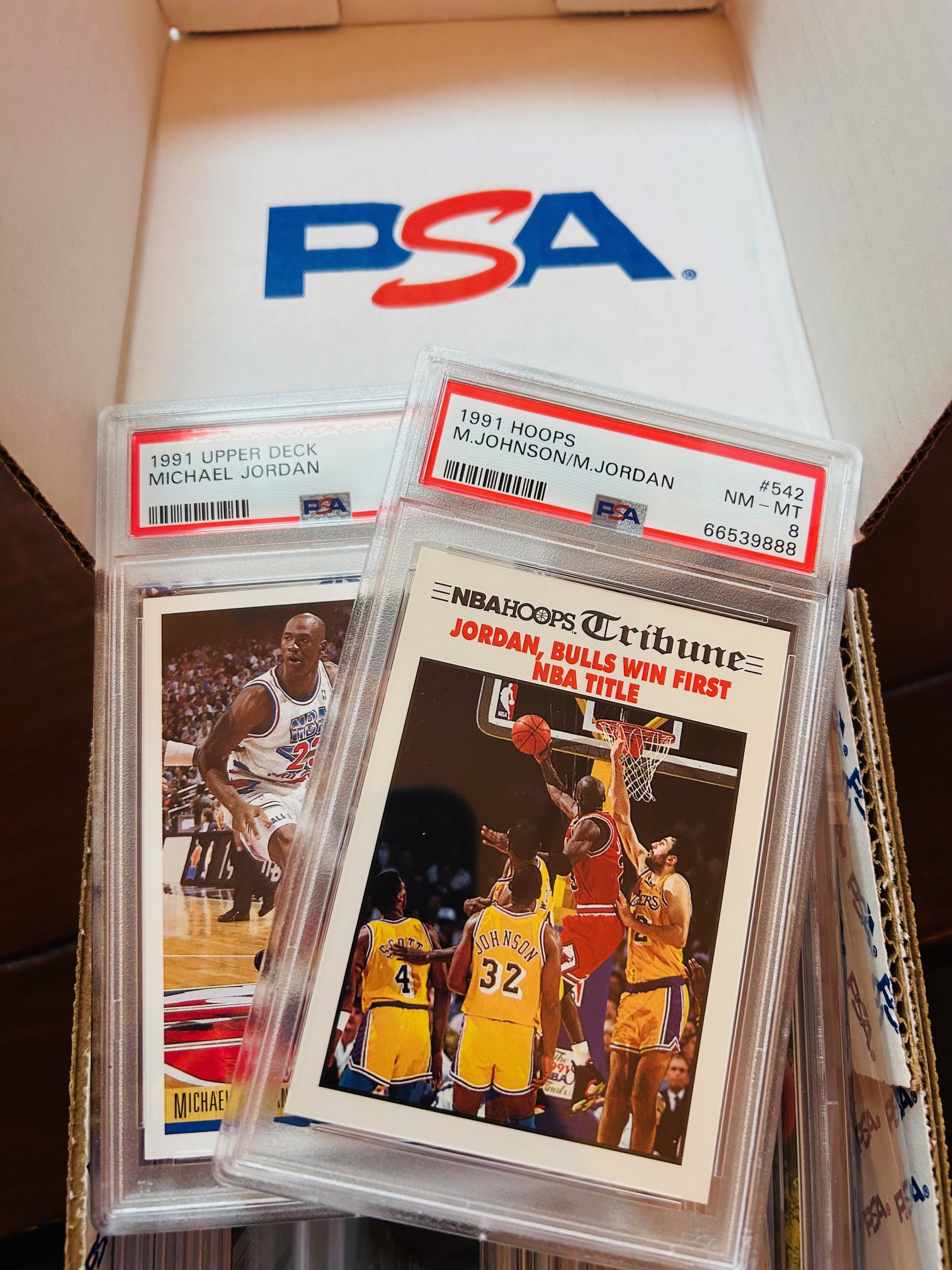
Fourteen million.
That number alone is enough to make me stop for a second. PSA reportedly had around 14 million cards waiting to be graded, temporarily paused parts of its Value service and still collectors kept sending more cards. If somebody described almost any other business like that, you would immediately assume competitors were making a fortune. One company cannot keep up with demand, customers become frustrated, prices increase and somebody else builds a better product. That is how markets are supposed to work. The grading market doesn’t seem to care.
Beckett has existed for years. TAG has arrived with attractive slabs, AI-assisted grading and probably the cleanest presentation currently available. CGC entered trading cards after building its reputation in comics. Europe has several smaller grading companies trying to establish themselves. Yet when somebody pulls a Shohei Ohtani Superfractor, a Michael Jordan rookie or an ultra-rare Pokémon card, the conversation almost always ends in exactly the same place.
“Should I send it to PSA?”
That fascinates me because, objectively speaking, PSA isn’t perfect. People complain about turnaround times. They complain about inconsistent grades. They complain about customer service. Some collectors even dislike the famous red label because it dominates the look of the card. Personally, I don’t mind it. Other grading companies probably produce nicer-looking slabs. TAG, for example, has done an impressive job making grading reports and presentation feel much more modern. None of that seems to move the market very much, and I think that tells us something important.
The Slab Was Never The Product
People often believe grading companies compete by building a better holder. I don’t think they do. The slab is simply the packaging. The real product is confidence, and confidence is painfully slow to replace. Every auction house knows what a PSA 10 means. Every dealer has sold PSA cards for years. Population reports have accumulated over decades. Price databases revolve around PSA. Buyers have trained themselves to compare PSA examples first because the next buyer will probably do exactly the same thing.
That creates a circle that becomes incredibly difficult to break. Imagine two identical cards. Same centring, same corners, same surface, same edges. One sits inside a PSA holder, the other inside a brand-new grading company’s holder. Even if both cards deserve exactly the same technical grade, most collectors already know which one they expect to sell more easily five years from now. That expectation becomes reality simply because millions of people share it.
Sometimes I wonder whether people massively overestimate the grading itself. The hobby spends endless hours debating half-points and surface scratches while the market quietly tells us something completely different. It isn’t rewarding the most accurate opinion. It is rewarding the opinion the largest number of people already trusts.
Europe Should Be The Perfect Opportunity
That is why I find Europe so interesting.
Shipping expensive cards across the Atlantic has never been particularly enjoyable. Customs, insurance, waiting times, additional costs—it all adds friction. A European grading company should have an obvious advantage. Faster service. Lower shipping costs. Local support. Better communication. On paper, it almost sounds unfair.
Instead, PSA is the company expanding.
The decision to establish a full grading hub in Frankfurt says far more about the market than people perhaps realise. PSA isn’t building infrastructure because demand is falling. It is doing exactly the opposite. Europe has become too important to ignore, and rather than leaving space for somebody else, PSA simply follows its customers.
If I were trying to launch a new grading company today, that would actually worry me more than the backlog itself.
So Why Doesn’t Somebody Build A Better PSA?
That is probably the wrong question.
Building a better grading company is relatively straightforward. Building a grading company that collectors trust more than PSA is something entirely different.
TAG already proved that technology can improve. AI can measure things more consistently than humans. Digital reports look fantastic. Other companies have cleaner slabs, different labels and more transparent processes. None of those things automatically translate into higher resale prices because collectors are not only buying today’s opinion. They are buying tomorrow’s liquidity.
That is where almost every challenger runs into the same wall.
People think they are competing against PSA.
In reality, they are competing against twenty-five years of collector behaviour.
Maybe The Opportunity Is Somewhere Else
Sometimes I wonder whether everybody is attacking the wrong problem.
Instead of building another grading company with another slab and another number on the label, perhaps somebody needs to build something that changes the way collectors think altogether. I don’t know whether that means AI, complete grading transparency, live grading, dynamic grading reports or something nobody has imagined yet. What I do know is that being slightly faster, slightly cheaper or slightly prettier probably won’t be enough.
The irony is that the market opportunity has almost never looked bigger. Tens of millions of cards still need grading. Hundreds of millions of dollars flow through the industry. Demand keeps growing, especially outside North America.
Normally, those numbers would attract dozens of successful competitors.
Instead, they have mostly reinforced the company already sitting at the top.
That may be the most remarkable thing about PSA. Its biggest competitive advantage is no longer grading cards.
Its biggest competitive advantage is that collectors have spent decades convincing each other that PSA is where important cards belong. Once a belief like that becomes embedded in a market, replacing it is far more difficult than designing a better slab.
This essay is part of Sports Cards: The Ultimate Guide.