
Sports memorabilia can look like an easy market from the outside. Buy the famous name. Wait. Sell higher. That is usually how people lose money.
The hobby is full of names everyone understands: Michael Jordan, Muhammad Ali, Pelé, Diego Maradona, Tom Brady, Kobe Bryant, Cristiano Ronaldo, Lionel Messi, Babe Ruth, Mickey Mantle, LeBron James, Shohei Ohtani. But the name alone does not carry every object. A real autograph can still sit in the low hundreds. A signed retail jersey can still be retail. A “player-issued” shirt can still be unworn. A rare card can still be a bad buy if the market already paid for the perfect version of the future.
That is where most bad sports memorabilia investing starts. People buy the story before they understand what they are actually buying.
A Signature Is Not Always a Premium Item
A real Muhammad Ali signature sounds expensive. But put that signature on a decorative Salvino statue and the market can still sit around a few hundred dollars. That does not make the autograph fake. It means the object underneath the signature is not the strongest Ali lane.
A signed full-size helmet is different from a signed mini helmet. A signed custom jersey is different from a licensed retail jersey. A signed photo is different from a game-used jersey. A sticker autograph card is different from an on-card autograph. A late Pelé signature on fabric is different from a clean black signature on a glossy photo.
The question is not only: “Is the signature real?”
The better question is: what kind of object is carrying the signature?
Game-Used Is Where the Money Gets Serious
Game-used and match-worn memorabilia can be the strongest lane, but also the most dangerous.
Collectors love the phrase game-used because it sounds direct. It feels like proof is already included. Usually it is not.
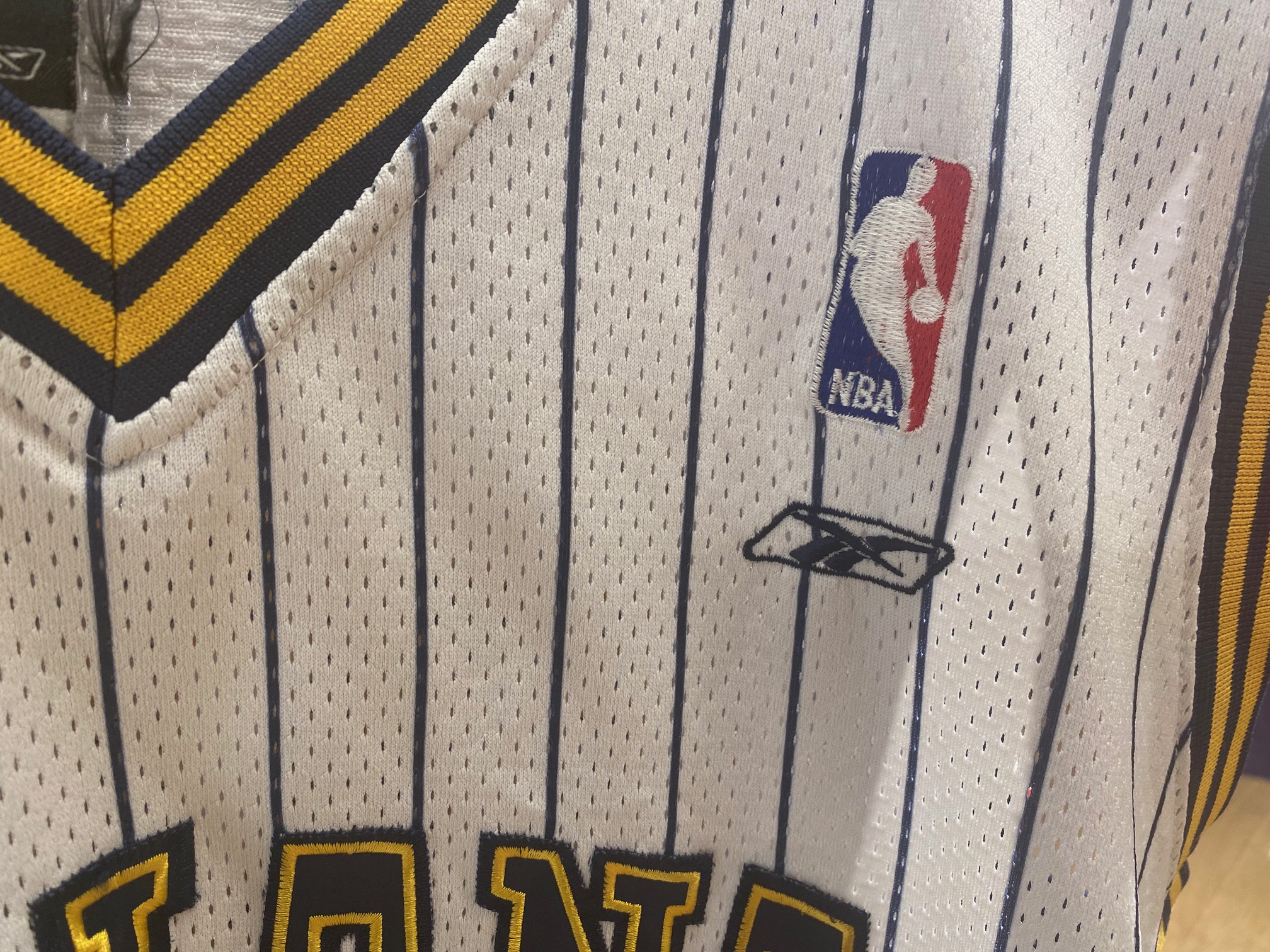
A jersey can be retail, pro cut, team-issued, player-issued, prepared, worn, photo-matched, or simply described in a way that lets the buyer hear what he wants to hear. Those are different markets. A Peyton Manning signed Broncos jersey with a Fanatics sticker is not the same as a photo-matched 2015 Broncos gamer tied to a specific game. A Beckenbauer Germany shirt described as “issued / worn” is not the same as a fully photo-matched match-worn shirt.
With expensive game-used items, the paperwork has to work. Team provenance, auction history, athlete source, photo-match, MeiGray-type registration, Fanatics, PSA/DNA, JSA, Beckett, Steiner, or a strong auction LOA can all matter. Weak paper does not become strong because the player is famous.
Vintage Is Not a Magic Word
Vintage memorabilia has moved hard because the buyers changed.
The kids from the 1980s, 1990s and early 2000s are adults now. Some have serious jobs, companies, bonuses and disposable income. They can finally buy the Jordan card, the Kobe autograph, the Ronaldo shirt, the Brady rookie, the Pelé piece, the Maradona item, the Gretzky card, the Mantle or the Ali glove.
But “vintage” is not enough. A common old item can still be common. A weak autograph can still be weak. A middle-tier player can still have a small buyer pool. Some names travel across generations. Others stay tied to the people who watched them live.
That is why I would rather buy a lower-grade iconic card than a high-grade nothing. I would rather buy a strong autograph with provenance than a cleaner-looking signature from a mystery seller. I would rather buy one piece tied to a real moment than ten random old items trying to borrow nostalgia.
Cards Need Their Own Rules
Sports cards are not one market.
A 1986 Fleer Jordan rookie, a Trevor Lawrence National Treasures RPA, a Bergmann Beckenbauer card, a Bronny James autograph, a 1986 Fleer sticker, and a Musiala sticker auto do not behave the same way.
Some cards are legacy objects. Some are prospect bets. Some are nostalgia plays. Some are set-builder pieces. Some are pure hype. Some only work if the player becomes the best possible version of himself.
That is why high-end modern cards can be brutal. The market often pays early. Trevor Lawrence is a good example. A rare 2021 National Treasures NFL Shield RPA can sell for house money, but if the career does not become Mahomes-level, the card starts carrying too much expectation.
With cards, I would always separate player, set, grade, population, autograph type, patch quality, scarcity and timing. A great card can still be bought too early or too high.
Proof Beats Description
The seller’s wording is not the proof.
“Rare.”
“Vintage.”
“Game-used.”
“Player-issued.”
“Investment piece.”
“From a private collection.”
“Estate find.”
“COA included.”
If it is a jersey, show the tags, repairs, stitching, cut, number puckering, wash wear and match evidence. If it is boots, show the inside, size markings, player-specific construction, soleplate and wear. If it is an autograph, show the ink, surface, authentication and source. If it is a card, show grade, population, condition, sales history and whether the market is actually liquid.
At high prices, pretty photos are not enough.
Liquidity Matters More Than People Think
A collectible can be valuable and still hard to sell.
That is where beginners often get trapped. They see an asking price and think it is market value. It is not. Asking prices are often wishes. Auction results, repeat sales, buyer depth and how quickly similar items move matter more.
Cristiano Ronaldo boots have global liquidity. Francesco Totti boots have a narrower but passionate buyer pool. A Jordan item usually has more buyers than a niche Hall of Famer. A modern Ajax match-worn shirt may be cool, but it does not have the same market as Real Madrid, Brazil or World Cup material.
What I Would Actually Buy
I would focus on items where several things line up at once.
A major player.
A clear object type.
Strong authentication.
Real provenance.
Good display value.
A buyer pool that exists outside one tiny fan group.
A price that does not already assume perfection.
That could be a signed Jordan UDA item, a photo-matched NFL jersey, a real Pelé or Maradona autograph with strong provenance, a vintage card in a grade the market respects, a game-used item tied to a specific season, or a signed piece where the object underneath the autograph actually matters.
I would avoid vague listings, weak COAs, random “vintage” claims, custom jerseys with big signatures, and modern cards priced like the player has already finished a Hall of Fame career.
The Real Strategy
Sports memorabilia investing is not about buying everything old, signed or famous.
It is about separating the object from the story.
The best pieces usually have more than one reason to matter: player, moment, proof, scarcity, condition, display value, and liquidity. The weak pieces usually ask the buyer to do too much imagination.
That is the difference between collecting with a market behind it and buying a story someone else wants to sell.
This essay is part of Sports Memorabilia: The Ultimate Guide.