
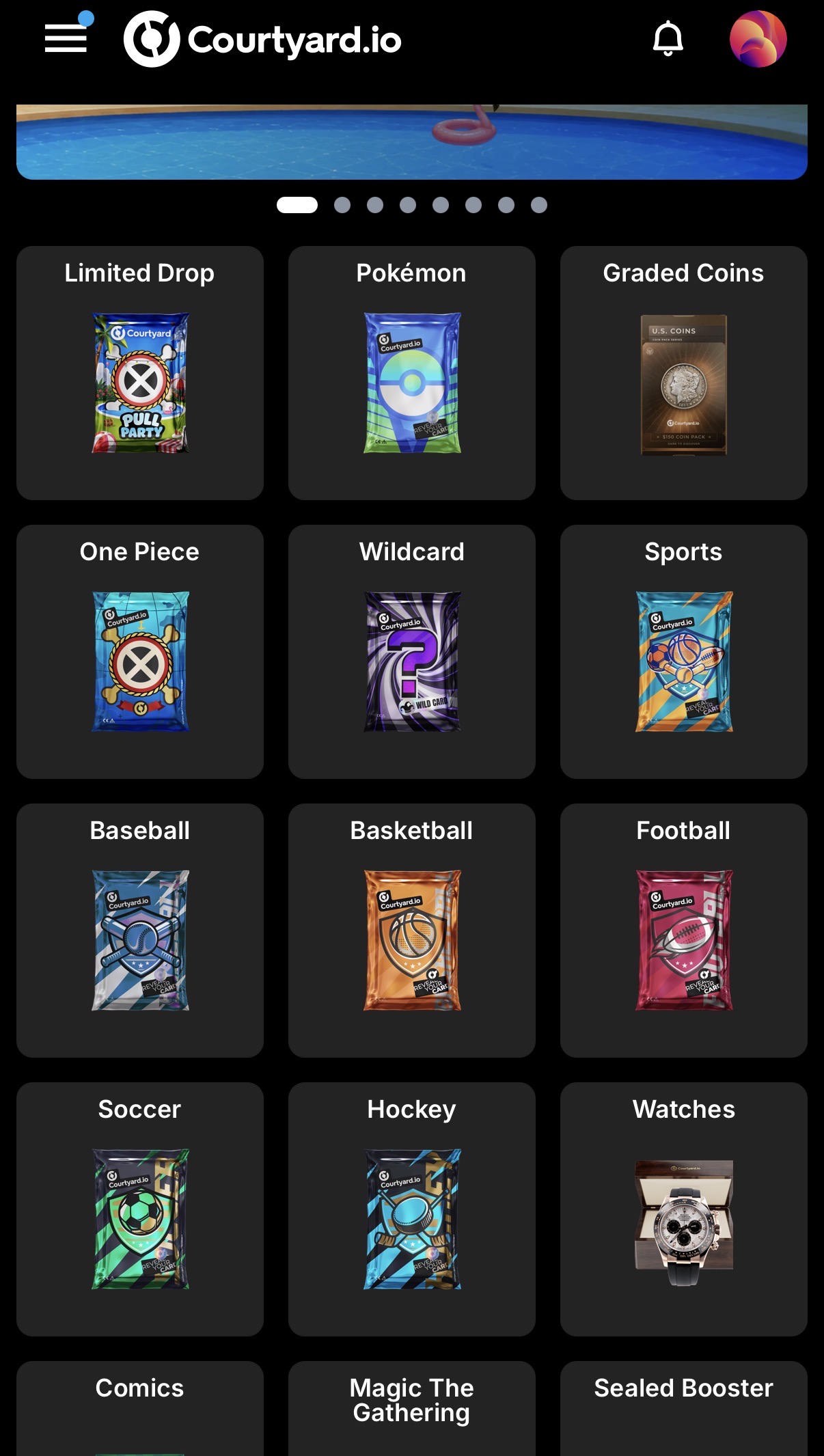
Over the past few weeks I became curious about digital card breaking platforms. Courtyard.io is probably the best-known example at the moment, although there are other providers such as Arena Club and Vault-style marketplaces that follow similar ideas. The concept is simple enough. You buy a digital pack containing sports cards, whether baseball, basketball, football or soccer, open it online and immediately see what you pulled. The difference is that you do not actually receive the card. Instead, it sits inside a digital vault owned by the platform.
I opened several packs myself because I wanted to understand how the economics actually work. The experience is entertaining. The animations are well produced, the opening feels surprisingly close to ripping a physical box and there is always the possibility of pulling a major card. But after a while I noticed something more interesting than the cards themselves.
The Math Rarely Works In Your Favour
Most of the packs I opened cost around $50. The cards I pulled were usually worth somewhere between $36 and $42. Occasionally I hit something much better. One card was worth roughly $86, so profitable packs certainly exist, but I never experienced one of the spectacular six-figure or five-figure hits that dominate social media.
After enough openings, a pattern became obvious. The average return consistently sat below the purchase price. That is exactly where the business model begins.
If you pull a $38 card from a $50 pack, the platform is usually happy to buy it back immediately. You do not need to list it, negotiate with another collector or wait for a sale. One click and the platform credits your account. If you think the market value is closer to $42, you can always try selling it yourself, but after marketplace fees the difference often becomes surprisingly small.
After five or six packs you may easily be down $30 to $60 overall. That is not because something unusual happened. It is simply how the system is designed.
The Cards Hardly Ever Leave
The shipping option exists, but it is not free. If you actually want the physical card delivered, you pay an additional fee. In my case that would have been around €16.
Many collectors simply leave the cards inside the vault because shipping feels expensive relative to the value of the card. Others immediately sell the card back to the platform to finance another opening. In both cases the physical card never really leaves the ecosystem.
Unlike traditional wax, where every opened box permanently removes cards from sealed inventory, these vault systems keep recycling the same assets. A card can be pulled today, sold back tomorrow and appear in another digital pack next week. Even expensive cards continue circulating because relatively few collectors actually request shipment. The inventory hardly shrinks.
Points Make You Feel Closer Than You Really Are
Most platforms also operate a loyalty system. Every pack earns points, and once enough points accumulate they can be exchanged for additional digital packs. Psychologically, this works extremely well.
You open five packs, lose money overall, but your account shows progress. The points create the impression that you are moving toward another opportunity, even though the expected value of the next pack remains exactly the same.
That mechanism feels familiar because it resembles loyalty systems in many other industries. The difference is that here the reward encourages another pack opening rather than ending the transaction.
It Feels More Like A Lottery Than Collecting
Traditional card collecting usually ends with ownership. You buy the card, grade it, display it or place it in your collection. Digital breaks change that relationship. Ownership becomes optional. Many participants are really buying the experience of opening the pack rather than the object inside it.
There is nothing inherently wrong with that if people understand what they are paying for. I actually enjoyed opening the packs. The experience is polished and entertaining. What I would not do is treat it as an investment strategy.
The average return sits below the purchase price, the platform earns money through spreads, fees and volume, and the inventory keeps circulating because comparatively few cards ever leave the vault. From a business perspective it is an elegant model. From a collector’s perspective it is much closer to buying a lottery ticket than building a long-term collection. Of course, you’re hoping to pull a graded Upper Deck Michael Jordan on-card auto, or maybe a Brady or Ohtani.
That is probably the biggest lesson I took away. The excitement is real. The technology is clever. But the house has designed a system where the cards remain inside the ecosystem, the opening experience keeps repeating and the economics continue to favour the platform over the collector.
This essay is part of Sports Cards: The Ultimate Guide.