
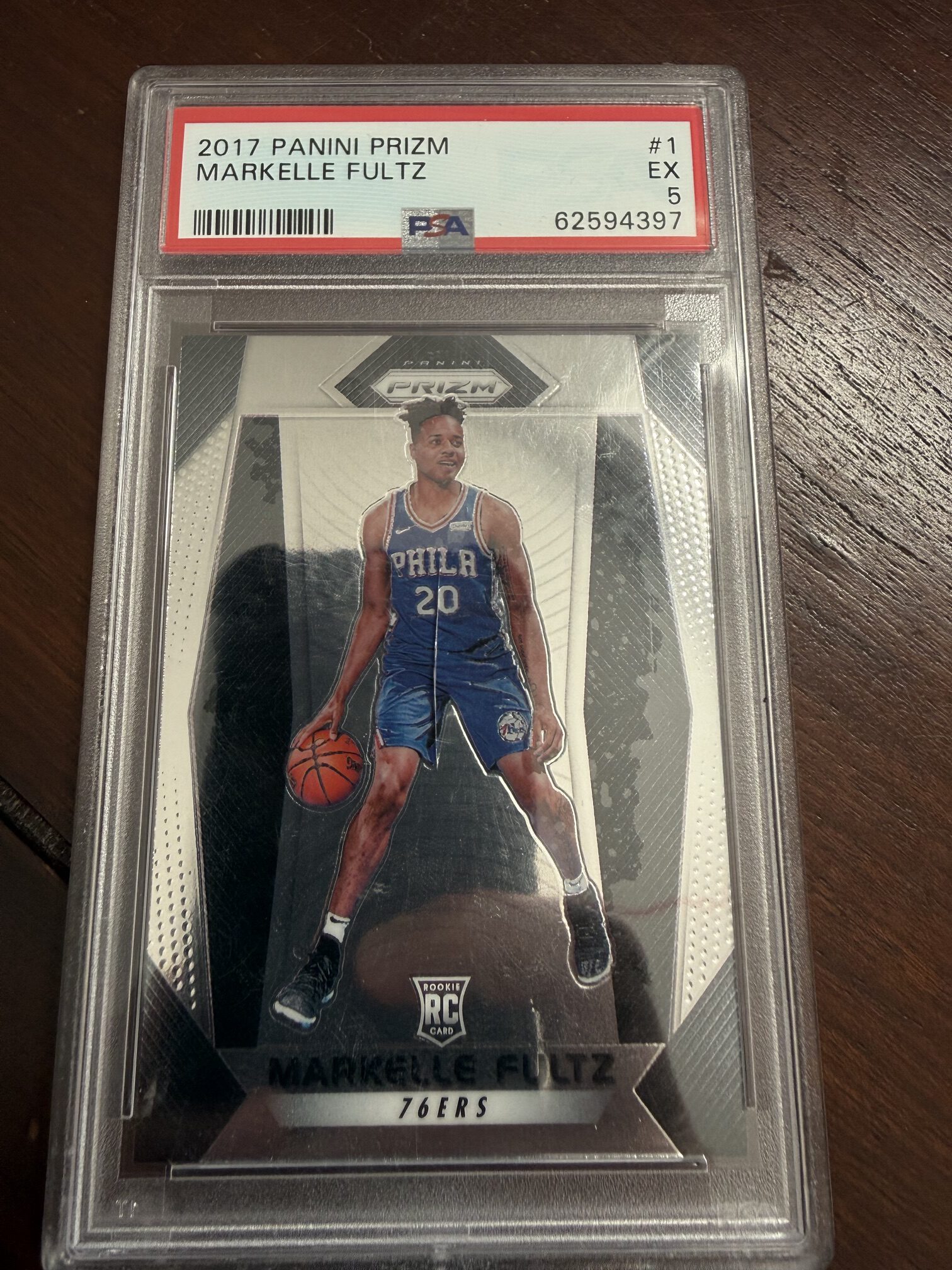
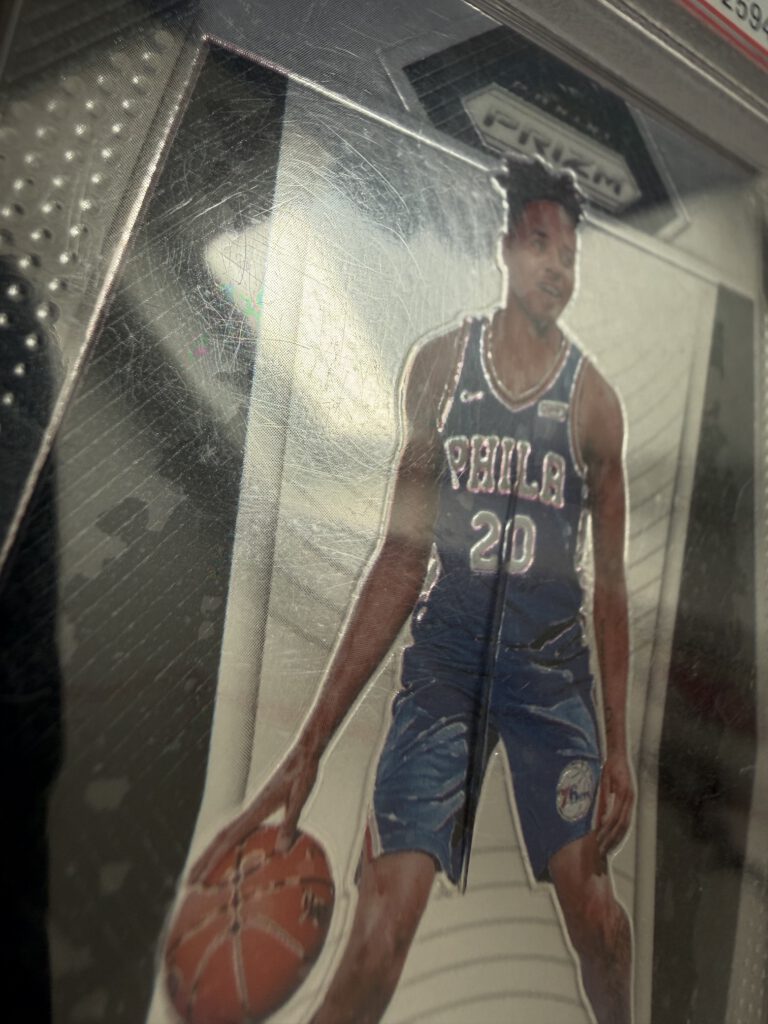
A cracked PSA slab does not always mean the card inside is damaged. I know that grey area myself. I have a cracked PSA 5 Markelle Fultz Prizm slab in my collection, and for that kind of card, I can live with it.
But a cracked or badly scuffed holder is still not the same thing as a clean slab. A PSA case is not random plastic. It carries the label, the grade, the certification number, the seal, and the confidence that the card has not been touched since grading. When that holder shows up damaged, the buyer is no longer receiving the same object they paid for.
The Doubt Comes With It
The problem is not only the crack. It is the doubt after the crack. Did the card move inside the case? Did broken plastic press against the surface? Did the impact touch a corner? Would PSA simply reholder it, or would the card itself become part of the question again? Some sellers act like only the cardboard matters and the holder is just packaging. I do not see it that way. With graded cards, the holder is part of the product.
“Just Send It To PSA” Is Not Nothing
“Just send it to PSA” sounds easy when it is somebody else’s card, time, and money. The buyer has to ship it again, wait, track it, hope the card is safe, and hope the damaged holder does not create new problems. If the holder damage put pressure on the surface or corners, I would no longer treat the old grade as guaranteed.
On a cheap card, maybe that risk is acceptable. On a high-end PSA 10, it is a different story. A clean PSA 10 and a PSA 10 in a cracked holder are not the same thing. The market sees the grade, but it also sees the problem around it. For cheap cards, maybe nobody cares that much. For rare cards, low-pop cards or cards where the difference between PSA 10 and PSA 9 is huge, the crack becomes a serious value issue. The buyer is not just taking on a small chore. They are taking on uncertainty that should already be reflected in the deal.
Packaging Is Part Of Selling
A slab is not a shipping box. If a graded card is worth real money, it should not float around in weak packaging while the seller hopes the PSA case does all the work. No movement, proper cardboard, bubble wrap, corner protection, and a box when the card justifies it.
Insurance helps, but it is mostly there for the seller. The buyer did not choose the packaging, buy the label, or create the risk. If a cracked slab arrives, the seller should get the card back, inspect it, refund or negotiate properly, and then deal with PSA or the shipping company.
Proof Matters
There is also another problem now: fake or exaggerated damage claims. Buyers can exaggerate. Sellers can deny everything. Shipping companies can damage packages and act like nothing happened. And with edited photos becoming easier, trust is not exactly getting better. That does not mean every cracked slab claim is suspicious. Most people are probably just trying to solve a real problem. But the process matters.
For expensive cards, a full unedited unboxing video is becoming more important. Show the package before opening it. Show the condition. Show the slab as it comes out. That kind of proof protects both sides.
The seller should not have to accept a fake claim. The buyer should not have to keep a damaged item. Documentation is what keeps the situation from turning into a guessing game.
The Markelle Fultz Difference
My cracked Markelle Fultz slab is fine for me because I know what it is. It is a PSA 5 budget card for my personal collection. My card, my crack, my decision. If the scuffed plastic hides a small flaw underneath, it does not break the bank.
That is completely different from buying a clean, high-end graded card and suddenly being handed a risky reholder problem. If I knowingly buy a cracked slab at a heavy discount, fine. That is part of the deal.
But if I buy a clean PSA slab and it arrives cracked, the buyer did not buy a project. The buyer bought a graded card in a sealed holder. If the holder arrives broken, the seller should not pretend nothing changed.