
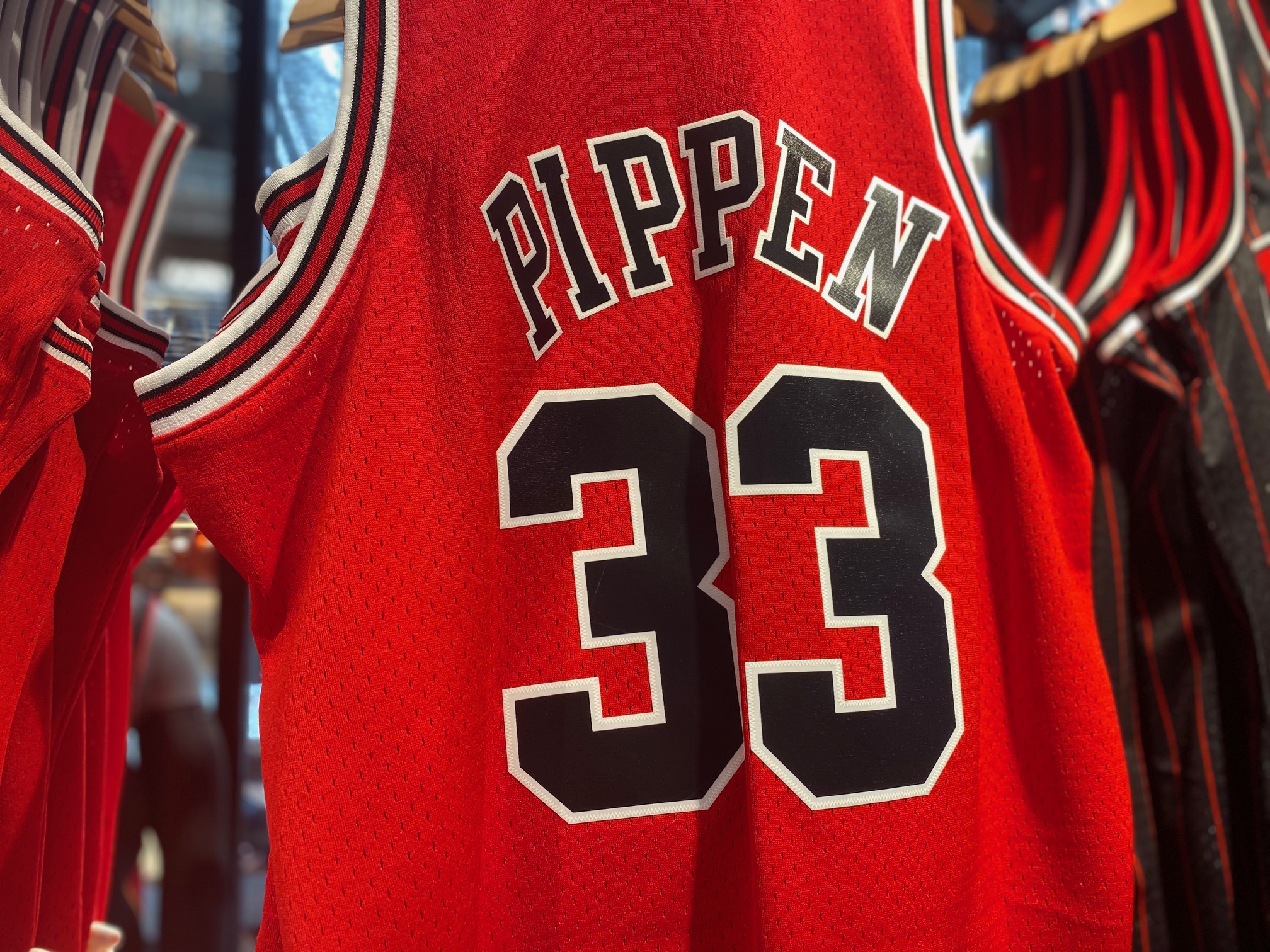
The Chicago Bulls are one of those franchises where the memorabilia market feels almost disconnected from the present. Most successful teams eventually build new generations of stars, new championship stories and new collector markets. The Bulls never really managed that. In many ways, they are still selling the 1990s.
That is not necessarily criticism. Few teams in sports history ever reached the cultural importance the Bulls achieved during the Michael Jordan era. The NBA was already growing, but Jordan turned basketball into something much larger. Shoes, advertising, television, international audiences, video games, trading cards, Upper Deck autographs and Nike all became part of one enormous machine. Michael Jordan was probably the first basketball player who became larger than the sport itself.
I have written before about Air Jordans, about Jordan autographs and about the role that Upper Deck played in creating one of the strongest autograph markets in sports. The remarkable thing is that these markets never really disappeared. A Michael Jordan autograph remains one of the safest pieces of modern sports memorabilia. Important PSA-graded Jordan cards can reach enormous numbers, and some dual-signed cards involving Kobe Bryant have reached prices that would have been almost unimaginable when the cards were originally released.
The Dynasty Still Carries The Franchise
The problem for the Bulls is that almost every important collector conversation eventually returns to the same period. Michael Jordan is obviously the center of the market, but Scottie Pippen remains highly collectible and Dennis Rodman occupies his own unusual place in sports memorabilia because his personality became almost as famous as his basketball career.
Steve Kerr is another interesting example. He was not one of the stars of the dynasty, yet his later success with the Golden State Warriors changed the way people look at him. The fact that he eventually coached Stephen Curry and helped build another dynasty gives his Bulls years an entirely different context than collectors might have seen twenty years ago.
The result is that one championship team continues to support most of the franchise’s memorabilia market.
Derrick Rose Came Closest
Derrick Rose probably came closer than anybody else to creating a second great Bulls chapter. Chicago loved him immediately. The local connection mattered, the MVP award mattered and his playing style made him one of the most exciting players in the league.
Rose remains extremely important to Bulls fans, and the retirement of his number reflects that emotional connection. But from a memorabilia perspective, the story feels unfinished. Collectors can still buy into the MVP season, the Adidas years and the early excitement, but the championships never arrived and the larger legacy never completely developed.
There is probably more emotion attached to Derrick Rose than there is market strength.
The Franchise Lost Its Stars
After Rose, the Bulls have struggled to produce players who fundamentally changed the franchise. Lauri Markkanen showed promise. Other players had moments. Some All-Stars passed through Chicago. But none of them created a collector market capable of competing with the 1990s.
That is perhaps the unusual thing about the Bulls. Most major franchises eventually move from one era to another. The Lakers moved from Magic Johnson to Kobe Bryant and later to LeBron James. The Warriors moved from their earlier history into the Stephen Curry era. The Bulls never really found their second dynasty.
As a result, the franchise often feels like a museum of its own greatest period.
Michael Jordan Still Defines The Entire Market
The difficulty for every Bulls player after Jordan is that they enter a franchise where the greatest basketball player ever already exists. Jordan remains the center of the autograph market, the card market and the memorabilia market. His shoes created an industry of their own. His Upper Deck autograph relationship changed modern sports memorabilia. His rookie cards continue to define basketball collecting.
Scottie Pippen remains expensive. Dennis Rodman has developed his own collector base. Derrick Rose still carries emotional value for many Bulls fans. Beyond those names, however, the market becomes much thinner.
The strange thing is that this has not damaged the Bulls brand. Quite the opposite. The franchise still benefits from the fact that the 1990s became much larger than basketball itself. The Bulls sold championships, but they also sold a global idea of the NBA. Thirty years later, collectors are still buying into that same story.