
Greatness Without The Ring
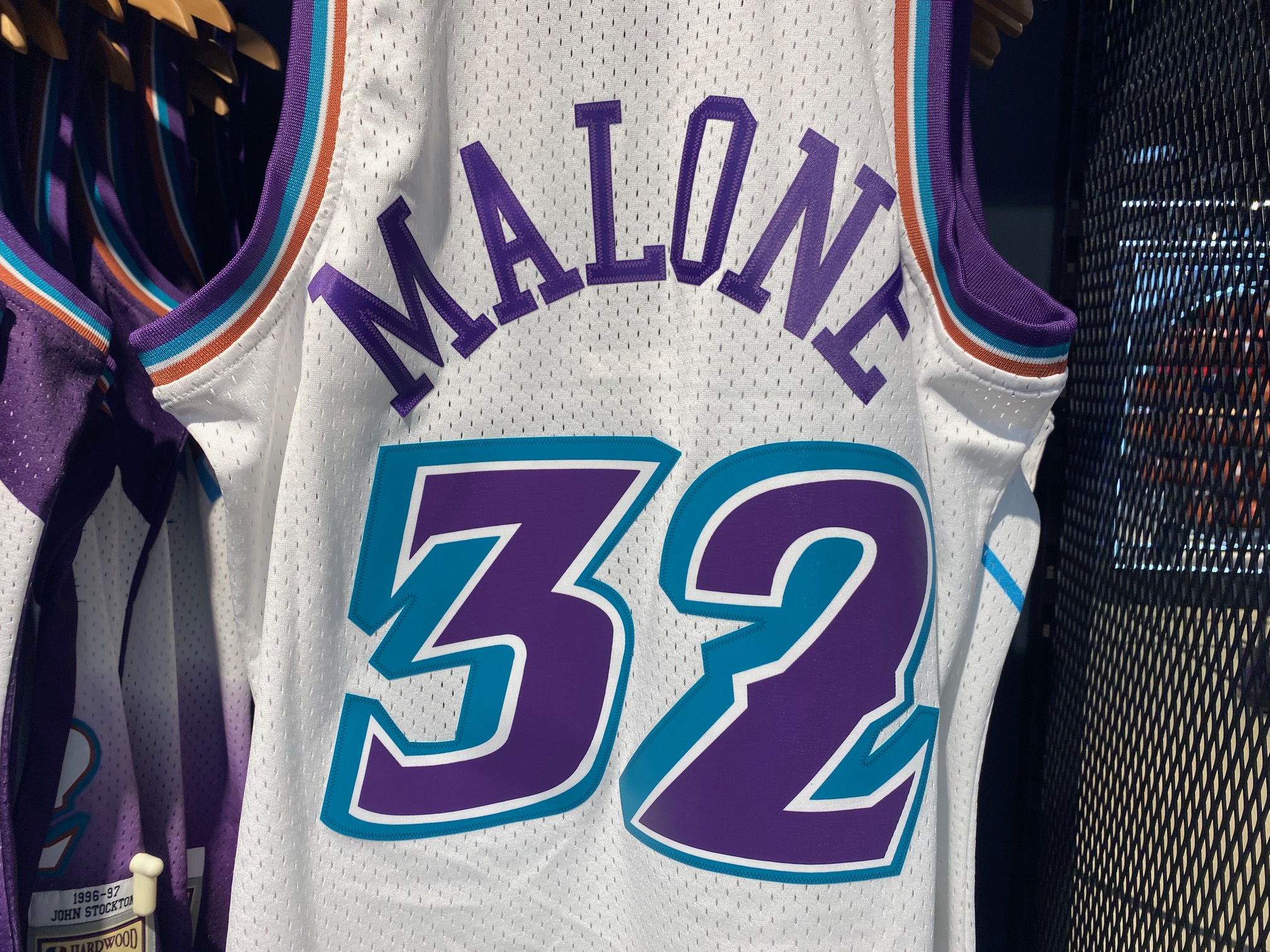
John Stockton and Karl Malone are two of the easiest players to underrate when people look back at the NBA of the 1990s. Stockton remains the great passer, the player who seemed to see every cut before it happened, while Malone became the Mailman, a scoring machine who turned the pick-and-roll into something the entire league knew was coming and still struggled to stop. The problem was Michael Jordan. The Utah Jazz reached the Finals, had the players, had the system and still became part of somebody else’s story. That follows both men into the memorabilia market today because collectors tend to remember championships first, then everything underneath them.
Karl Malone Put A Lot Of History On The Market
Malone’s own memorabilia history is unusual because he eventually released a substantial part of his collection, including pieces connected to the 1992 Olympic Dream Team. Once material like that enters the market, collectors suddenly have access to jerseys, shoes and equipment that would otherwise remain hidden for decades. Individual pieces can reach around $10,000 and much more depending on the player and the object, although the interesting part is not only the price. Malone created supply in a market that usually survives on scarcity.
That also says something about how differently collectors treat these careers. A Jordan Dream Team item becomes a centrepiece. Malone’s material can be historically important and still sit in another price category. The basketball achievement is not small. The buyer pool simply is.
The Cards Are Stronger Than The General Market Suggests
Karl Malone autograph cards are not everywhere, especially once you move into better products and high grades. A desirable signed card in PSA 9 or PSA 10 can reach $200 and above, which is already a serious number for a player whose memorabilia is often described as overlooked. Stockton has the same problem in a different form. Everybody knows what he did, but fewer collectors build entire collections around him.
The dual autographs are where the market becomes more interesting. Stockton without Malone feels incomplete, and Malone without Stockton does too. Together they represent one of the defining duos of the 1990s, not because they won the title, but because they came close enough, often enough, that the entire era still makes sense through them. A dual autograph carries that better than two separate cards ever could.
The Jordan Years Still Decide The Price
Had Stockton and Malone won one championship, the memorabilia market around both players would probably look different. Maybe not dramatically different, because neither had Michael Jordan’s cultural reach, but enough to move them into another tier. Instead, their careers are remembered as proof that even two all-time players can spend their best years running into the wrong dynasty.
That is why the prices remain uneven. The statistics are enormous, the careers are secure and the supply of truly good autographs is not unlimited, yet the market still hesitates. For collectors who care more about basketball history than the usual shortlist of Jordan, Kobe and LeBron, that hesitation is probably the most interesting part.