
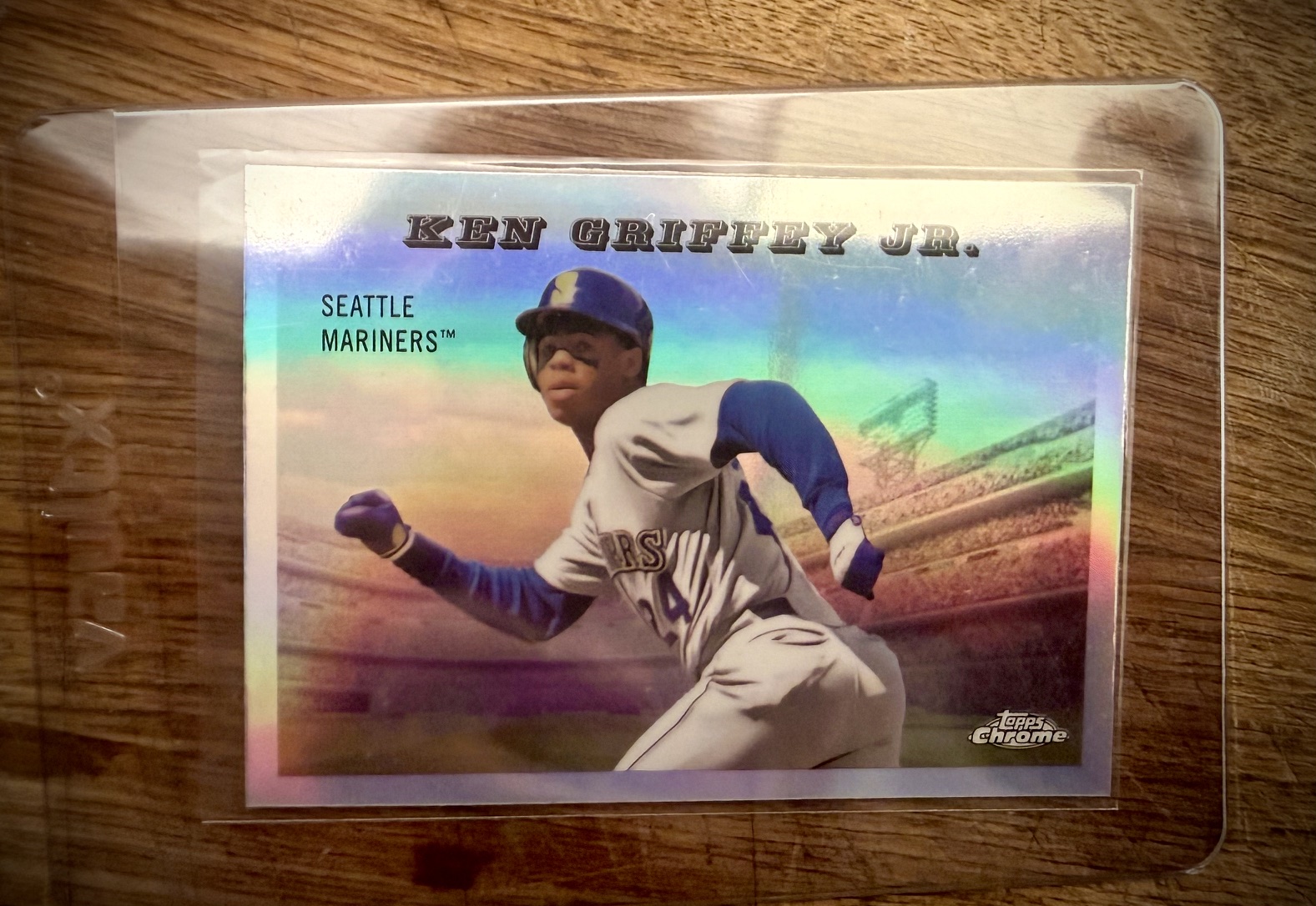
Insert cards occupy a strange place in the modern hobby because they are designed to feel special. Different card stock, foil surfaces, unusual artwork, die cuts, holograms and separate insert packs immediately tell the collector that this card is supposed to matter more than a normal base card. Many collectors remember their first insert because it felt like pulling something exclusive, something that was not supposed to appear in every pack.
The reality is often more complicated. Most inserts are not rare in the way many collectors imagine. The manufacturer already decided that every hobby box, every mega box or every blaster should contain a certain number of inserts. The hit is therefore often built into the product before the collector even opens the packs. The card may be less common than a base card, but it also belongs to a print run that was specifically designed to create excitement during the opening process.
That does not make inserts worthless. Some become extremely important cards. Others disappear almost immediately after release. The problem is that collectors sometimes confuse visual difference with scarcity. A shiny design, special artwork or a separate insert pack can create the impression that the card is difficult to pull, even though thousands of copies may exist.
Manufacturers Need Inserts
Modern products almost require inserts because base cards alone are often not enough to create excitement. If a collector opens a hobby box containing only base cards, the experience becomes predictable very quickly. Inserts slow down the opening process. The collector suddenly sees different colors, thicker card stock, refractors or unusual designs and immediately assumes something important has happened. That reaction is exactly what the manufacturers like Topps want.
The insert therefore serves two purposes at the same time. It creates excitement during the break and it creates additional layers inside the product checklist. Some products now contain dozens of insert sets, each with their own parallels, colors and serial-numbered versions. The result is that collectors can easily pull cards that look extremely rare without necessarily being rare at all.
The Difference Between Inserts And Hits
Collectors often use the word “hit” too broadly. If a box guarantees insert packs, then the insert itself is not necessarily the hit. The manufacturer already promised that something different would appear inside the product.
The more important question is how difficult a particular insert actually is to pull. Some inserts appear in almost every box. Others fall once every several cases. Some have numbered parallels, autographs or short prints attached to them that create an entirely different market.
This becomes especially visible when watching online breaks. A breaker may celebrate every insert because the card looks spectacular, while the secondary market quickly shows that the card itself is neither particularly scarce nor especially desirable.
Grading Only Works If The Player Works
Some inserts are worth sending to PSA, but I would be careful here. A PSA 10 only matters if the market actually wants the player and the card. That sounds obvious, but it is surprisingly easy to forget when an insert comes directly out of a pack with perfect corners and strong centering.
For me, the player has to carry the grading decision. A Hall of Famer who is not particularly fashionable in today’s market can become difficult. Frank Thomas, without meaning any disrespect, is one example where I would look very carefully before grading a modern insert. Nolan Ryan, Ken Griffey Jr., Shohei Ohtani or Aaron Judge are completely different conversations because collector demand is simply much broader.
With many other players, even a PSA 10 may not generate enough additional value after grading fees, shipping costs and waiting time. The insert may look beautiful. It may even be somewhat difficult to pull. But if the market does not strongly care about the player, the grade alone rarely creates value.
Modern Sports Cards Sometimes Create Artificial Scarcity
The hobby has become very good at manufacturing excitement. A collector opens a pack, sees a gold background, unusual artwork and a completely different design and immediately assumes that the card must be important. Sometimes that assumption is correct. Sometimes the card exists in very large numbers because every product release contains thousands of identical inserts.
That is one reason why I often look at the checklist before I look at the design. How often does the insert fall? Is it guaranteed? Is it one per box? One per case? Is there a numbered version? Does the market actually care about this particular insert set?
Many inserts lose value quickly because the market eventually realizes that the card was designed to feel exclusive rather than to be exclusive.
The Inserts That Survive
Some insert sets eventually become their own market. Certain Topps, Panini or Upper Deck inserts develop collector bases that survive long after the original product disappears. Those cards stop being interesting because of scarcity alone and become desirable because collectors genuinely want to own them.
That is probably the point where inserts become most interesting. They are no longer simply the guaranteed extra card inside the box. They become a collecting category of their own.
Most inserts never reach that stage. They perform their function inside the product, create excitement during the opening process and eventually disappear into binders and storage boxes. Every few years, however, an insert set survives and develops its own collector base. Those are often the cards people remember much longer than the base cards that originally surrounded them.
This essay is part of Sports Cards: The Ultimate Guide.