
Fake autographs used to sound like an easy problem. Compare it to a real one, look at the shape, check the slant, send it to somebody who knows signatures, done. In reality, that was always too simple, and now it is even worse.
Some autographs give you a lot to work with. Weird letter formation, pressure changes, rhythm, hesitation, the way the pen enters and leaves the surface. You can sometimes see when a hand is copying instead of signing. But plenty of modern athlete signatures are barely signatures at all. Initials, loops, quick scratches, rushed lines after practice, rushed lines at a card show, rushed lines on 200 stickers for a signing session. Try judging that from one blurry listing photo and you are already in trouble.
Some Signatures Give You Almost Nothing
Younger players are the worst for this. A lot of them sign like they are trying to escape the table. That does not mean the autograph is fake. It just means there may not be enough there to judge comfortably.
A big, old-school signature with personality gives you more ways to catch a problem. A tiny modern scribble does not. Sometimes the real autograph looks lazy. Sometimes the fake looks cleaner. That is what makes the whole thing annoying. Collectors want the fake to look ugly and the real one to look right, but the market does not work that politely.
Big Names Attract Better Liars
Nobody is spending elite effort faking some random $15 autograph unless they are doing volume. But Jordan, Brady, Mahomes, Messi, Pelé, Kobe, LeBron, Ronaldo, Tiger, Ali, Ruth, Mantle, that is different. The money changes the quality of the lie.
Jordan is the obvious example. His autograph has been copied forever because the market is huge, and Upper Deck Authenticated became the clean lane for a reason. Brady is interesting because his autograph is valuable, but not visually impossible to imitate. Mahomes has more movement, but the market is big enough that people will keep trying anyway.
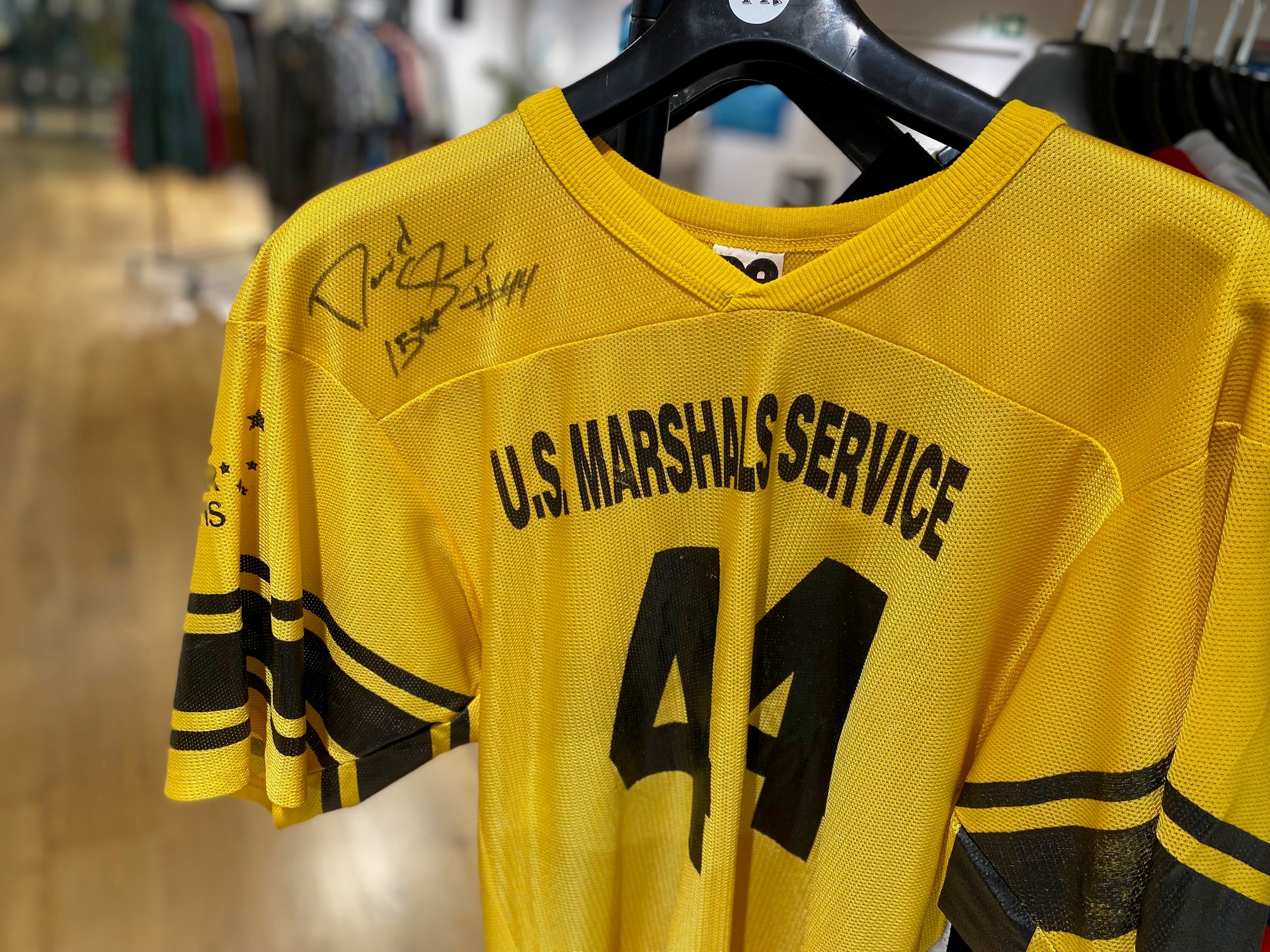
On expensive names, the signature is only part of the problem. The object matters. A signed jersey, a glossy photo, a card, a mini helmet, a ball, a pair of cleats, all behave differently under ink. Silver marker on a jersey number is not the same as black Sharpie on a photo. A late Pelé signature on a Brazil shirt should not be judged like a clean catalogue example from years earlier.
Autopen Made the Old Questions Too Small
The old question was usually, “did the athlete sign it or did some guy fake it?” That is not enough anymore. Autopen and robotic signing systems made the problem stranger because the shape can look right. Sometimes too right.
Collectors have to look for things that do not show well in a lazy seller photo. Does the ink sit naturally? Are the starts and stops dead? Is there pressure variation? Do multiple examples look weirdly identical? Does the pen movement feel like a hand, or does it feel like a machine drawing a signature because technically that is what happened?
And yes, people overcall autopen too. Not every stiff-looking signature is machine signed. Not every repeated autograph is a scandal. But the possibility has changed how careful you have to be.
Listing Photos Are a Trap
A lot of buyers are trying to authenticate from one photo taken on a kitchen table under bad light. Sometimes that is enough to reject something. If it is obviously wrong, fine. But better fakes live in the grey area.
You want to see the ink. You want angles. You want the surface. You want to know whether the marker bled, skipped, dragged, pooled, sat on top, sank into fabric, or reacted to gloss. You want to see whether the autograph belongs on that object in that era. A clean signature on the wrong item can still feel off. A messy signature on the right item can be real.
That is why cheap COA plus bad photo plus too-good price is such a familiar horror triangle. The seller may not even be lying. Sometimes they just inherited something, bought something, or trust some paper that should not calm anybody down.
COAs Are Not All the Same
Collectors talk about authentication like it is one thing, but it is not. PSA, JSA, Beckett, Fanatics, Steiner, Upper Deck, team holograms, private signing holograms, auction house letters, random “certificate of authenticity” paper from a company nobody has heard of. Those do not all carry the same weight.
A COA can help. It can also be decoration. The paper has to mean something, and it has to match the item. A Jordan UDA piece lives in a different confidence zone than a Jordan signature with a generic certificate from a mall-frame operation. A private signing hologram can be strong if the source is real. A random sticker with no searchable trail is just a sticker.
One Expert Is Not Enough for Everything
The autograph world is too wide for anyone to be great at all of it. Vintage baseball, modern basketball, European football shirts, boxing gloves, tennis photos, rushed in-person signatures, private signings, charity items, jerseys, cards, balls, boots, entertainment autographs. That is too much territory.
Someone may be strong on Michael Jordan and weak on Pelé. Someone may know vintage baseball but have no feel for modern soccer. Someone may understand Upper Deck-era basketball but not old European football material. Broad confidence is cheap. Focused expertise matters more when the item is expensive.
Start With the Whole Object
I would not start with one letter. I would start with the whole thing. Who supposedly signed it? What is the item? Does the surface make sense? Does the ink make sense? Does the age of the signature match the object? Is the seller believable? Is the price stupidly low? Is the authentication actually worth anything? Can you compare it to strong examples, not just random internet images?
A fake is not always exposed by one ugly stroke. Sometimes the whole setup smells wrong. Wrong item, weak paper, bad photo, strange price, seller story full of fog, and a signature that looks just clean enough to tempt somebody.
The Annoying Answer
Autograph collecting has become harder because the signatures got simpler, the fakes got better, machines entered the conversation, and online buying turned too many decisions into photo-reading exercises. The big names attract people who are very willing to do the work, and the cheap end is full of junk nobody wants to inspect properly.
For a low-cost item, maybe you accept the risk. For Jordan, Brady, Mahomes, Messi, Pelé, Kobe, LeBron or any other serious name, I would want more than a nice-looking signature in a listing photo. I would want the object to make sense, the ink to make sense, the authentication to mean something, the seller to survive basic questions, and ideally another set of eyes from someone who actually knows that signer.