
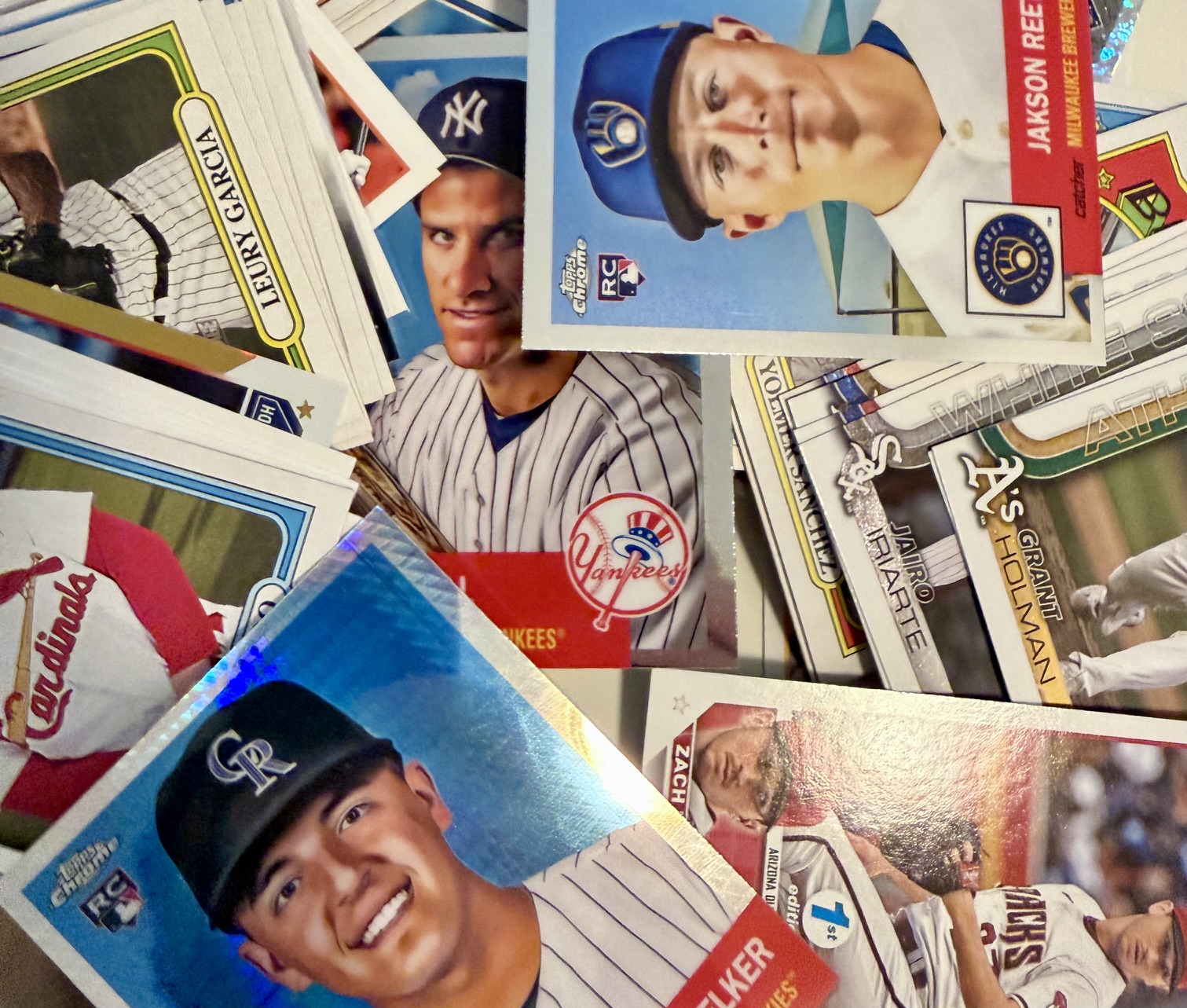
This question bothers me more than it probably should. A trading card is a machine-made object. Same with many stickers. Same with modern jerseys, even game-used jerseys before the player actually wears them. The thing starts as industrial production. Cardboard, ink, fabric, licensing, packaging and distribution.
With gold, the story is different. With land, it is different. Even with old paintings, there is at least the idea of a unique object from the beginning. But a sports card starts as a product. It comes out of a print run. Sometimes a huge one. Sometimes a numbered one. But still a production run.
And yet a PSA-graded card, a rookie sticker, a rare autograph or a game-used jersey can end up in the same auction-house world as watches, art and rare collectibles.
PSA Turns Production Into A Market Language
I have written before about PSA, Beckett and grading, and this is where they become important.
A card can be one of thousands, but once it is graded, the market can handle it differently. PSA 10, PSA 9, population report, cert number, slab, auction history. Suddenly the card is not just a card from a print run. It has a market identity.
That does not make the card less machine-made. It simply makes one copy easier to compare, price and trade against another.
This is probably why grading became so powerful. The market needed a way to separate one printed object from another printed object. Condition became the filter. The slab became the packaging for that filter.
Most Cards Stay Mass-Produced
The other side of the argument is important: most sports cards never become assets. Probably 99 percent of them stay exactly what they were at the beginning: mass-produced cardboard. Base cards, common parallels, weak inserts, forgotten rookies, products nobody really chases later. They may be collectible, but they are not investment-grade objects.
Even some numbered cards still feel close to mass production. A /75, /25 or even a 1/1 can use almost the same photo, design and product structure as the base card. Sometimes the difference is color, foil, border, stamp or patch window. Technically rare, yes. But not always important.
The expensive end of the market is built around the exceptions that collectors actually remember: true case hits, iconic inserts, important rookies, low-pop high grades, real autographs, strong patch autos and cards with a reason beyond the serial number.
That is the strange structure of the market. The product is mass-produced, and even some “rare” versions are still variations inside that machine. Most cards become bulk. A few become the reason people buy the box.
Autographs And Jerseys Need Their Own Layer
The same thing happens with autographs and memorabilia, only there the filter is authentication and provenance. A Pelé autograph from his earlier years does not feel the same as one of his later, shakier signatures. I have written about that before. The name is the same, but collectors do not view every example equally. Age, health, signature quality, inscription, authentication and provenance all play a role.
A game-used jersey has the same problem. The fabric is not special by itself. The value comes from proof that it was actually used, who wore it, when it was worn, how it entered the market and whether buyers trust that chain.
That is why weak COAs bother me so much. Without the trust layer, the object stays very close to ordinary merchandise.
Sotheby’s, Christie’s And The Asset Shift
The strongest signal for me is that Sotheby’s and Christie’s now treat sports memorabilia seriously. That does not mean every jersey is art. It does mean that the top end of the market is now being placed next to categories wealthy collectors already understand: watches, classic cars, art, rare books and historical objects. Goldin largely built this market inside the hobby. Sotheby’s and Christie’s exposed it to a much broader audience.
A high-end trading card becomes easier for a non-hobby buyer to understand when it is PSA graded, has auction history and sits inside the same auction catalogue as other collectible assets.
The Difference Is The Width Of The Market
The point is not that trading cards are the first manufactured collectibles with value. Watches, coins, stamps, musical instruments and luxury goods existed long before. What feels different today is the width of the market: sports cards are no longer producing one strange record sale every few years, but an entire layer of six- and seven-figure objects across different sports, eras, grades and auction houses.
Maybe This Is The Modern Cultural Object
I also wonder whether younger collectors simply attach value to different cultural objects than previous generations.
A rookie card may feel more relevant to a modern collector than a painting hanging in a museum because the athlete was part of his own life. World Cups, television broadcasts, YouTube clips, sticker albums, video games and social media all helped create that connection. These objects were not created as luxury goods.