
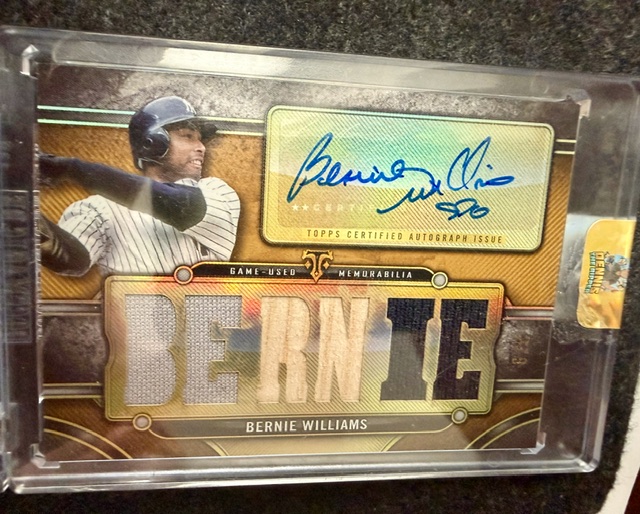
My Bernie Williams card made me think about a question collectors do not always separate cleanly: when does an autograph become an inscription?
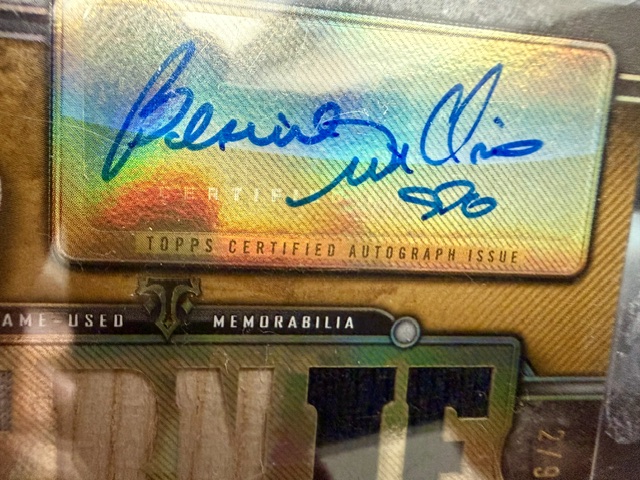
You can see the card above. Under the signature there is a small extra mark, almost like a heart or personal symbol. At first glance it looks different from a standard autograph, which immediately raises the question. Is that already an inscription? Or is it simply part of the way Bernie Williams signs?
Collectors use the term inscription all the time. Inscribed jerseys. Inscribed baseballs. Inscription autos. But once you look closer, the definition becomes surprisingly messy. Some athletes add numbers. Some add symbols. Some write achievements. Some write personal messages. Not all of those things belong in the same category.
The Number Debate
The easiest example is the jersey number. A lot of collectors automatically call a signature with a number an inscription. I am not convinced that is correct anymore. Many athletes include their number so often that it becomes part of the autograph itself.
Tony Parker is a good example. The number is so closely connected to the way he signs that removing it almost feels like changing the autograph. The same discussion existed around LeBron James signatures over the years. At some point the number stops being an addition and becomes part of the signature structure.
If a player signs thousands of items with the number included, I struggle to see it as a true inscription. It may look better. It may display better. But it is still part of the standard signing routine. For a long time, the “23” was part of LeBron’s signature as a tribute to his childhood idol, Michael Jordan. I would say that it’s definitely not an inscription. His signature looks completely different today, and he now signs differently for Topps.
Where Inscriptions Begin
For me, inscriptions start when the athlete consciously adds information beyond the normal autograph.
“HOF 2020.”
“ROY.”
“MVP.”
“1st Pick.”
“World Series Champion.”
Those are inscriptions because they communicate something about the player’s career. They require an extra action beyond signing the name. The younger players do this quite often. Rookie of the Year. First overall pick. Draft position. Sometimes even short messages to fans. Those additions create a different piece because the autograph is no longer the entire story. That is also why collectors often pay premiums for them.
The Athlete Actually Spent More Time On It
One thing that rarely gets discussed is the physical interaction with the item itself. Imagine a player sitting in front of a stack of jerseys. A normal signature takes seconds. Name, move on. But once an inscription is added, the athlete has to stop, think and write something extra. That sounds trivial, but for many collectors it changes the feel of the piece.
A jersey signed with “HOF 2020” feels more intentional than the same jersey with only a signature. Not because the ink is different. Not because the autograph is bigger. Simply because the player spent additional effort on that specific item. The same logic appears on baseballs, photos and helmets. The inscription creates separation from the thousands of standard examples that exist in the market.
My Bernie Williams Card
That is why I would not call the mark on my Bernie Williams card a full inscription. It makes the autograph more interesting. It gives it character. It catches the eye immediately. But it does not communicate an achievement, a milestone or a message. It looks much closer to a signature flourish than a true inscription.
If every unusual pen movement becomes an inscription, the word loses its use. On this Bernie Williams card, I would call it a nice autograph detail, not a full inscription.