
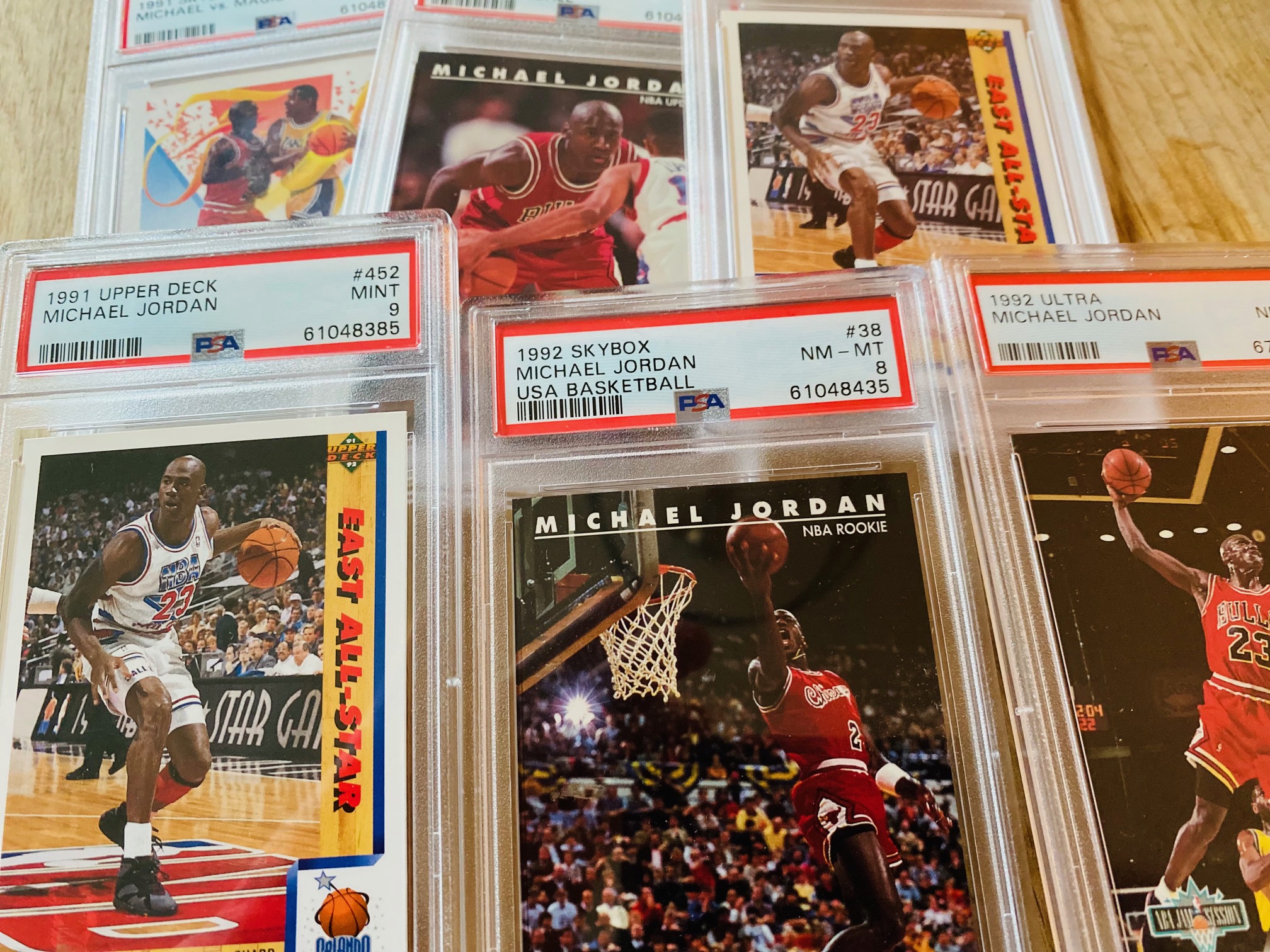
Thousands of PSA-graded trading cards were stolen in California. The theft raises uncomfortable questions about security, shipping standards and whether the sports card industry has kept pace with the value of its collectibles.
On October 13, 2026, thieves stole two pallets of graded trading cards from a FedEx truck near PSA’s facility in Santa Ana, California. A third pallet was also disturbed. According to the Santa Ana Police Department, the initial estimated value of the stolen merchandise was approximately $963,000. The final loss could be considerably higher.
Think about that for a moment. Nearly a million dollars in collectibles, potentially more, disappearing from a delivery truck. Not from a heavily guarded museum, a bank vault or a private collection, but from a vehicle carrying parcels back to their owners.
Bitte einen Spielernamen eingeben.
And that is what makes this case so troubling to me. We have spent years watching the trading card market produce increasingly spectacular auction results. Cards now change hands for hundreds of thousands, sometimes millions of dollars. Yet the infrastructure surrounding these assets still seems remarkably ordinary.
The more I read about the PSA theft, the more I began to wonder whether the hobby has developed the security standards its market values demand.
What Happened Outside PSA in Santa Ana?
According to reporting by the Associated Press, Santa Ana Police Department spokesperson Natalie Garcia confirmed that the FedEx driver had left the truck unattended. When the theft was discovered, the lock securing the cargo compartment was missing. Two pallets had been taken, and a third had been disturbed.
The police initially estimated the stolen merchandise at $963,000 but cautioned that the exact value remained undetermined.
That detail about the lock deserves attention. It was not simply a case of someone taking a small parcel from an unlocked vehicle. The reported theft involved entire pallets of merchandise, a missing lock and a vehicle temporarily left without its driver.
How long the truck was unattended was still part of the investigation, according to Garcia.
And there is another question I find difficult to ignore: How did the thieves know what was inside?
We are not talking about a random collection of ordinary parcels. The vehicle was carrying graded trading cards from one of the best-known authentication companies in the industry. Some of those cards were extraordinarily rare.
Of course, the location itself may have provided a clue. A FedEx truck parked near PSA’s shipping facility is not exactly an anonymous vehicle. Someone familiar with the business could reasonably assume that valuable collectibles were being transported.
But that is different from knowing exactly what was inside, how valuable the shipments were or when the vehicle would be accessible.
Was this an opportunistic theft? Had the location been watched? Did the perpetrators understand the shipping routines? Investigators have not publicly established the answers, and there is no verified evidence of insider involvement.
Nevertheless, the questions are legitimate. If entire pallets of high-value collectibles can disappear during a routine collection, the security arrangements deserve scrutiny.
PSA Responds: Thousands of Cards and an Expanding List of Victims
On October 23, PSA published a statement addressing the theft and outlining its response. The company initially identified 6,451 stolen items and published their certification numbers. It also deactivated the relevant certificates and notified auction houses, marketplaces and other trading platforms.
PSA said it had provided investigators with video footage, shipment manifests and item-level records. Both the Santa Ana Police Department and the FBI are investigating.
The company’s stated priority is recovering the stolen items and returning them to their owners.
But the story did not end with the original list. In an update dated November 10, PSA acknowledged that an audit of shipping records had identified additional affected parcels. The company did not provide a new total at that point.
PSA has promised compensation based on fair market value, subject to each shipment’s declared Maximum Insured Value. Grading fees for affected orders are also being refunded.
The company additionally points out that more than 99.9 percent of items entrusted to it during the previous year were safely processed and returned.
That is worth acknowledging. Millions of collectibles move through grading and shipping systems without becoming the subject of a major theft.
But the question is not whether the existing system usually works. It is whether the system is sufficiently robust when it does not.
The Problem With Insuring an Irreplaceable Card
One affected collector, known as SKY-B Cards, told CBS Los Angeles that his missing shipment contained 104 cards, including rare case hits and one-of-ones. He valued the collection at more than $100,000.
His concern was not simply whether PSA would offer compensation. Some of the cards, he explained, were effectively irreplaceable.
And that is a problem I think the industry sometimes underestimates.
A rare trading card is not always interchangeable with another example of the same player. Its serial number, condition, autograph, provenance and personal history may all matter to its owner.
A one-of-one is, by definition, unique.
An insurer can estimate its market value, but it cannot necessarily replace it. Nor does a declared insurance value always reflect the price a collector might eventually have achieved at auction.
This is where the comparison with fine art becomes interesting.
Would You Ship a Million-Dollar Painting Like This?
Imagine owning a painting worth a million dollars. Would you put it into the ordinary parcel network and hope that tracking information and an insurance policy would be enough?
Specialist art logistics exists precisely because valuable artworks require more than careful packaging. Professional providers offer controlled transport, documented handovers, secure storage, condition reports and insurance tailored to individual objects.
Some exceptionally valuable works are accompanied by dedicated couriers or transported under additional security arrangements.
Of course, artworks are shipped by freight companies, too. The distinction is not that every valuable painting is personally delivered. It is that the art market has developed specialist services and procedures for managing exceptional value and risk.
Trading cards have some of these services as well. There are vaults, specialist insurers, secure auction-house storage and high-value consignment arrangements.
For many collectors, sending a valuable card for grading still means packing it into a box, choosing a service level and entrusting it to a delivery network. The card may eventually be worth as much as a luxury car or a small apartment. Yet physically, it is still treated as a parcel. That discrepancy is becoming increasingly difficult to justify.
Card Shows Have the Same Problem
I see a similar contradiction at major card shows.
You can walk through a convention hall and find extraordinary collectibles displayed in glass showcases. Vintage baseball cards, Michael Jordan autographs, Kobe Bryant memorabilia and rare modern parallels may represent enormous sums of money.
There are security guards, surveillance systems and dealers who take considerable precautions. I do not want to suggest otherwise. In July 2024, the industry was shaken by the reported theft of approximately $2 million in cards connected to the Dallas Card Show. Security was subsequently increased at the National Sports Collectors Convention.
And in August 2026, police in Rosemont, Illinois, reported a theft involving a sports card valued at approximately $12,000 at the National. Investigators subsequently recovered the card.
These incidents are not evidence that every card show is unsafe. They do, however, demonstrate that security is an ongoing challenge, even at the industry’s most prominent events.
The concentration of value is extraordinary. A dealer may have hundreds of thousands of dollars in inventory displayed within a few square metres, sometimes separated from thousands of visitors by little more than glass, locks and vigilance.
The Hobby Needs More Than a Community
There is another difference between the sports card market and the established art world.
The art market has spent generations building relationships among collectors, galleries, dealers, insurers, auction houses, museums and specialist logistics companies.
The sports card market has developed an impressive community of its own. Collectors meet at shows, communicate online, trade internationally and follow auctions in real time.
But a community is not necessarily the same thing as a mature market infrastructure.
I would argue that the hobby still lacks a sufficiently consistent set of expectations around the transportation, exhibition and custody of particularly valuable cards. That does not mean there are no professional operators or security standards. There clearly are. PSA, major auction houses, vaulting providers and established dealers have invested heavily in authentication, storage and protection.
A collector with a $500 card and another with a $100,000 card may still find themselves navigating surprisingly similar shipping processes. Security arrangements vary between companies, events and service levels. Insurance terms can be difficult to understand, particularly when the value of a card changes significantly after grading.
When the Values Grow Faster Than the Infrastructure
I do not believe the PSA theft proves that the trading card market is fundamentally unsafe. Nor does it prove that FedEx, PSA or any individual employee acted improperly. Those are questions for investigators and, where appropriate, independent reviews.
The prices are already there. The investors are there. The international auction houses are there. The specialist grading companies and increasingly sophisticated marketplaces are there. What has not necessarily developed at the same pace is a shared understanding of how these assets should be handled when they leave a secure facility, travel across the country or sit in a showcase at a convention.
Perhaps the next stage of the sports card market will be defined less by another record-breaking auction and more by professionalisation: stronger custody procedures, clearer insurance arrangements, specialist transport for exceptionally valuable shipments and more consistent security expectations.
I still love the expression The Hobby. It captures something important about collecting: the excitement of opening a box, discovering a rare card and sharing that experience with other enthusiasts. But there is an uncomfortable irony in the name. The values have grown into those of a serious alternative collectibles market. Parts of the infrastructure still seem to belong to a hobby. And after what happened in Santa Ana, I think it is time to ask whether that needs to change.