
November 24, 2026
I wanted to follow up on my latest PSA submission, which I briefly mentioned in my article about the sports card market correction. Eleven cards, some of which I’ve written about on this blog before, and a set of grades that made me reconsider my approach to buying raw sports cards.
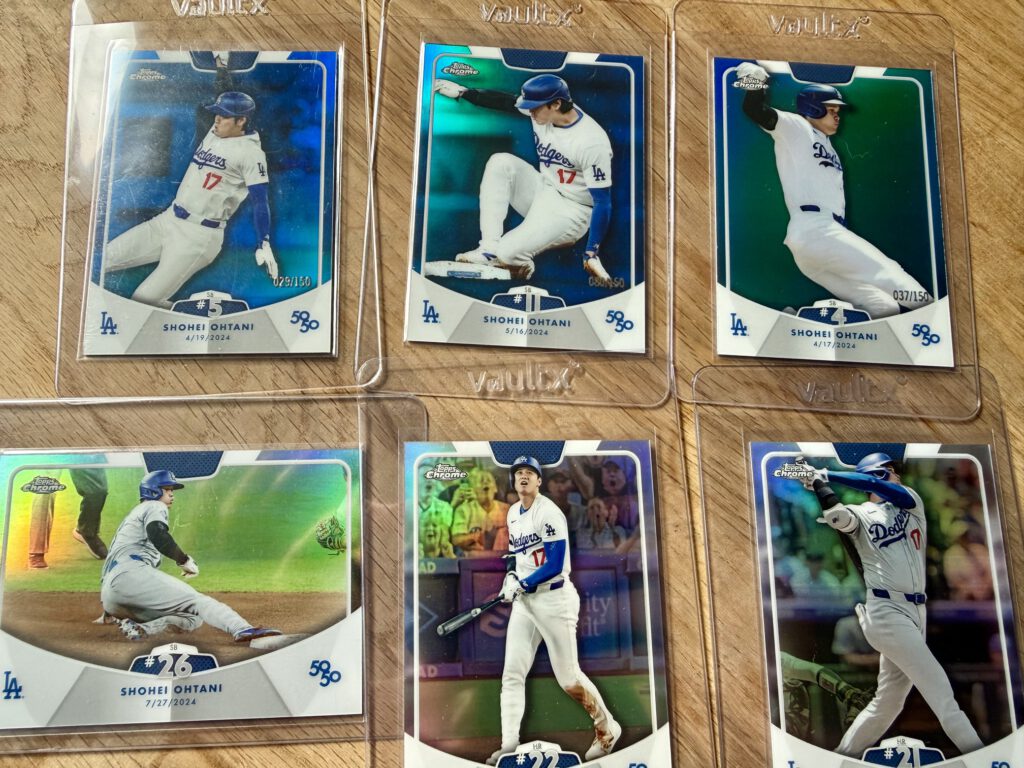
The Shohei Ohtani refractors hurt the most. Not necessarily because they’re bad cards, but because my previous experience grading Ohtani cards had been so different.
From a 90% PSA Gem Rate to Zero
Back in 2024, I bought an Ohtani box directly from Topps. I opened it myself and eventually submitted ten cards to PSA. Nine received a PSA 10, including the SSP featuring the Kanji lettering. The only PSA 9 was a refractor. Fast-forward to November 2026. My latest submission included several Ohtani refractors numbered to 150, purchased raw on the secondary market. They came back as PSA 8s and one PSA 9. Not a single Gem Mint 10 among them.
| Submission | PSA 10 gem rate |
|---|---|
| Self-pulled Ohtani cards from 2024 | 90% |
| Recently purchased Ohtani /150 refractors | 0% |
Different cards, small samples, and hardly enough data to draw conclusions about the entire secondary market. But zero? That hurts.
I’m used to getting a mixture of PSA 9s and 10s when I submit cards I’ve pulled myself. Occasionally, there’s an 8. I even managed to get a PSA 6 once, although that was a relic card with frayed edges, submitted back when I knew very little about grading. Looking back, I’m not entirely sure what I expected PSA to do with that one.
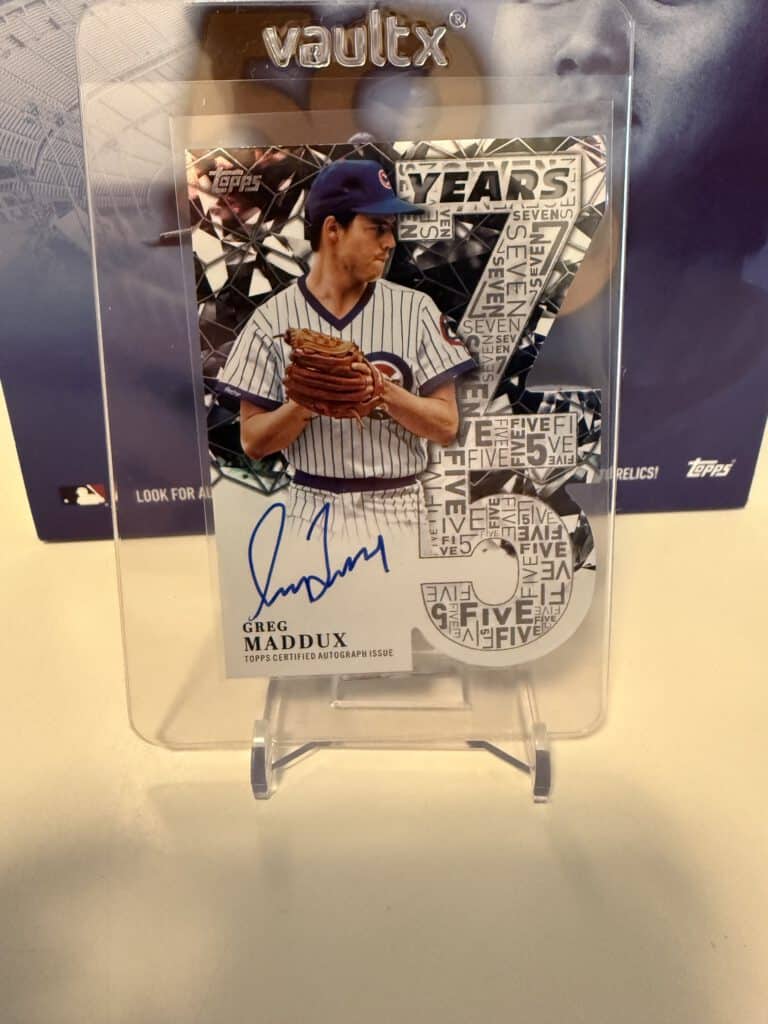
There were some more encouraging results in my latest submission. The Greg Maddux die-cut autograph numbered to 10, which I’ve written about previously, received a PSA 9. Given the shape of the card and the number of vulnerable edges and corners, I’m quite happy with that result.
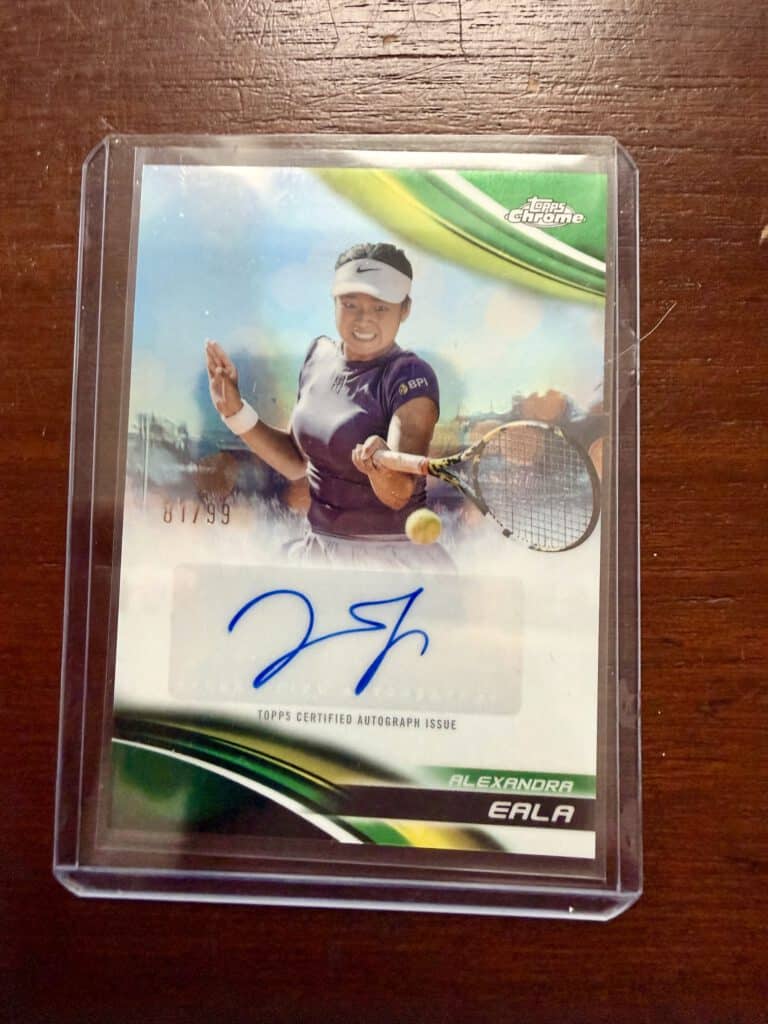
My Alexandra Eala sticker autograph, on the other hand, received a PSA 8. I could already see some imperfections before submitting it. The condition reminded me of a card that had been taken out of its protective holder and put back several times, although I obviously have no way of knowing whether that actually happened.
The zero percent gem rate I’m talking about here applies specifically to the Ohtani /150 refractors, not necessarily to all eleven cards in the submission.
Buy Singles, Not Boxes. Unless You Want to Grade Them?
I’ve lost count of how many times I’ve heard collectors recommend buying the card you want rather than spending money on boxes. From a collecting perspective, I understand the argument. Why spend hundreds of dollars chasing an Ohtani refractor when you can buy the exact card on eBay?
But when your intention is to grade that card, things become a little more complicated.
I sometimes get the impression that professional card dealers know exactly which cards they want to send to PSA themselves and which ones they’re happy to sell raw. Think about it from their perspective. If you’re handling thousands of modern sports cards and know that a particular card is worth three or four times as much in a PSA 10, you’re probably going to take a closer look before listing it.
There are plenty of reasons why a dealer might sell a perfectly good grading candidate raw. Grading costs money, ties up capital and delays the sale. Not everybody wants to run a grading business.
But as a buyer, I don’t know whether the seller has decided against grading the card for financial reasons or because they’ve already noticed something wrong with it.
There’s an economic concept called information asymmetry. One party knows more about the product than the other. If sellers systematically retain the strongest grading candidates and sell the weaker ones raw, that can create what economists call adverse selection.
The frustrating thing is that both cards might look almost identical in an eBay listing.
Can You Spot a PSA 8 in an eBay Listing?
Centering is probably the easiest thing to assess from a decent photograph. If a corner is badly damaged or there’s obvious whitening along an edge, you might catch that as well.
But the surface? Good luck.
With Chrome cards, a small scratch, a print line or a tiny indentation can make a considerable difference to the grade. Most of the photos I encounter on eBay show the card inside a penny sleeve and a top loader, often with reflections from the surrounding light.
Sometimes I can’t even tell whether a scratch is on the card or on the top loader. I could have inspected my Ohtani refractors more thoroughly once they arrived. Better lighting, different viewing angles, perhaps a magnifying glass. I’m not trying to shift responsibility for my grading results onto the people who sold me the cards.
But I don’t think I could reliably distinguish a PSA 8 from a PSA 10 based on the photographs in many of the listings I see. And by the time I have the card in my hands and can properly inspect it, I’ve already spent the money. That’s a problem when the entire financial calculation behind the purchase depends on receiving a high grade.
How Many Times Has Your Card Been Taken Out of Its Top Loader?
Most collectors know how to protect a valuable card. Penny sleeve, top loader, done. That’s exactly what you want to see when a card is pulled from a pack.
What I hadn’t given enough thought to was everything that might happen afterward.
The original owner takes the card out to photograph it. Perhaps somebody buys it, checks the surface and puts it into another top loader. The card changes hands again. A dealer inspects it, considers sending it to PSA, decides against it and lists it for sale.
By the time I buy it, several people may have handled the card. Even if everybody involved has been reasonably careful, there have been several opportunities for something to go wrong.
A little dust inside a sleeve, an awkward movement when inserting the card, a corner catching somewhere it shouldn’t. You don’t need to drop a card on the floor to turn a potential PSA 10 into a PSA 8.
I think this is an underrated aspect of buying raw modern sports cards. We spend a lot of time discussing print runs, centering and population reports, but we rarely know anything about how an individual card has been handled since it left the factory.
The fact that it arrives in a clean top loader doesn’t tell me much about what happened before that.
Why I Put Pack-Fresh Cards Straight Into Semi-Rigid Holders
When I pull a card that I intend to grade, I usually inspect it, put it into a penny sleeve and then straight into a semi-rigid card holder.
I don’t see much point in putting it into a top loader first, taking it out again a few weeks later and eventually transferring it into a semi-rigid holder for my PSA submission.
Ideally, once I’ve inspected and protected the card, the next time it is removed from its holder will be at PSA.
Semi-rigid holders are also the standard protection PSA recommends for card submissions. You can find the submission instructions on PSA’s website.
I’m not suggesting that putting a card into a Card Saver magically improves its condition. If Topps has produced a card with poor centering, a print line or a damaged edge, there’s nothing my choice of holder can do about it. I’ve pulled enough imperfect cards straight from sealed packs to know that.
What I can do is reduce the opportunities for additional damage. I suspect that’s one reason why I’ve generally had better grading experiences with cards I’ve pulled myself, although I haven’t collected enough data to measure the effect.
Check the PSA Gem Rate Before Buying a Raw Card
This is something I could easily have done before purchasing my Ohtani refractors. And frankly, considering how much time I spend researching sports card prices, I’m slightly annoyed with myself for not paying more attention to it.
PSA publishes population data showing how many examples of a particular card have received each grade. You can use that information to calculate the historical gem rate.
The calculation is simple: divide the number of PSA 10s by the total number of numerically graded examples and multiply by 100.
| Total graded | PSA 10 population | Historical gem rate |
|---|---|---|
| 100 | 85 | 85% |
| 100 | 50 | 50% |
| 100 | 30 | 30% |
| 100 | 15 | 15% |
These are hypothetical population figures, not the actual population reports for my Ohtani refractors.
If I’m looking at a card with a historical gem rate above 80%, that gives me some encouragement. If the gem rate is below 30%, I probably shouldn’t be surprised when my card comes back as something other than a PSA 10.
At that point, I’m simply joining the majority of submissions that didn’t receive the highest grade.
There’s an important catch, though. PSA population reports don’t represent a random sample of all cards produced. Collectors and dealers generally inspect their cards before submitting them. Many of the visibly damaged examples never reach PSA in the first place.
An 80% historical gem rate therefore doesn’t mean that any raw example I buy on eBay has an 80% chance of receiving a PSA 10. If anything, the adverse selection problem I mentioned earlier gives me another reason to be cautious about applying that percentage to a card that an experienced dealer has decided to sell raw.
I would also look at the population of the exact parallel rather than relying on the gem rate of the entire set. Base cards, colored refractors, die-cuts, thick relic cards and autographs can have very different grading characteristics.
My Maddux die-cut receiving a PSA 9 might be a more satisfying grading result than a PSA 9 on a modern base card with a historically high gem rate.
The grade alone doesn’t tell the whole story.
You can research individual cards using the PSA Population Report.
The Economics of Buying Raw Cards to Grade
For one of my Ohtani refractors, the original calculation looked like this:
| Expense | Cost |
|---|---|
| Raw card purchase | $90 |
| PSA grading | $59 |
| Total investment | $149 |
| Break-even sale with 10% selling fees | $165.56 |
| Break-even sale with 15% selling fees | $175.29 |
That excludes shipping and any additional submission expenses.
When I bought the card, I was thinking about what it could be worth in a PSA 10. A PSA 9 would probably have been acceptable, depending on how the Ohtani market developed. I hadn’t spent nearly as much time considering what would happen if the card came back as a PSA 8.
So let’s run through a hypothetical example. These aren’t actual Ohtani market prices, but they illustrate how the financial outcome changes depending on the grade.
| Grade | Sale price | Proceeds after 10% fees | Profit or loss |
|---|---|---|---|
| PSA 10 | $400 | $360 | +$211 |
| PSA 9 | $200 | $180 | +$31 |
| PSA 8 | $150 | $135 | −$14 |
Looking at that table, it’s easy to get excited about the $211 profit on a PSA 10. That’s the number I would probably have focused on when buying the raw card.
But how likely am I to actually make that profit?
Expected Value: How Many PSA 10s Do I Actually Need?
Let’s assume that, based on my assessment of the cards and their historical grading results, I estimate the following probabilities:
| Grade | Estimated probability | Profit or loss | Weighted contribution |
|---|---|---|---|
| PSA 10 | 20% | +$211 | +$42.20 |
| PSA 9 | 40% | +$31 | +$12.40 |
| PSA 8 | 40% | −$14 | −$5.60 |
| Expected profit | 100% | +$49.00 |
Under these assumptions, the expected profit is $49 per card before shipping, taxes and other expenses.
If I submitted ten comparable cards under the same conditions, the combined expected profit would be $490. That doesn’t mean I’d actually receive two PSA 10s, four PSA 9s and four PSA 8s. I could get lucky, or I could end up with another zero percent gem rate.
What happens if my initial assessment of the grading probabilities is too optimistic?
| PSA 10 probability | PSA 9 probability | PSA 8 probability | Expected profit per card |
|---|---|---|---|
| 80% | 15% | 5% | $172.75 |
| 50% | 30% | 20% | $112.00 |
| 20% | 40% | 40% | $49.00 |
| 10% | 30% | 60% | $22.00 |
| 0% | 20% | 80% | −$5.00 |
| 0% | 0% | 100% | −$14.00 |
All of these scenarios use the same hypothetical resale prices, grading costs and selling fees. They also assume that no card receives a grade below PSA 8, which isn’t something I can guarantee.
The interesting thing about the calculation is that I don’t necessarily need a particularly high gem rate to make money, provided the purchase price is low enough and PSA 9s retain sufficient value.
Equally, even a high gem rate won’t save me if I’ve overpaid for the raw cards or the market declines while they’re at PSA.
That’s why I think the population report and recent completed sales belong together. Looking at one without the other gives me only half the information I need.
The Market Can Change While Your Cards Are at PSA
There’s another variable that doesn’t appear in the tables above, and my Ohtani submission is a fairly good example of it.
When I bought the refractors, Ohtani’s card market was considerably stronger than it is today. As I discussed in my recent article about the sports card market correction, prices have come down from their summer highs.
Even if I had received better grades, the financial outcome might not have been quite what I originally anticipated.
Buying a raw card to grade involves taking two separate risks. I don’t know what grade the card will receive, and I don’t know what that grade will be worth when the card comes back.
A card can receive a PSA 10 and still turn out to be a disappointing investment if the market has moved against me.
In my case, the numbered Ohtani refractors are currently hovering around what I paid for the cards and the grading, based on the prices I’m seeing. Once I factor in selling fees, the situation looks less attractive.
I’ll probably hold them until the baseball market picks up again. At least I still have numbered Ohtani cards rather than PSA 8s of a player nobody remembers.
Small consolation, I know.
Should I Just Buy PSA 10 Cards Instead?
If I want a PSA 10, the obvious solution is to buy one.
I know the grade, I know the price and I can compare recent sales. I don’t have to spend another $59 on grading and wait for somebody to tell me whether the card is in the condition I hoped it was.
The disadvantage is that I’m paying for the grade upfront. Somebody else has already captured the potential increase in value that came from turning a raw card into a PSA 10.
I still enjoy that part of the hobby. Finding a raw card at an attractive price, inspecting it, submitting it and eventually receiving a Gem Mint 10 is satisfying. It’s also one of the few ways collectors can potentially create additional resale value without relying entirely on the player’s future performance.
But my latest submission has reminded me that I’m not simply buying a card. I’m buying an uncertain grading outcome, and I need to price that uncertainty into the purchase.
What I’ll Do Differently With My Next PSA Submission
I’m not going to stop buying raw cards, nor am I going to pretend that opening boxes is suddenly a more profitable strategy. I’ve opened enough boxes to know how quickly that can become an expensive exercise.
I will, however, change the way I assess cards that I buy specifically for grading.
Before buying, I want to check the population report for the exact card and parallel, look at completed sales in PSA 8, 9 and 10 condition, and calculate the potential outcome after grading and selling fees. If the numbers only work with a PSA 10, I need a very good reason to believe the card deserves one.
I’ll also pay more attention to surface condition. If the listing photographs aren’t good enough, I can ask the seller for additional pictures or simply move on to another card.
With cards I pull myself, I’ll continue using semi-rigid holders and try to avoid unnecessary handling before submission.
My 90% gem rate from the 2024 Ohtani box doesn’t prove that buying sealed products is the answer. My latest zero percent gem rate doesn’t prove that professional dealers are selling their grading rejects, either.
What it does tell me is that I’ve been spending too much time looking at the potential upside of a PSA 10 and not enough time calculating the probability of actually getting one.
Next time I find a tempting Ohtani refractor on eBay, I’ll probably open three tabs: one for the listing, one for the PSA population report and one for recent PSA 8 sales.
Not quite as exciting as calculating my potential profit on a Gem Mint 10, but probably a better use of my time.
I’m not a financial advisor. This article reflects my personal collecting and grading experiences. The financial examples are hypothetical, and neither grading outcomes nor future sports card prices are guaranteed.