
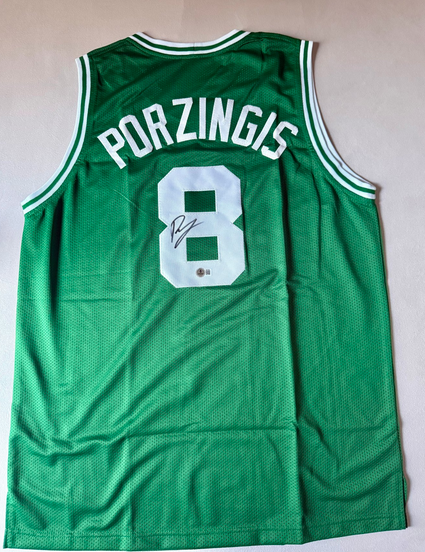
There is a question that comes up surprisingly often among collectors, and the answers are almost always emotional rather than rational. Imagine finally finding the jersey you have been searching for over months or even years. The size is right, the player is right, the price is acceptable. There is only one catch: someone has signed it. Suddenly the purchase becomes a philosophical debate. Do you wear it? Do you frame it? Do you even try to remove the autograph because, in reality, you never wanted the signature in the first place?
I recently stumbled across exactly this discussion, and what fascinated me wasn’t that collectors disagreed. It was why they disagreed. Their answers reveal something much bigger about sports memorabilia and how differently collectors define value.
A Jersey Has Two Different Values
The mistake many collectors make is believing there is only one value attached to a jersey. There isn’t.
There is the market value, which is relatively easy to understand. A genuine autograph from an NBA, NFL or MLB player can increase the resale price considerably, particularly if it is authenticated and the player has an established collector market.
Then there is the personal value, and that is where everything becomes complicated.
If you have been looking for a specific Kristaps Porziņģis jersey in your exact size for years, perhaps you couldn’t care less about the autograph. You wanted the jersey because you wanted to wear it to games, to the gym or simply because it reminds you of a certain era. In that case, the signature may actually be an inconvenience rather than an upgrade. The market might see added value, while you see an obstacle preventing you from using something you finally managed to find.
That difference explains why two collectors can look at exactly the same item and reach completely different conclusions without either of them being wrong.
The Market Wants Preservation. Collectors Often Want Memories.
Some collectors said they would never wear a signed jersey because sweat, sunlight and washing inevitably increase the risk that the autograph fades over time. Once the ink disappears, a significant part of the collectible value disappears with it.
Others had a completely different philosophy. They deliberately buy inexpensive signed jerseys because wearing them is actually more enjoyable than leaving them in a closet for twenty years. One collector even admitted that he owns several signed jerseys specifically designated as his “wear jerseys” because they cost only twenty or thirty dollars. Another explained that he had worn signed jerseys for years without caring whether the autograph survived, because the memories attached to wearing them mattered more than preserving resale value.
We Often Treat Autographs As If They Changed the Object
One thought kept coming back to me while reading those discussions.
Physically, almost nothing changes when an athlete signs a jersey. It is still the same piece of fabric produced in exactly the same factory. Yet those few strokes of a marker can multiply the price because collectors are no longer buying polyester. They are buying scarcity, provenance and the story attached to that piece of clothing.
That also explains why some collectors even considered removing the signature. From a traditional memorabilia perspective, that sounds almost absurd because you would be destroying value. But if the signature itself never mattered to you and only prevented you from enjoying the jersey you actually wanted, the calculation suddenly changes. Your utility increases while the market value decreases.
It is a reminder that value is never entirely objective. The market sets prices, but every collector decides privately what an item is actually worth to him.
Should You Wash a Signed Jersey?
Another surprisingly practical question appeared throughout the discussion.
Several collectors reported that signatures applied with ordinary permanent markers gradually faded after repeated washing. Others said they had hand-washed signed jerseys without noticeable problems, while a few admitted they simply accepted that the autograph would disappear eventually because the jersey was bought to be worn, not preserved forever.
That distinction matters because many modern autographs are signed with standard Sharpie markers rather than specialised archival ink. If the goal is maximum preservation, frequent washing is obviously not your friend. If the goal is enjoying the jersey as clothing, fading ink may simply become part of its story.
Sports Memorabilia Always Comes Back to One Question
I have written many times that collectors often confuse investment value with collecting value. They overlap, but they are not identical.
If your primary objective is financial appreciation, the answer is simple. Frame the jersey, keep it out of sunlight, minimise handling and preserve the autograph for the next owner.
If, however, you bought the jersey because you wanted that player, that design and that size, then wearing it is hardly irrational. After all, the entire purpose of collecting is not necessarily to maximise resale value. Sometimes it is simply to own something that makes you happy every time you put it on.
That may sound almost heretical in a market obsessed with grading, authentication and investment returns, but perhaps it is worth remembering that sports memorabilia originally existed because fans loved sports, not because they expected double-digit annual returns.
And maybe that is the real collector’s dilemma. Are you preserving an asset for the next owner, or are you enjoying something you bought for yourself? There is no universal answer, and that is precisely why the discussion never seems to end.