
Joe Montana is one of those athletes whose importance is actually larger than his memorabilia market. Four Super Bowls, four Super Bowl MVP awards, the San Francisco 49ers dynasty and one of the most important quarterbacks in NFL history should probably produce a market that feels completely untouchable. The prices are certainly strong, but they are often much lower than modern collectors might expect.
That may simply be because Montana belongs to a different era. He represents football before the complete commercialization of sports, before social media, before endless autograph programs and before modern card manufacturers turned athletes into permanent content machines. In many ways, Joe Montana belongs to the last generation of American superstars who became global icons before the modern memorabilia business fully existed.
There is also a story connected to Montana that is rarely told outside Germany. During the difficult years of German football in the 1970s and early 1980s, stadiums were not always full, revenues were limited and many clubs struggled financially. Uli Hoeneß, who had taken over much of the responsibility at Bayern Munich, traveled to the United States and visited San Francisco 49ers games. He saw Joe Montana, he saw the atmosphere inside the stadiums, he saw the merchandising and the presentation of the franchise, and he later spoke repeatedly about how impressed he was by the business side of American sports. That influence is probably much larger than people realize.
Joe Montana And The Business Of Sports
Today European football clubs generate enormous revenues. Bayern Munich produces well over €800 million in annual revenue. English clubs operate global businesses. Manchester United built enormous audiences throughout Asia during the 1990s and early 2000s, helped by the David Beckham phenomenon and the expansion of the Premier League.
Champions League football now reaches larger worldwide audiences than the Super Bowl in many years, which would have been difficult to imagine decades ago. Yet some of the early ideas about merchandising, stadium experiences and the commercialization of sports arrived from American football.
Joe Montana was standing at the center of one of those organizations. That does not mean Montana alone transformed European football, but he became part of a system that European executives observed very closely. In that sense, his influence reaches much further than the NFL.
The Prices Are Strong But Surprisingly AccessibleThe memorabilia market reflects this earlier generation. A signed football generally sells between $300 and $1,000 depending on the quality of the signature, the authentication and the type of football. Those are strong prices, but they are not extraordinary compared to some modern athletes.
His 1981 Topps rookie card remains one of the important football cards of the era. Lower-grade examples can be found for several hundred dollars, while higher-grade copies and PSA examples can move into the thousands.
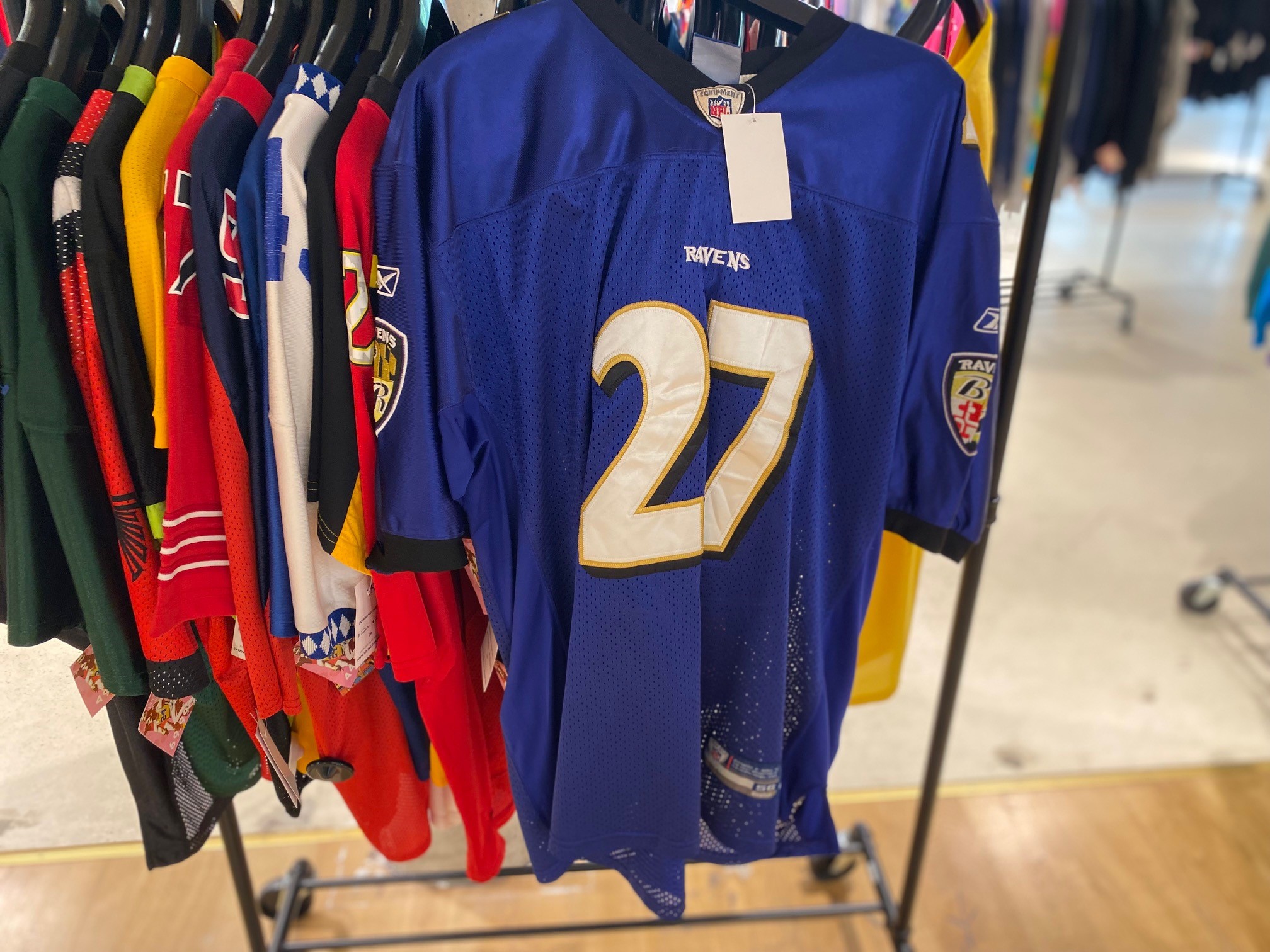
Game-used jerseys are a different category altogether. Jerseys connected to important games or Super Bowl years can reach tens of thousands of dollars, which places Montana among the major historical names in football memorabilia.
Super Bowl material remains particularly desirable. Programs, tickets, rings and championship-related items often achieve several thousand dollars, while replica material remains accessible to many collectors.
Even signed prints and artwork generally sit between $100 and $300, which again feels surprisingly affordable considering Montana’s historical importance.
The Signature Problem
One interesting aspect of the Montana market is the availability of signatures. Joe Montana signs regularly, and this keeps many autograph prices relatively stable. Modern collectors can even find signed trading cards for surprisingly modest amounts of money.
Some of these are what I would call convenience signatures. A modern grading company slab, a thick marker and a signature added long after the original card was produced. These signatures often have little connection to the original set and can sometimes be purchased for around $60.
That sounds almost absurd if one considers that Montana belongs among the greatest quarterbacks ever to play the game. The difference is scarcity. Modern autograph cards are built into products. Serial numbering creates artificial limits. Montana signatures often exist outside those systems, which makes them accessible but also limits some of the upside.
Montana Belongs To A Different Era
What makes Joe Montana fascinating to me is that his market reflects his generation. The very top of the market is expensive. Game-used jerseys, important rookie cards and major Super Bowl material perform extremely well.
The broader market, however, remains relatively approachable. Collectors can still buy Montana autographs, signed cards and display pieces without entering the six-figure territory that now surrounds some modern athletes.
Meanwhile, his influence reaches beyond football. The 49ers became a model for executives who later transformed European clubs into global businesses. Bayern Munich became an international company. English football became a worldwide product. Manchester United built enormous audiences throughout Asia. The commercialization of sports accelerated everywhere.
But somewhere in California, watching the 49ers and watching Joe Montana, Uli Hoeneß began to understand that a sports club could become something much larger than simply a team playing games on weekends.
That may be one of the most interesting pieces of Joe Montana memorabilia that does not exist in any auction catalogue.