
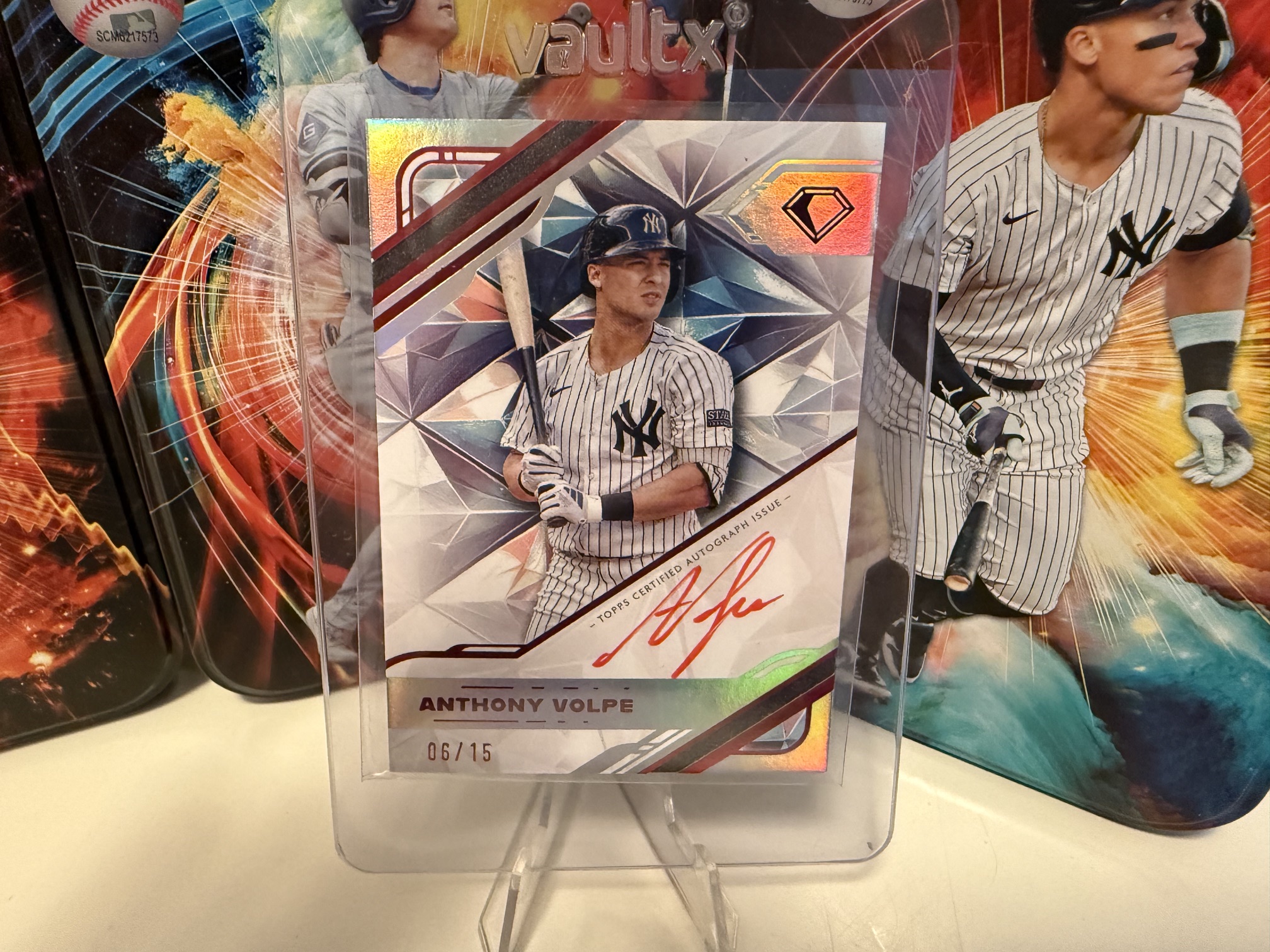
Card shows do not really believe in internet prices. eBay sold listings may set the reference point, but the room quickly adds its own math: cash, trade value, condition, liquidity, player hype and whether the dealer actually wants to own that card. A card can be worth one number online, another number in a trade, another number in cash and another number if the player just had a big week.
That is where sports cards become more interesting than the apps make them look. The internet tries to flatten everything into comps. Last sold. Average sale. PSA population. Market value. At a card show, those numbers are still there, but they do not end the conversation. A dealer may offer 75 percent because he needs margin. A buyer may pay above comps because the card is right there in front of him. Someone else may walk away because the same card will probably appear online tomorrow. None of those decisions are irrational. They are just not the same decision.
Ohtani Is Almost Too Efficient
Shohei Ohtani is the cleanest example of a card market that has very little mystery left. His important cards are watched constantly. Dealers know the comps. Buyers know the comps. Auction results are easy to find. PSA populations are easy to check. There is still emotion around Ohtani, but not much hidden information.
That makes Ohtani difficult at shows. You are usually not discovering a mistake. You are deciding whether you want to pay the price for one of the safest modern baseball names in the hobby. Sometimes the opportunity is not the discount. Sometimes the opportunity is simply that the card is available in the room, in the grade you want, without waiting for an auction or trusting photos online.
Prospects Are Not Priced Like Finished Players
Spencer Jones, Nick Kurtz and Munetaka Murakami are different. Those cards are not only cards. They are arguments about what happens next.
Murukami could win Rookie of the Year. Spencer Jones could become a Yankees monster. Nick Kurtz could become one of those names that suddenly looks obvious later, after the cheap window has already closed. Or the market could simply be too early, too loud, too confident.
That is where card shows still create strange moments. One dealer may be holding firm on Spencer Jones because he believes in the player. Another dealer may want out of prospects completely and prefer cash today. A collector may think Murakami is underpriced because the upside is still not fully understood. Another may think the hype already ran too far. The card is the same card, but the future attached to it is not the same for every person in the room.
Raw Cards Are A Different Game
Condition becomes more important when the card is raw. Online photos can hide things. A sleeve can hide things. A bad angle can hide things. At a table, you can ask to see the card properly, check the corners, look at the surface and decide whether the price still makes sense.
That matters because so much modern card value sits inside the gap between PSA 9 and PSA 10. A raw card of a hot player is not just a raw card. It is a possible PSA 10, a possible PSA 9, or maybe already a card with no realistic grading upside. The seller may price it like the first version. The buyer has to decide whether it is actually the second or third.
I have written before about opening packs carefully because damage can happen before a card ever reaches a penny sleeve. Card shows are the opposite side of that same problem. The card already exists. Now the question is whether the condition still leaves room for the grade people are imagining.
The Room Creates Its Own Prices
Card shows still work because the price is never only the price. An Ohtani card may be almost fully understood before anyone touches it, but a Murakami, Spencer Jones or Nick Kurtz card carries a lot more argument inside it.
One table may treat the player like the next breakout. Another may treat the same card as inventory that needs to move. That is where the show becomes useful. Not because it has better data than the internet, but because you can see how different collectors price the same uncertainty in real time.