
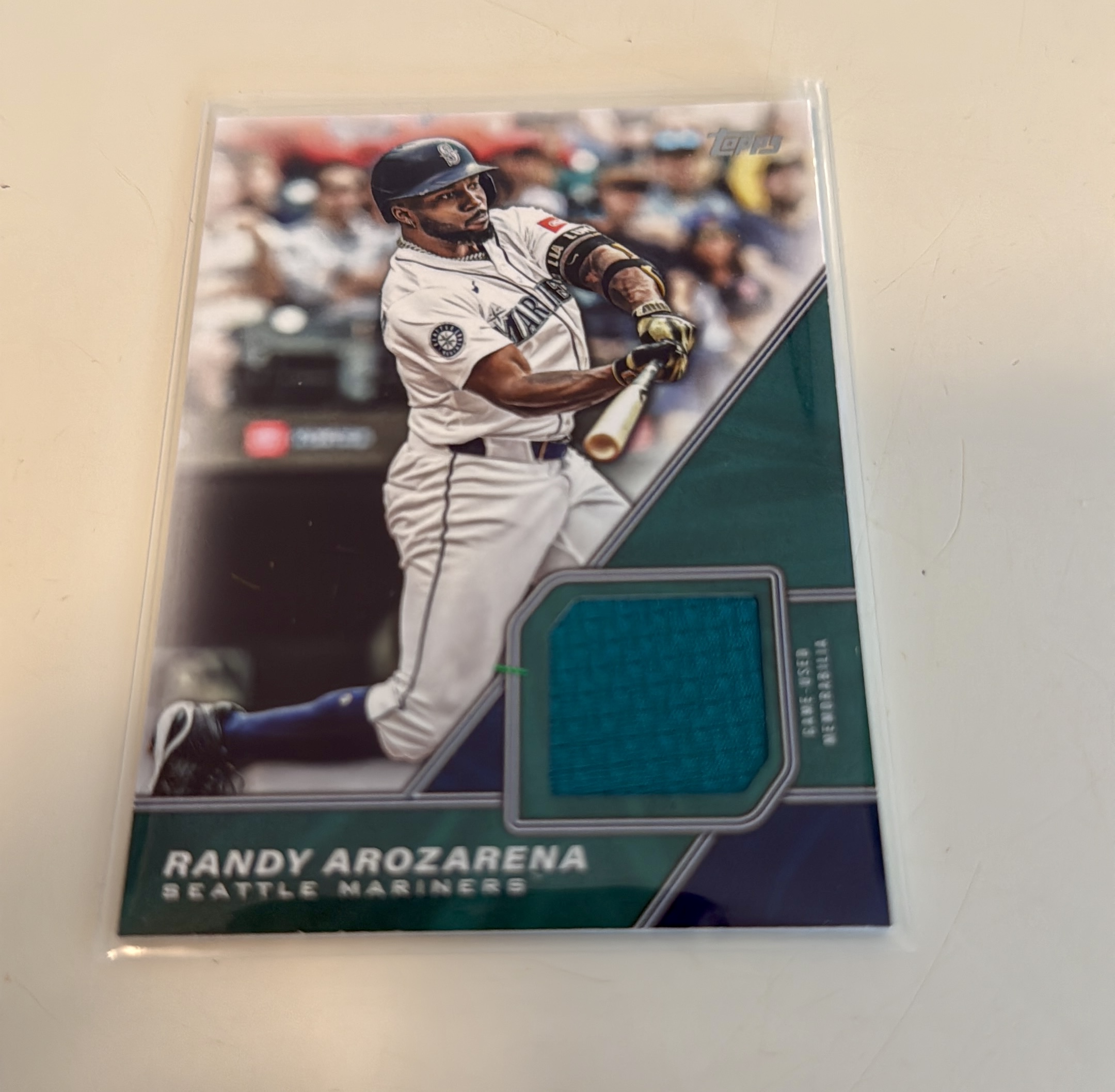
A damaged Topps relic card made the rounds in collector groups recently, and honestly, I understand why people reacted so strongly. This was not just a tiny corner issue. It looked more like one of those cards where you immediately ask yourself how it came out of a pack like that.
The top edge looked torn, compressed, and bent. On a normal base card that would already be annoying. On a thick relic card, especially a card people might have hoped to grade or sell, it becomes a real problem.
And this is not only about one card. Thick relic cards, patch cards, and memorabilia cards are simply more fragile than people want to admit. The card stock is thicker, the edges are harder to keep clean, the patch window adds another weak point, and the surface can pick up pressure marks before the card ever reaches the collector.
That is the ugly part of modern premium products. The box can be expensive, the card can be factory fresh, and the condition can still be bad.
Factory Fresh Does Not Mean PSA Ready
This is the mistake many collectors make. They pull a card from a sealed pack and immediately think: fresh card, grading candidate.
But PSA does not care that the card came straight from the box. PSA grades the card in front of them. If the edge is damaged, the edge is damaged. If the surface has roller lines, the surface has roller lines. If the corner is soft, the corner is soft.
Topps could have caused the issue. Packaging could have caused the issue. The relic window could have made the card weaker. It does not really matter once the card is in grading.
A thick relic card with factory damage can turn into a financial mess very quickly. You pay for grading, shipping, insurance, maybe customs if you are outside the United States, and then the card comes back with a grade that kills the resale value.
That is why thick patch cards should be inspected much harder than normal cards before sending them to PSA. I already wrote about five Jamal Musiala autopatch cards that only received PSA 7 and PSA 8 grades despite being major hits from premium products.
That alone says a lot about modern thick patch cards. Even cards that come directly from sealed products can already have weak edges, soft corners, surface marks, or pressure issues that immediately limit the grading ceiling.
But severe factory damage is a completely different category. Once a relic card shows visible chipping, peeling, crushed edges, dents, creases, or damage around the patch window, the situation changes completely. At that point, collectors are no longer talking about PSA 10s. Sometimes even a PSA 5 is unrealistic.
And that is the real frustration with modern premium products. A collector can pull a massive card and still end up with something that was effectively damaged before it ever reached the pack.
Thick Relic Cards Are Brutal
The problem with relic cards is not only the surface. It is everything: edges, corners, layering, patch windows, pressure marks, slight bending, and small dents around the memorabilia piece. Even the way the card sits in the pack can become an issue.
A standard trading card already has enough ways to disappoint you under strong light. A thick relic card adds more failure points.
That is why not every premium card should automatically be treated as a grading candidate. Some cards simply look better raw than trapped forever in a low-grade slab.
A PSA 6 or PSA 7 on a modern relic card does not hide the damage. It highlights it.
Should You File a Topps Damage Claim?
If the card is clearly damaged out of the pack, filing a Topps defect claim can make sense. Replacement claims can take time, and collectors should be realistic about the process.
You may not receive the exact same card back. You may receive something Topps considers comparable. Sometimes collectors are happy with the replacement. Sometimes they are not.
If the card is a major hit, document everything immediately: photos of the card, photos of the packaging, box information, receipt, and anything else Topps might ask for. Waiting weeks before deciding usually does not help.
The bigger issue is not one damaged relic card. The issue is that modern premium products keep getting more expensive while collectors still have to deal with factory damage, roller lines, weak edges, soft corners, and grading disappointment.
That is the part that frustrates people. You can buy an expensive box, pull the kind of card you were hoping for, and still lose because the condition is not there.
Before sending a thick Topps relic card to PSA, slow down. Look at the edges, check around the patch window, tilt the surface under strong light, inspect the corners, and look for pressure marks or separation.
If the card already looks damaged, grading is not going to save it.