
It might be one of the best kept secrets in the modern trading card hobby. The so called Topps Super Short Print cards, or SSPs. They are chased, discussed, and often misunderstood. And the deeper you go, the more you realize that even experienced collectors struggle to define them clearly.
What Is a Topps Super Short Print
According to Topps, the idea behind a Super Short Print is relatively simple. These are cards produced in extremely limited quantities, typically with a print run of 100 copies or fewer.
That definition sounds clean. It gives collectors a benchmark. But it also leaves a lot of room for interpretation, especially since exact print runs are rarely disclosed publicly.
The Collector Perspective on SSP Cards
Within the hobby, the definition of a Topps Super Short Print often becomes more nuanced. Many collectors believe that true SSPs should be significantly rarer than what the official definition suggests.
Some common perspectives include:
- A real SSP sits closer to 50 copies or even below
- Short prints may exist in the range of 100 to 300 copies
- Anything numbered is considered a parallel rather than an SP or SSP
- Unnumbered variations are more likely to fall into the SP or SSP category
This creates a situation where definitions are shaped less by official rules and more by community consensus.
Short Print Versus Super Short Print
The distinction between SP and SSP is one of the most debated topics in the hobby.
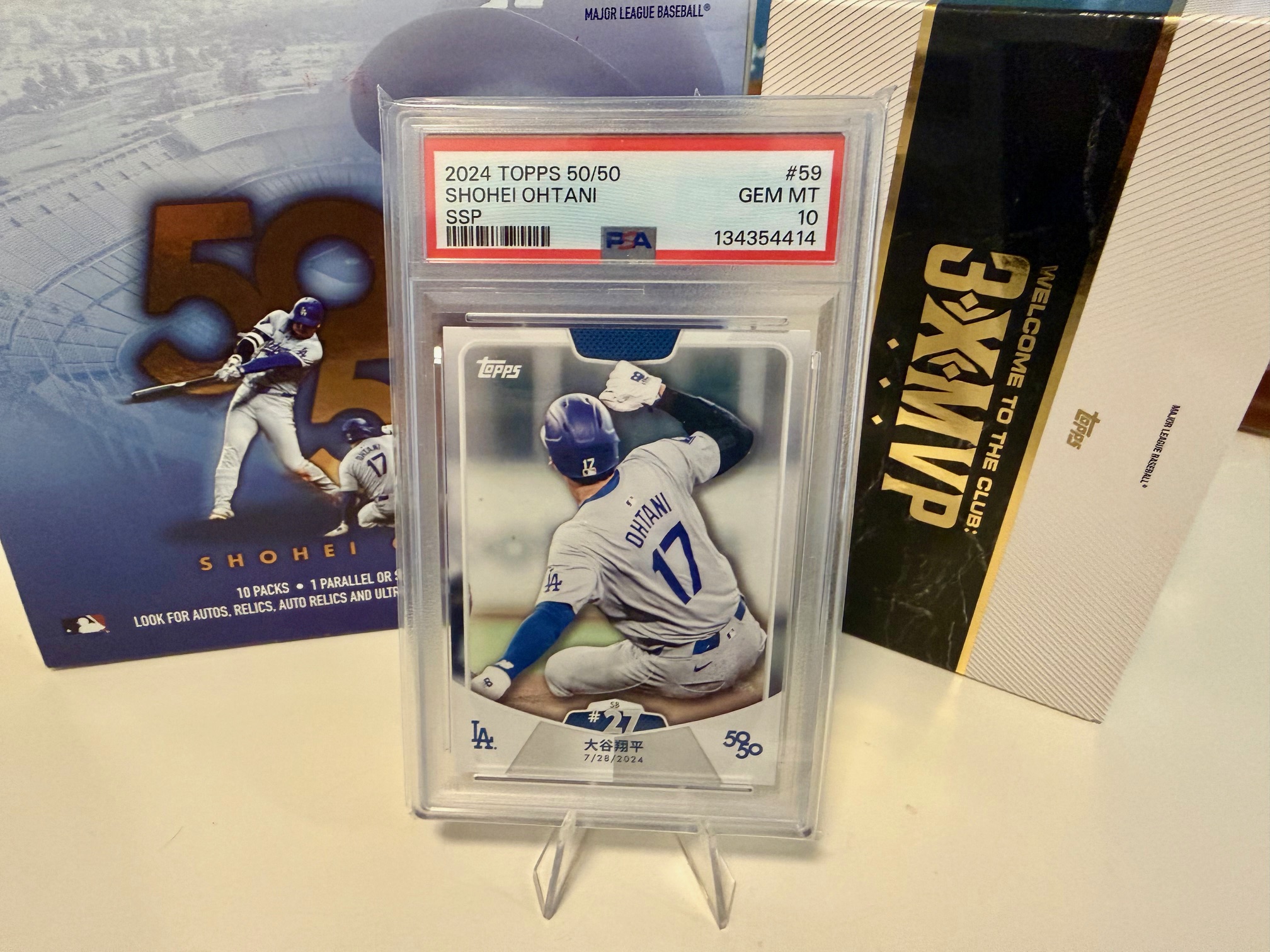
In theory, it sounds simple. A short print is rare, and a super short print is even rarer. In practice, the line between the two is anything but clear. As shown below, this Shohei Ohtani SSP (cover image) looks almost identical to the base version.
Some collectors refer to older assumptions:
- Around 300 copies for SPs
- Around 100 copies or fewer for SSPs
- Ultra short prints sometimes falling below that
But these thresholds have shifted over time. Different products, different years, and different strategies from Topps have blurred the boundaries even further.
The result is a moving target. What counted as an SSP a few years ago might not feel as rare today.
Design Choices and Criticism
Another important aspect of Topps Super Short Print cards is how they actually look.
Many collectors expect ultra rare cards to feature completely unique designs. In reality, SSPs often rely on subtle variations instead:
- Minor color differences such as foil or refractor effects
- Slightly altered images rather than entirely new artwork
- Small thematic details that are easy to overlook
A strong example is Shohei Ohtani. In certain releases (50/50 Box release 2024), SSP versions of his cards include Japanese Kanji on the front. The card remains visually similar, but the added detail creates a distinct variation that collectors value.
This design philosophy has divided opinion. Some collectors appreciate the hidden nature of SSPs, while others argue that truly rare cards should stand out more clearly.
Hidden in Plain Sight
One of the defining characteristics of a Topps Super Short Print is how easily it can be missed.
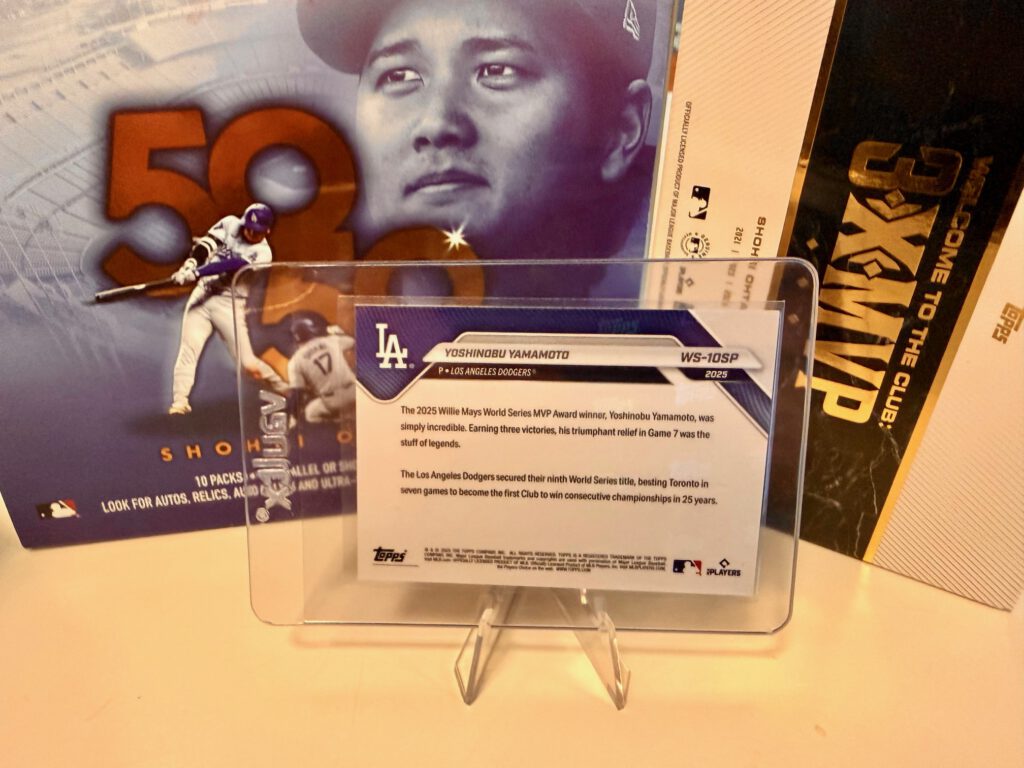
Unlike numbered parallels, SSPs often do not announce themselves. Identifying them frequently requires flipping the card and checking the small print code on the back.
This adds a layer of discovery to collecting. A card that looks completely ordinary at first glance might turn out to be one of the rarest in the entire set.
It also explains why SSPs generate so much excitement. The idea that something valuable could be hiding in plain sight keeps collectors engaged.
How to Identify a Topps Super Short Print
Knowing that SSPs are hard to spot is one thing. Actually identifying them is another.
There are a few practical ways collectors use to detect short prints when opening packs or sorting through cards. None of them are perfect on their own, but together they significantly increase your chances.
1. Card Orientation
A common indicator is the orientation of the card.
Short prints are often horizontal rather than vertical. While most base cards follow a standard portrait layout, SSPs frequently use landscape images.
This is not a rule, but it is often a first visual clue worth paying attention to.
2. Unusual Photography
Another strong signal is the image itself.
Base cards typically show standard in-game action such as pitching, hitting, or fielding. Short prints, on the other hand, often break that pattern.
Examples include:
Players in street clothes
Pre-game or batting practice shots
Candid or playful moments
Non-game situations
These variations are designed to feel different, even if the difference is subtle.
3. The Code on the Back
This is the closest thing to a reliable method.
On the back of Topps cards, there is a small printed code near the bottom edge. The last digits of that code often determine whether a card is a base, SP, or SSP.
For example, within a specific set:
Base cards may end in one number
Short prints in another
Super short prints in yet another
The exact codes change from set to set, but once you know what to look for, this becomes the most consistent way to identify SSPs.
4. Use External Checklists
The most practical approach is still to verify online.
Websites like checklists and variation guides provide:
Full lists of short prints
Visual comparisons
Matching code references
Collectors often rely on these resources during breaks or when reviewing cards afterward.
In practice, this means one thing. Even experienced collectors regularly double-check their cards. SSPs are easy to miss, and many valuable ones are only discovered after a second look.
Are Topps Super Short Prints a Good Investment?
This is where the discussion becomes more practical.
In theory, scarcity should drive value. But with SSPs, scarcity is often estimated rather than confirmed. That creates uncertainty that does not exist with numbered cards.
Some SSPs trade at strong premiums compared to their base versions. Others do not. The difference is not always obvious upfront.
What makes this segment interesting is exactly that lack of clarity. Pricing is often driven by perception, availability, and short-term demand rather than hard data.
For investors, that means one thing above all: SSPs are not a purely rational market. They sit somewhere between rarity and storytelling, and that makes them harder to evaluate but also more volatile.
The Ongoing Definition Debate
At its core, the Topps Super Short Print concept sits between official terminology and collector interpretation.
There is no universally accepted threshold. No single rule that applies across all products. And no clear point where short print ends and super short print begins.
That leaves the hobby with a set of open questions:
When does short print begin
When does super short print start
And how rare is rare enough
For now, the lack of a clear answer is not a flaw. It is part of what defines the modern collecting experience.