
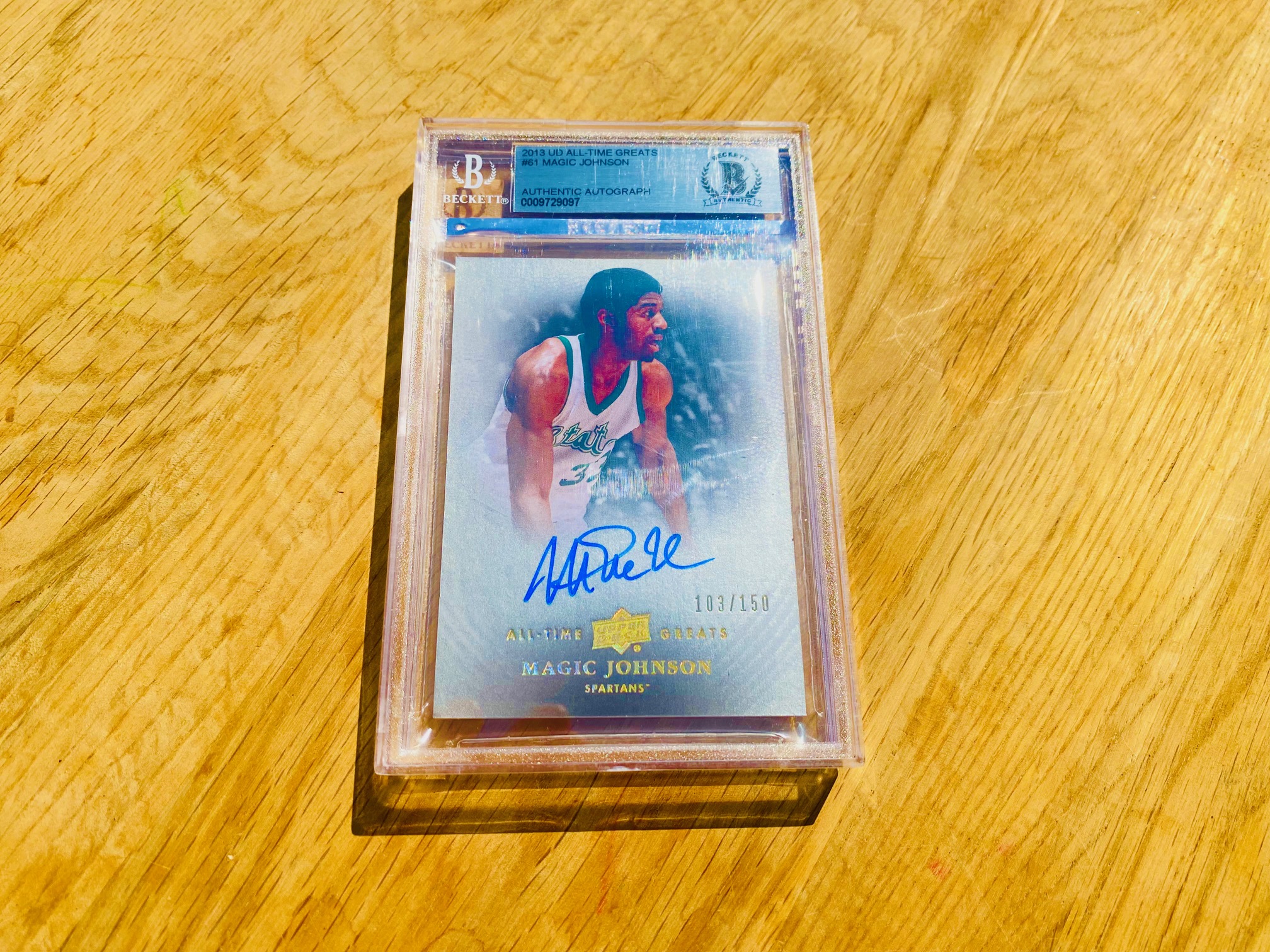
I saw the question again in a collector group the other night, and like always, the answers came fast. Wembanyama. Ohtani. Brady. Jordan. LeBron. Kobe. Mahomes. Curry. Giannis. Paul Skenes. Roman Anthony. Bobby Witt Jr. Cam Ward. Cooper Flagg. Harper. Tony Romo.
Somebody even mentioned Wander Franco, which probably tells you enough about how chaotic these discussions can become once people start throwing names around. Some collectors were naming legends, some were naming prospects, some were naming players they already owned, and a few were probably just hoping the group would confirm that the cards sitting in their box were still a smart hold. That is usually how these conversations go. Everybody wants the next big card before the rest of the room arrives, but most people only realize a player has become “the guy” after prices already moved hard.
The Obvious Names
The obvious answer is also the boring answer. Michael Jordan, Tom Brady, Kobe Bryant, LeBron James, Shohei Ohtani, Patrick Mahomes, Steph Curry, Lionel Messi, Cristiano Ronaldo, Babe Ruth, Jackie Robinson. Nobody really needs an explanation for why those names matter because the collector demand already exists across generations, countries, and different levels of the market.
Jordan is not dependent on a hot month. Brady does not need another championship for people to care about his rookies. Kobe has an emotional collector market that probably never fully disappears. Ohtani already feels bigger than baseball in some ways because he attracts both sports fans and people who barely followed cards before the boom. The problem with those names is not legitimacy. The problem is price. Nobody is early on Jordan in 2026. Nobody is secretly discovering Brady. If you buy into those markets now, you are paying for certainty, or at least for something that feels close to certainty inside a hobby where almost nothing actually is.
That is why I would not just buy random cards from legendary names and assume the player alone solves everything. A low-pop PSA 10, an important rookie, a rare parallel, a strong on-card autograph, or a genuinely scarce game-used piece is very different from another mass-produced base card that happens to feature a famous athlete. A random base card of a huge name is still just a random base card in a lot of situations, even if collectors convince themselves otherwise because they recognize the player immediately. The stronger markets usually reward the stronger versions of the player, especially once hype cools and people become more selective about what they actually want to own long term.
Wembanyama
Wembanyama is the obvious modern answer because he already looks like a player the hobby wants to build around for the next decade. He moves differently, the defensive impact already jumps off the screen, and every big game immediately turns into another wave of highlights, clips, and discussions online. If his body holds up, people are going to keep watching him for a very long time.
That “if” matters more than people want to admit, though, because a huge percentage of current Wembanyama prices already assume future greatness. Collectors are not treating him like a normal young player anymore. In many products, the market already prices him closer to a future all-time name than a prospect who still has years left before proving everything people expect from him.
I still understand why collectors want Wembanyama exposure, but I think people flatten the market too much by acting like every Wemby item is automatically strong because the player is strong. A Fanatics-authenticated autograph is one thing. A low-numbered rookie is another. A clean PSA 10 from the right product is another conversation entirely. A signed basketball with strong presentation and real display appeal feels different from another random insert pulled from a product with a massive print run. Personally, I would rather own one genuinely strong Wembanyama piece than a stack of ordinary cards that only work if the hype around the name keeps climbing nonstop for years.
Prospects
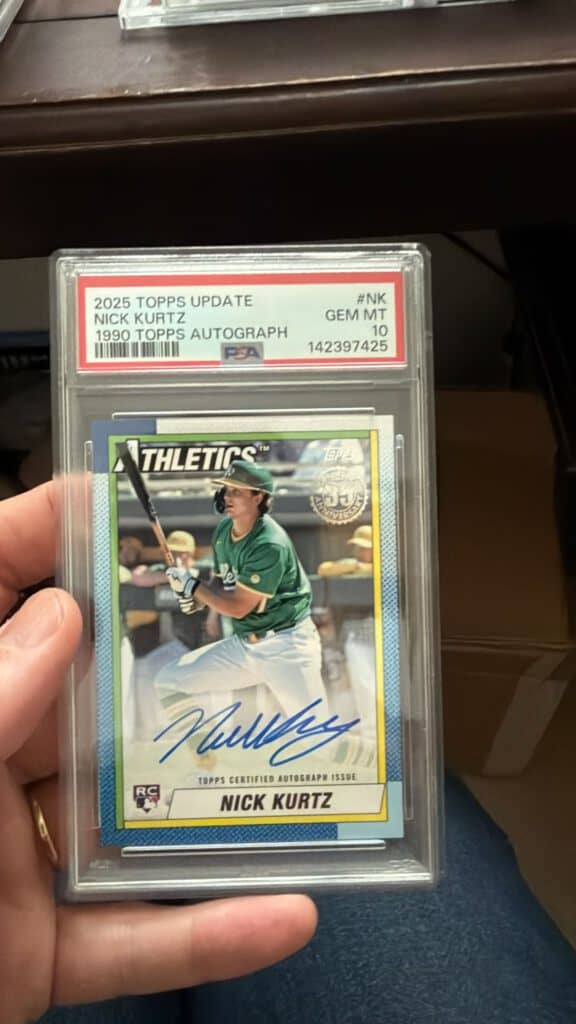
The prospect side of the hobby is where things usually become much more emotional because this is where collectors start imagining what a player could become instead of what he already is. Roman Anthony, Paul Skenes, Ben Rice, Bobby Witt Jr., Cooper Flagg, Cam Ward, Macklin Celebrini, Nick Kurtz. every few weeks another name enters the cycle and suddenly people start debating whether the market is still early or already overheated. Baseball is probably the craziest version of this because baseball prospecting almost feels like its own separate economy inside the hobby. A player gets hot for two weeks, screenshots of sales start flying across social media, and suddenly everyone wants to know whether they missed the move already or whether the next jump is still coming.
Anthony Volpe is a good example of how quickly hobby emotion can shift. Yankees player, everyday starter, huge attention, real hype, and then injuries and performance questions changed the entire tone around him faster than most people expected. That does not mean Volpe suddenly became a bad player. It just means the hobby is not patient once excitement starts cooling. Ben Rice is interesting right now for the same reason. He is producing, collectors are paying attention, and I completely understand why people are watching his cards closely. But the uncomfortable truth is that nobody really knows how these stories end while they are happening. Maybe he builds a serious season and the market keeps moving upward. Maybe people stop talking about him by August because another younger name takes over the conversation. The card market usually does not wait politely while collectors figure that out.
That is also why I think many people misunderstand prospecting. They talk about it as if it is only about identifying talent before everybody else does, but timing matters almost as much as the talent itself. A collector can be completely correct about the player long term and still lose money because the entry point was bad, the market overheated too quickly, or the excitement faded before the player fully developed. Nick Kurtz is another example where the hobby may demand instant confirmation before it gives the player time to settle into what he actually is. The market likes talent, but it likes immediate validation even more.
Good Player, Weak Card Market
One thing newer collectors often underestimate is how many excellent athletes never become truly strong hobby markets. A player can be legitimately great and still have weak card demand because the position is wrong, the team does not attract enough national attention, the autograph supply becomes too large, or there is simply not enough emotional collector interest behind the player. Some athletes are respected more than they are chased. Some players become hobby stars before they are fully proven in the actual sport. Some numbered cards still feel forgettable even when they are technically rare because scarcity alone does not automatically create demand. The hobby has never been a clean ranking of the best athletes in the world. If it were, the market would look very different.
Hype
One guy in the group joked that he watches ESPN highlights and listens for the names commentators repeat every night, and honestly, that method is not even as ridiculous as people pretend. Attention absolutely moves cards. Once a player starts appearing everywhere, searches increase, collectors rush in, prices react, and the cycle feeds itself. The problem is timing because the easiest move is often gone by the time everybody starts repeating the same player in every Facebook thread and Reddit discussion. A collector might still be buying a genuinely good athlete, but that does not mean he is buying early anymore. A lot of people confuse being early in a player’s career with being early in the actual card market, and those are not always the same thing.
What I Look At
When I look at cards, I usually care about the specific item before I care about the player alone. Is it a real rookie? Is it numbered? Is the autograph on-card or sticker? What does the PSA population look like? Is the product respected long term or just temporarily hyped? Does the card actually feel important, or does it only look rare because somebody stamped a low serial number on it? I also think collectors avoid the resale question because it is less exciting than talking about upside. A $200 card is one thing. A $20,000 card is a completely different market with a much smaller buyer pool and far less emotional decision-making. People love talking about giant auction sales because those headlines travel fast online, but most cards never operate in that world.
The Names I Understand
I understand the appeal of Jordan, Brady, Kobe, LeBron, Ohtani, Mahomes, Curry, Messi, and Ronaldo because those markets already have real depth behind them. I understand Wembanyama because the ceiling is obvious even if expectations are already extremely high. I also understand why people chase names like Paul Skenes, Roman Anthony, Bobby Witt Jr., Cooper Flagg, Cam Ward, Celebrini, or Ben Rice because upside is exciting and prospecting gives collectors the feeling that they might still be early to something important. The mistake is treating all those names as the same type of purchase because they are completely different bets with completely different levels of risk attached to them.
So What Would I Buy?
If I had to simplify my own approach, I would usually rather own a stronger card of a slightly less hyped player than a weak card of the hottest name in the room. Not every time, obviously, but often enough that it has changed the way I look at modern cards. A stronger card gives you more things working in your favor later on: scarcity, condition, authentication, presentation, historical importance, and a clearer reason for another collector to care about it years down the line. Weak cards often lean too heavily on the player staying permanently hot, and once that heat fades even a little, the flaws of the card itself become much more obvious.
That is why these collector-group discussions are useful and dangerous at the same time. They show you where attention is going, which absolutely matters in this hobby, but they also show you where the crowd may already be arriving late. There is never one clean answer to the question because the real conversation usually comes down to the player, the card itself, the entry price, the timing, and whether there is realistically another buyer waiting on the other side later on.