
Today I want to look at a question that matters a lot in modern sports memorabilia: Are Fanatics COAs legit?
I am using a real example from my own collection: a signed Victor Wembanyama basketball from Fanatics. Wembanyama is already one of the most important young names in basketball, and after becoming one of the league’s most dominant defensive players, his memorabilia market is obviously getting a lot of attention.
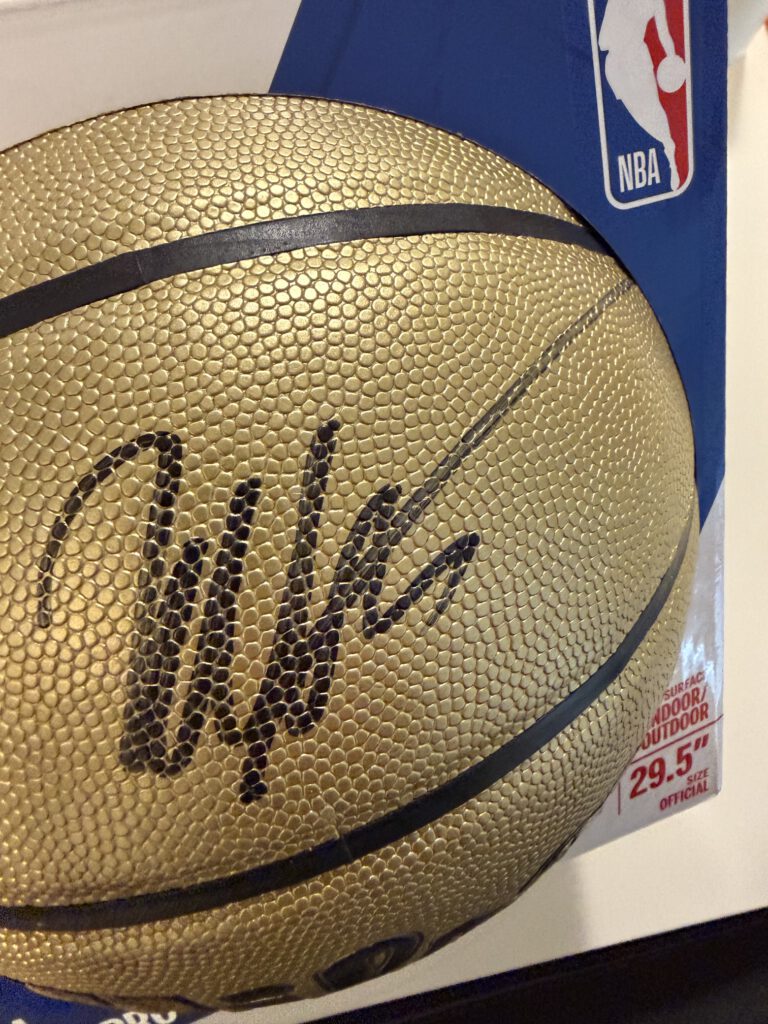
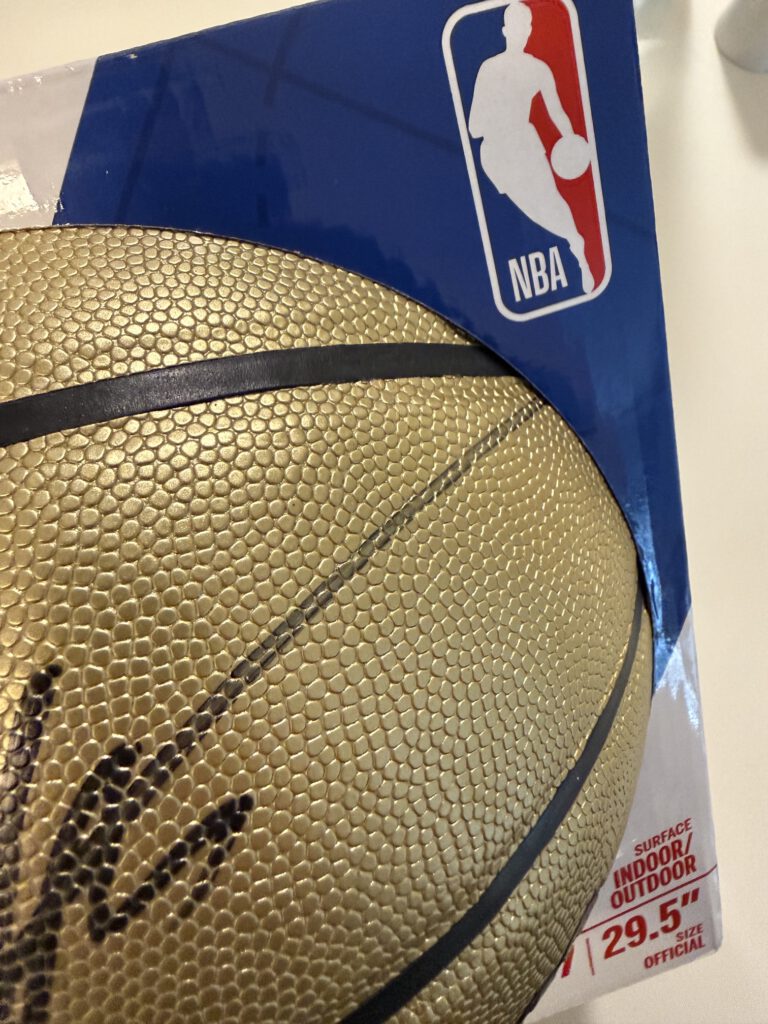
The ball itself looks great. The gold NBA basketball gives it a strong display look, and the signature is clearly visible. But with modern autographed memorabilia, the signature is only one part of the story. The more important question is authentication.
That is where Fanatics becomes interesting.
The Fanatics COA and Hologram
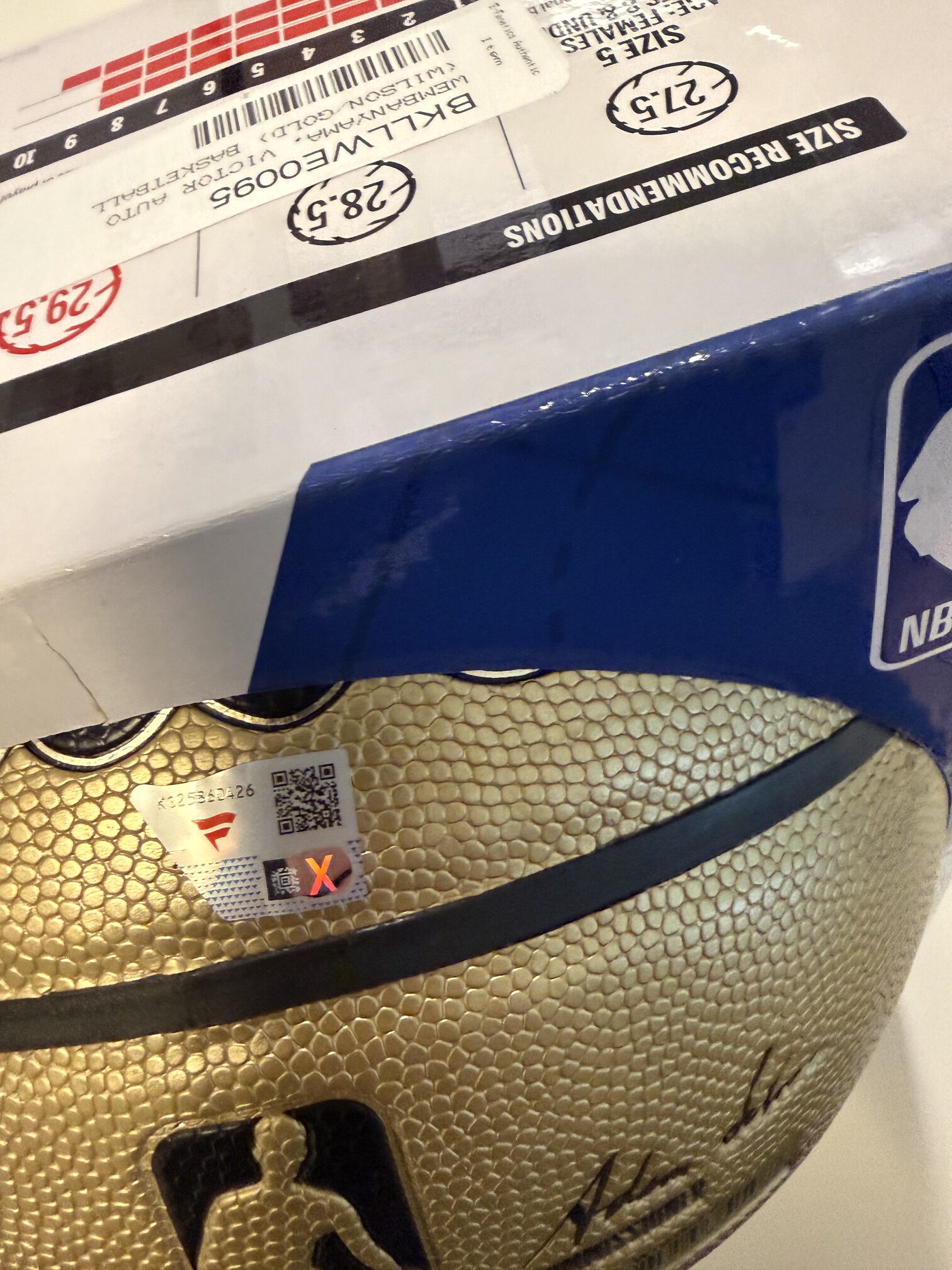
Fanatics has improved its authentication system over the years. Older Fanatics items often relied heavily on a QR code or basic certificate structure. Today, the company uses a more advanced hologram sticker system on many signed products.
On this Wembanyama basketball, the Fanatics hologram is placed directly on the ball. When you move it in the light, you can see the security effect clearly. In this case, the hologram shows a distinct X pattern. The sticker also has a unique code that can be checked through the Fanatics authentication system.
As discussed in one of my previous blog post: Legitimation matters most because a simple printed COA can be copied. A basic QR code can be abused. But a physical hologram with a unique code and visible security features is much harder to fake at scale.
Of course, no system is perfect. But this is clearly better than a loose paper certificate with no real security feature.
Why the Hologram Matters
The main problem in autographed memorabilia is not only fake signatures. It is also fake certificates, fake stickers, copied COAs, and items where a real-looking authentication label is used to sell something questionable.
By using a more secure hologram system, Fanatics makes it harder for fraudsters to create multiple fake items from one original certificate. To fake this properly, someone would need not only the ball and the signature, but also a convincing Fanatics hologram with the right code and visual security effects.
That does not make fraud impossible. But it makes it much harder.
And if someone tried to create many fake items with the same code, that would likely become visible over time.
Fanatics vs Other COAs
One reason Fanatics items often sell at a premium is trust.
Collectors know the company. Fanatics works directly with leagues, athletes, and major sports properties. That does not automatically mean every item should be bought blindly, but it does give Fanatics a stronger position than many random COAs in the market.
With Victor Wembanyama signed basketballs, I have noticed that Fanatics examples often sell higher than similar balls with weaker or less recognized authentication. At the time of writing, Fanatics Wembanyama signed basketballs often sit around the $700 to $800 range, depending on the exact ball, signature placement, condition, and seller. New listings with DPOY inscriptions are way above $1000.
Similar Wembanyama signed balls with other COAs can sometimes be $100 to $200 cheaper.
That price difference tells you something.
The market is paying extra for the Fanatics authentication.
The Wembanyama Autograph Question
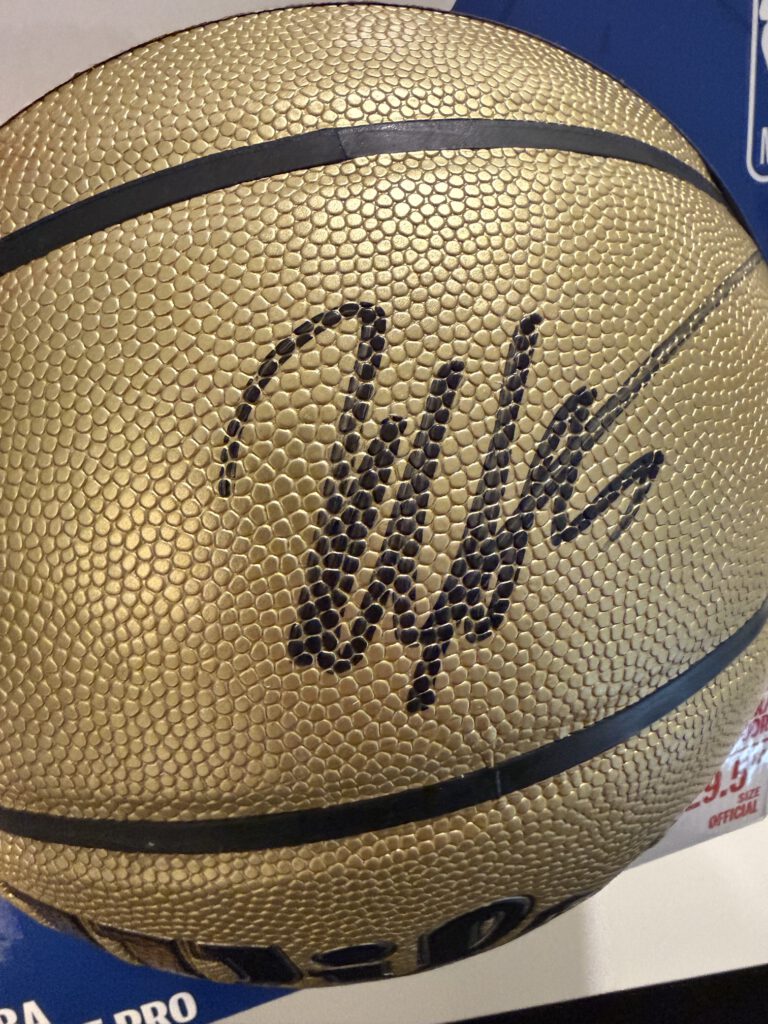
There is one small downside with Wembanyama memorabilia: he signs quite a lot.
That does not make the autograph bad. He is still one of the most exciting players in basketball, and his signed memorabilia will continue to attract collectors. But supply matters.
If a player signs a lot of balls, jerseys, photos, and cards, the long-term value of a standard autograph can be affected. A Fanatics COA helps, but it does not change the fact that collectors should still think about supply.
That is why I would separate the autograph market into different levels.
A standard signed Wembanyama basketball is interesting. A Fanatics-authenticated signed ball is stronger. A limited inscription, game-used item, rookie-era piece, or especially rare signed item would be in a different category.
Not every Wembanyama autograph will behave the same way.
My View on Fanatics COAs
For me, Fanatics COAs are among the stronger options in modern sports memorabilia.
The company is recognizable, the hologram system is more secure than a simple paper certificate, and the market clearly gives Fanatics-authenticated items a premium. That does not mean collectors should stop checking details. You should still verify the code, inspect the hologram, compare the signature, and buy from sellers you trust.
But compared with many weak COAs in the market, Fanatics is a much safer lane.
With this Wembanyama basketball, the authentication is part of the reason I was comfortable buying it. The ball has the signature, the Fanatics hologram, the NBA presentation, and a player with major collector demand.
Not risk-free. But definitely more convincing than a random signed ball with a weak certificate.
This essay is part of Sports Memorabilia: The Ultimate Guide.