
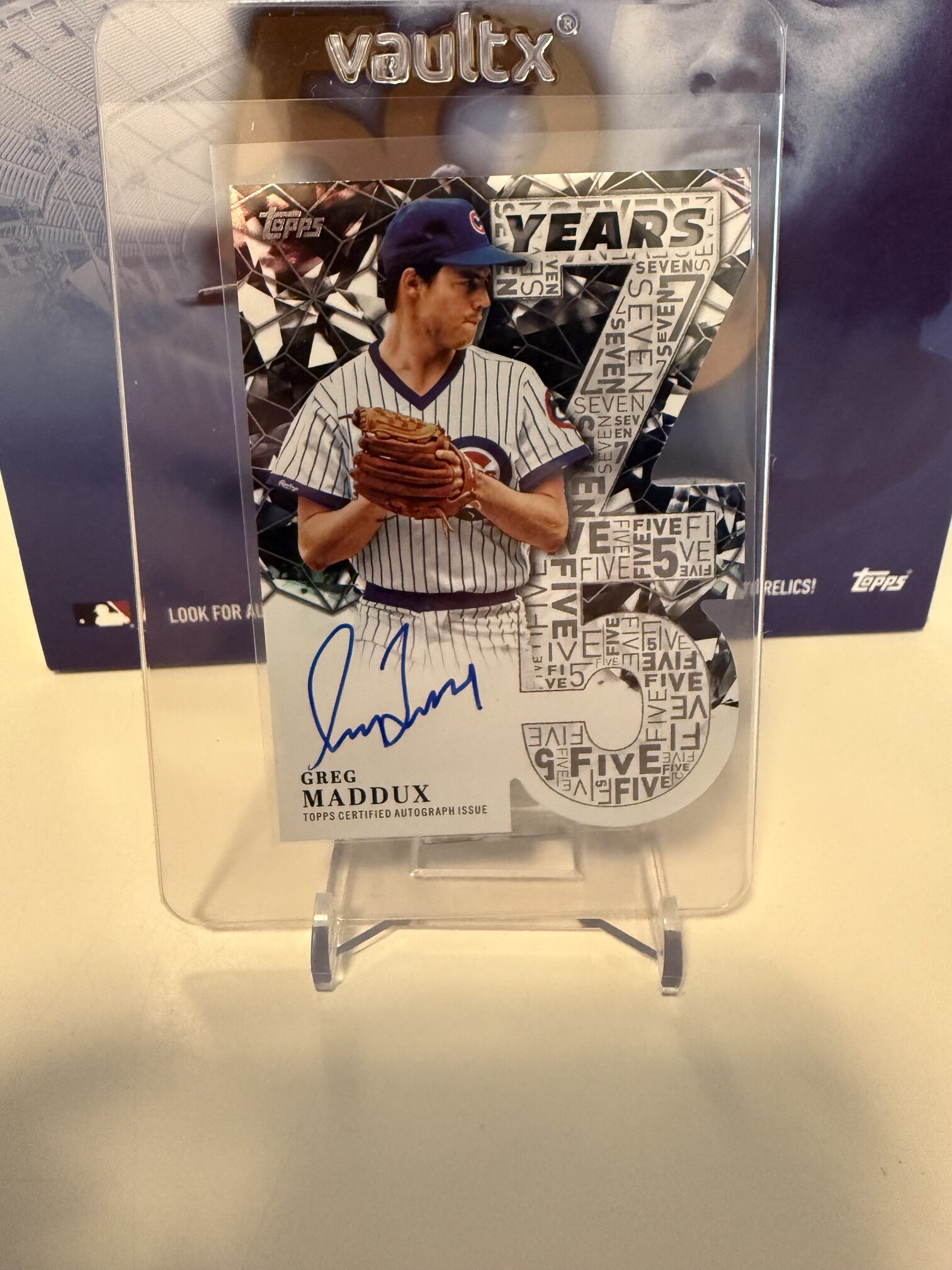
Topps die-cut cards are beautiful, popular, and often highly collectible. But for anyone thinking about sending one to PSA, they also come with a very real problem: the corners.
And not just four corners.
That is the entire issue.
A standard trading card has four corners. A die-cut card can easily have six, seven, eight, or even more points, edges, curves, and cut-out details that all create extra opportunities for damage. Every additional corner is another reason why PSA might decide that the card does not deserve a Gem Mint 10.
That makes die-cut cards exciting to pull, but nerve-racking to grade.
Recently, I bought a Topps MLB retail box and pulled a Greg Maddux die-cut autograph card. Maddux is one of the most respected pitchers in baseball history and is especially associated with the Chicago Cubs and Atlanta Braves. His number has been retired, and many fans consider him one of the greatest pitchers the game has ever seen.
The card itself is stunning.
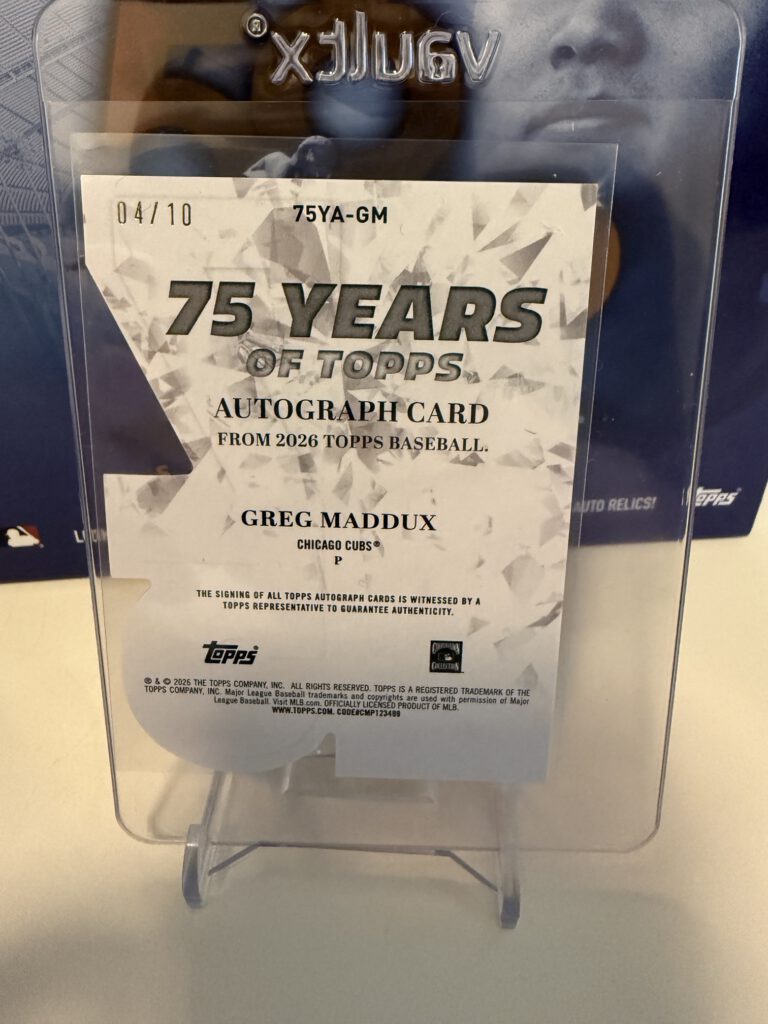
It is numbered 4/10, which immediately makes it special. There are only ten cards of this exact version in the world. For any collector, that is a serious pull.
But then comes the stressful part: the condition.
This Greg Maddux die-cut card has multiple edges, angles, and rounded sections. Depending on how you count them, the card has far more grading-sensitive points than a normal card. The design is gorgeous, but every cut, every point, and every rounded section becomes a potential problem under PSA’s inspection.
That is why die-cut cards are so difficult. They often look amazing in hand, but grading them is another story.
A tiny imperfection on one of those extra corners could be enough to keep the card from receiving a 10. With a normal card, you are worried about four corners. With a die-cut card, you might be worrying about seven or more. That changes everything.
The fact that this card is numbered 4/10 helps a lot. Scarcity matters. A low-numbered Greg Maddux autograph is still a strong collectible, even if the grade does not come back perfect.
But there is another side to the story.
After doing some research on Greg Maddux, it seems that he signs quite a lot for Topps products. That does not make the card bad, of course. Maddux is still a legendary name. But it does mean that his autograph may not be quite as exclusive as I first thought.
In today’s hobby, there are so many parallels and variations. A card numbered to 10 is clearly more desirable than one numbered to 75 or 99, but sometimes the differences between those versions are relatively small. The surface, color, or finish may change only slightly, while the autograph itself remains part of a much larger signing program.
That is the modern card market.
Low-numbered cards are exciting, but collectors also have to ask how unique the card really is. Is it a true standout piece, or one of many similar versions across different Topps releases?
Still, I cannot deny that this Greg Maddux die-cut autograph is a beautiful card. The design is impressive, the numbering is strong, and the player is a Hall of Fame legend. But if I send it to PSA, I will be nervous.
Die-cut cards are simply unforgiving.
They look incredible. Collectors love them. But when it comes to grading, every extra corner becomes another risk.
And that is why Topps die-cut cards are both amazing and terrifying at the same time.
Affiliate disclosure: This post may contain affiliate links. If you buy through these links, I may earn a small commission at no extra cost to you.