
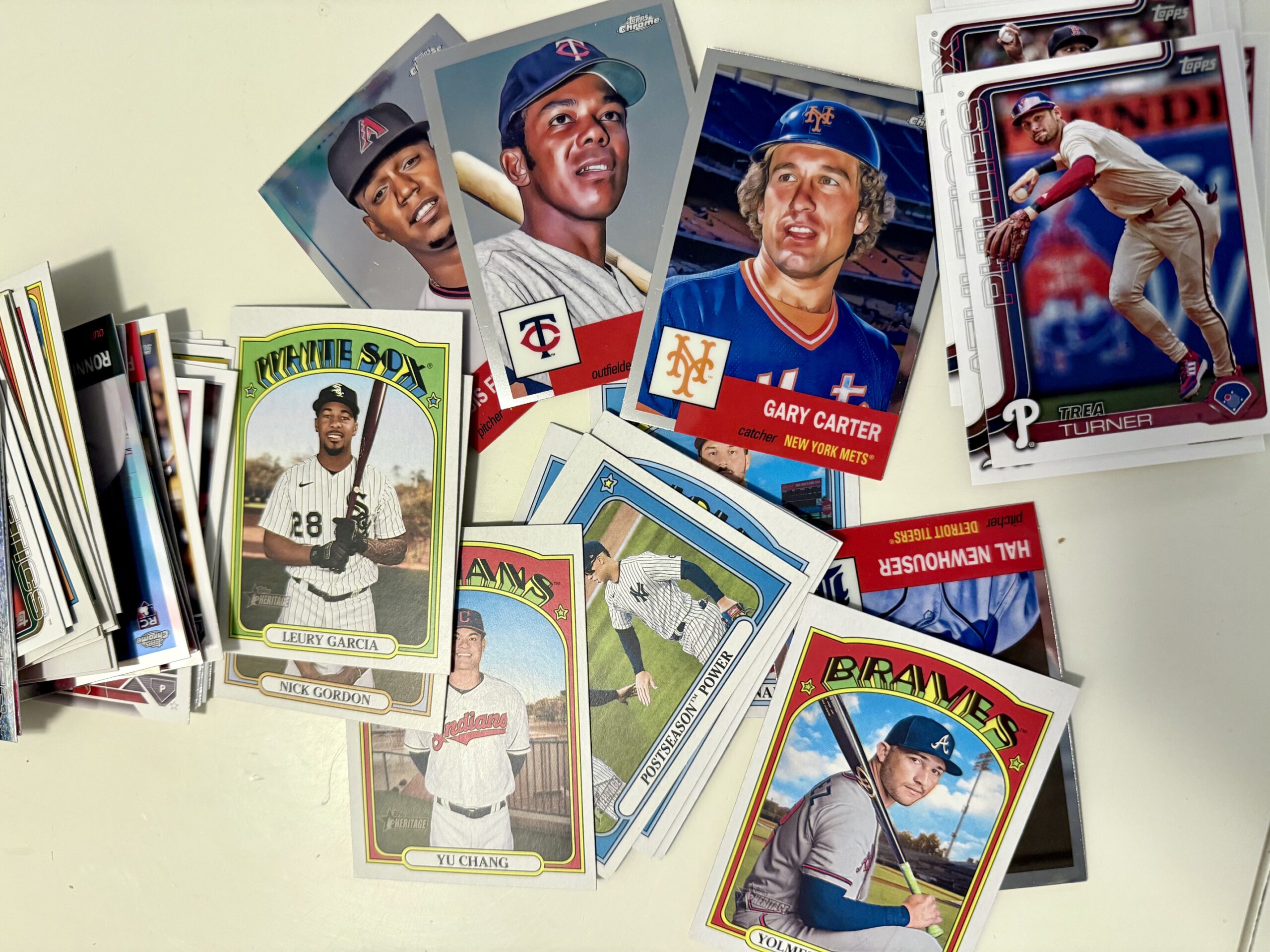
If you collect sports cards, you probably have stacks of base cards sitting around after opening retail boxes, blasters, hanger boxes, fat packs, or hobby products. While base cards may not carry huge value individually, there are still plenty of smart ways collectors use them.
The truth is, there is no single right answer. Base cards may not always have big resale value, but that does not mean they are worthless. Depending on your goals, space, and collecting style, there are several good ways to handle them.
One thing many collectors notice quickly is that lower-end retail products tend to create the biggest piles of base cards. Hanger boxes, fat packs, blasters, and most retail products are especially known for this because they usually contain fewer guaranteed hits, autos, or numbered cards.
Once you move into hobby box territory, manufacturers like Topps and Panini often guarantee autographs, relics, parallels, or other hits, which helps balance out the amount of base cards you get. Hobby boxes also tend to include more numbered cards and lower print-run content, so even if you still pull base cards, the overall box value usually feels stronger for collectors and investors.
Sort and Store Them
One of the easiest options is to organize your base cards by year, set, sport, team, or player. You can also separate rookies, inserts, stars, and Hall of Famers.
This takes time, but it can pay off later. A player who seems unimportant today might break out next season. If you already have your cards sorted, you can quickly go back and find their rookie cards or early releases.
Most long-time collectors eventually reach the point where storage becomes a real issue. Two-row or four-row cardboard storage boxes are usually the best solution and can be found at most local card shops.
Build Complete Sets
Some collectors still love building complete sets. Instead of chasing only autos, parallels, and rare cards, base cards can help you enjoy the hobby in a more traditional way.
You can organize cards numerically and try to complete the full checklist. Once completed, sets can be kept, traded, sold, or donated.
For many collectors, building sets is still one of the most enjoyable parts of the sports card hobby.
Sell Them in Bulk
Base cards can be difficult to sell individually, but bulk lots can still move surprisingly well. Some collectors buy bulk sports cards to build sets, sort by team, or give cards to kids.
Popular options include:
- eBay lots
- Facebook Marketplace
- Local card shows
- Whatnot auctions
- Team sets
- Cheap value boxes at shows
You probably will not get rich selling base cards, but it can help clear space and recover a little money.
Are Graded Base Cards Worth It?
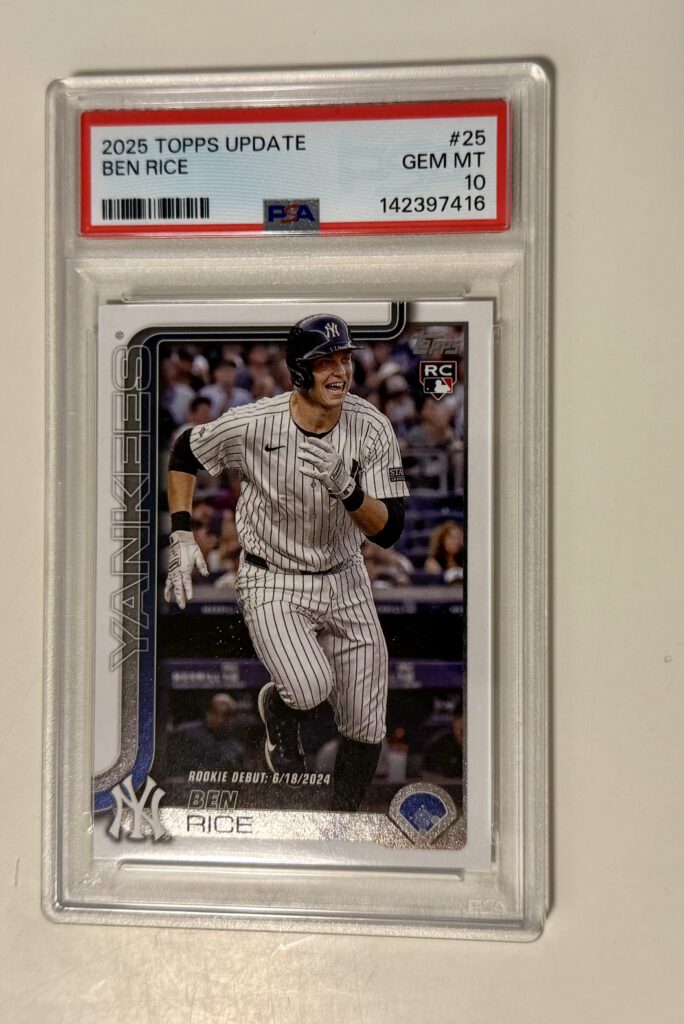
Another debate that has become increasingly popular in the sports card hobby is whether base cards are actually worth grading.
During the boom years of 2020 and 2021, collectors submitted huge numbers of ultra-modern base cards to grading companies like PSA, BGS, and SGC. Today, many collectors look back at that period as the “junk slab era” because of how many high-population PSA 10 base cards now exist.
Critics argue that modern base cards often have limited long-term value, especially when rare inserts, numbered parallels, case hits, and short prints can sometimes be purchased for similar prices.
For example, some collectors would rather own a rare case-hit insert or low-numbered parallel instead of a PSA 10 base rookie card with a population count of 20,000 or more.
However, not everyone agrees.
Others believe graded base cards still play an important role in the hobby because they are affordable, recognizable, and accessible to newer collectors. PSA 10 rookie cards from flagship products like Prizm, Topps Chrome, or Bowman are often considered the “iconic” rookie card for many players.
There is also a strong argument that graded base cards remain useful for:
- beginner collectors
- kids
- player collectors
- lower-budget buyers
- short-term flipping opportunities
In many cases, when a player starts performing well, their PSA 10 base rookie cards are often the first cards to rise because there is more buying and selling activity compared to ultra-rare cards.
While many long-term investors still prefer rare parallels and low-pop cards, graded base cards continue to have a place in the hobby — especially now that grading costs have become cheaper and turnaround times have improved.
Donate Them
One of the best uses for base cards is giving them to people who will actually enjoy them.
Many collectors donate cards to schools, churches, youth programs, Boys & Girls Clubs, YMCA programs, local card shops, or teachers. Kids often do not care whether a card is worth $1 or $100. They care about the player, the design, and the fun of collecting.
A card that feels worthless to one collector can easily become a favorite card for a kid who is just getting started in the hobby.
Make Packs for Kids
A popular idea is to create small packs of 10–20 cards and hand them out on Halloween, at school events, birthday parties, or as stocking stuffers during Christmas.
Collectors who have tried this often say kids absolutely love it. Adding one insert, rookie card, parallel, or star player to each pack makes it even more exciting.
For many people, this is one of the best ways to keep the hobby growing and introduce the next generation to sports card collecting.
Use Them for Crafts
Base cards can also become creative projects. Some collectors use them to decorate frames, cabinets, tabletops, displays, or even entire card rooms.
Others paint on them, use them for custom artwork, or turn them into fun hobby-related decorations.
While not every collector likes altering cards, it can still be a fun way to repurpose large amounts of extra base cards.
Keep the Ones You Like
Not every card needs to be about profit.
Keep your favorite players, teams, photos, rookies, and designs. Base cards are still part of the hobby, and collecting should be fun. Almost every collector has boxes filled with base cards somewhere, even if they mainly chase autos and parallels today.
If you only open packs looking for hits and money, the hobby can start to feel repetitive pretty quickly.
Base cards may not be the most valuable part of a collection, but they still have purpose. You can sort them, store them, sell them, donate them, craft with them, grade them, or give them to kids who may become the next generation of collectors.
The worst option is probably letting them pile up forever without a plan.
So before you throw them away, think about who might enjoy them. What do you do with your base cards? Every collector handles them differently.