
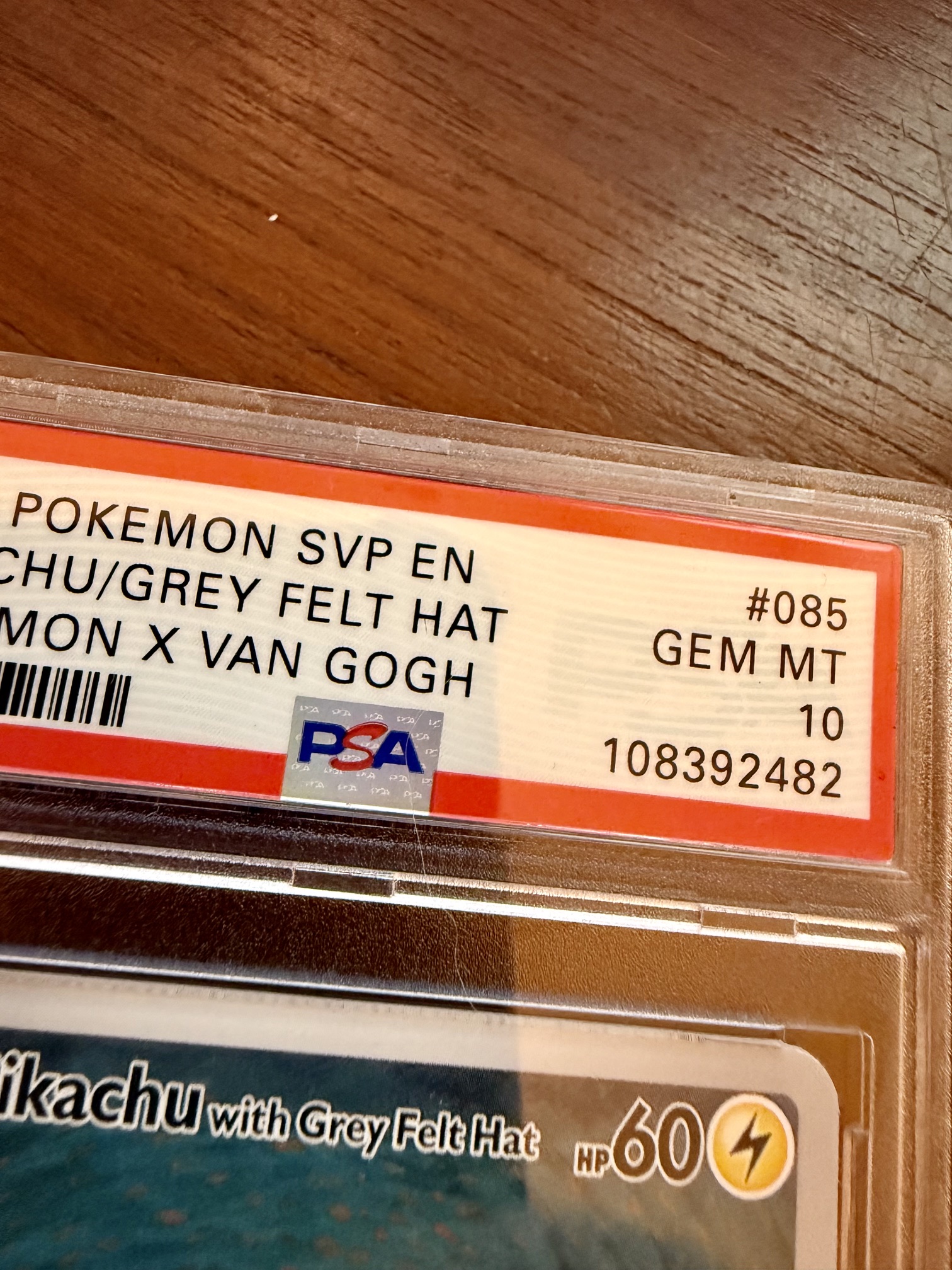
Over the last few years, fake PSA slabs have become much more common across marketplaces, Facebook groups, trade forums, and private sales. A lot of collectors still assume that a PSA slab automatically guarantees authenticity, but after recently inspecting several counterfeit slabs in hand, I no longer think a certification number alone means very much anymore.
Some modern fake PSA slabs look surprisingly convincing in online photos. At first glance, the labels, holograms, certification numbers, and overall slab dimensions can appear very close to authentic PSA holders. But once I handled several fake slabs in person, a lot of small problems immediately started standing out.
One of the fake slabs I inspected happened to contain a modern Pokémon promo card, but the issues I noticed would apply just as much to sports cards, vintage rookies, or any other graded card category.
The Card Movement Immediately Felt Wrong
The first thing I noticed was how loose the cards felt inside the holder. Authentic PSA slabs are usually sealed tightly and the card barely moves at all. These fake slabs felt completely different. The cards shifted around slightly inside the case whenever the slab was tilted, which immediately made them feel less secure and less professionally assembled.
The Slab Quality Looked Poorly Sealed
The slab quality itself also felt wrong almost immediately. One case already showed slight separation near one of the corners without any real pressure being applied. The plastic seams looked rougher than authentic PSA slabs I own, and there were visible imperfections along parts of the sealing edges. I also noticed uneven plastic edges and small traces of residue that looked suspicious under close inspection.
At that point, the slabs already felt questionable before I even focused closely on the labels.
Once I compared the labels side by side with authentic PSA slabs, the differences became much easier to spot.
The print quality on several fake labels looked softer and less refined in person than they appeared in marketplace photos. Some of the text looked slightly blurry or almost double printed, especially under direct light. The font spacing also looked inconsistent compared to genuine PSA labels. Certain letters appeared slightly too thick while other areas looked compressed or uneven.
The PSA Logo and Barcode Were Major Red Flags
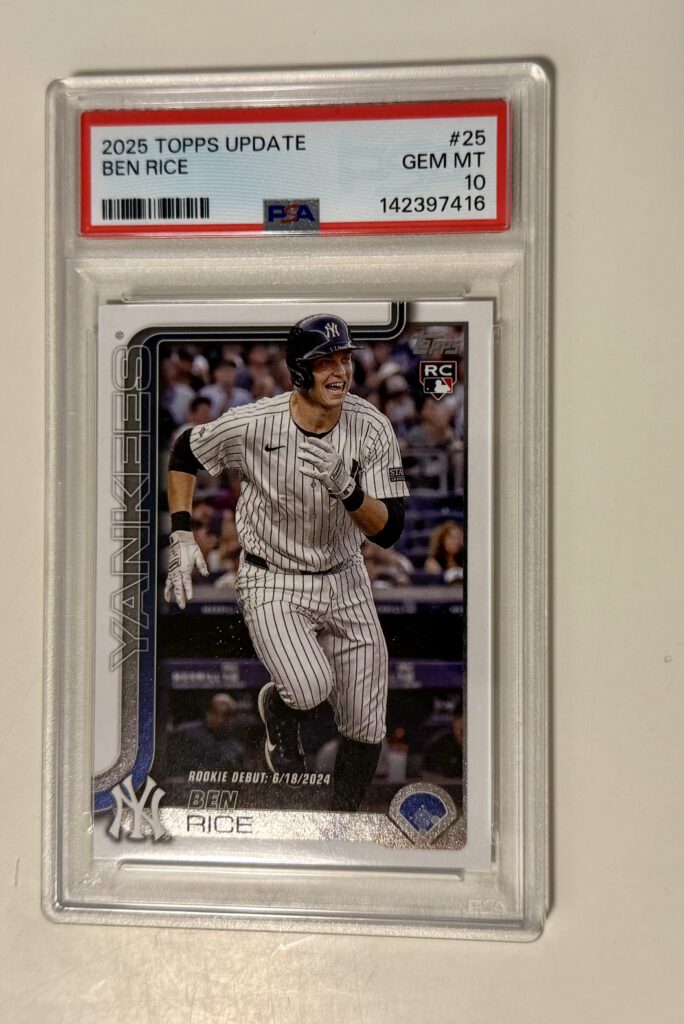
The PSA logo itself was another major giveaway. Authentic PSA labels usually look extremely clean, sharp, and professionally printed in person. Many fake slabs, however, start to feel slightly off once viewed closely under proper lighting.
On several counterfeit slabs, the PSA logo appeared flatter, overly glossy, and less refined compared to authentic PSA labels. Genuine PSA labels usually show cleaner metallic depth, sharper reflective detail, and a more balanced finish when viewed in hand. On the fake slabs, the logo looked flatter and duller overall. The silver areas looked more gray than metallic and lacked the cleaner contrast visible on authentic slabs.
Another detail that immediately stood out was the barcode quality. The barcode printing looked weaker and thinner than on genuine PSA slabs. Even more suspicious, two different fake slabs I inspected appeared to use nearly identical barcode layouts despite containing completely different cards. That alone was a huge red flag.
What makes modern counterfeit PSA slabs much more dangerous today is that many of them now use real PSA certification numbers copied from authentic graded cards. In some cases, the certification lookup itself may still lead to a legitimate PSA entry online, which creates a false sense of security for buyers who only verify the cert number.
Some Fake Slabs Still Contain Real Cards
One thing that surprised me was that some of the cards inside the fake slabs actually appeared to be authentic cards. The holders themselves were fake, but the cards inside looked real, just in noticeably worse condition than the assigned grades would realistically suggest. After inspecting them more closely, there were visible surface problems, edge wear, and handling damage that did not match the grades shown on the labels at all.
That was probably the biggest takeaway after handling these fake slabs in person. Counterfeit PSA holders do not always contain counterfeit cards. Sometimes authentic lower condition cards are placed into fake slabs because it makes the overall presentation look far more believable to inexperienced buyers.
UV light inspection also revealed additional issues. Authentic PSA labels usually show much cleaner hidden security details and sharper UV patterns under blacklight. On the fake slabs, some of the hidden details looked blurry, overly bright, slightly misaligned, or poorly printed compared to authentic PSA examples.
Fake PSA Slabs Usually Fail Through Small Details
What stood out most to me after inspecting these slabs is that fake PSA holders rarely fail because of one single massive mistake. Instead, it is usually a combination of smaller inconsistencies that slowly starts making the slab feel wrong overall.
The card moves too much. The label looks soft. The PSA logo lacks depth. The barcode quality looks weak. The slab edges feel rough. The UV details appear messy. Individually, some collectors might overlook those issues. Together, they become much harder to ignore.
Counterfeit PSA slabs are improving every year, and some are already convincing enough to fool inexperienced buyers in online listing photos. That is why I would never rely on a PSA certification lookup alone anymore.
If possible, always compare suspicious slabs side by side with authentic PSA examples. In many cases, the differences become obvious surprisingly quickly once you inspect them carefully in person.