
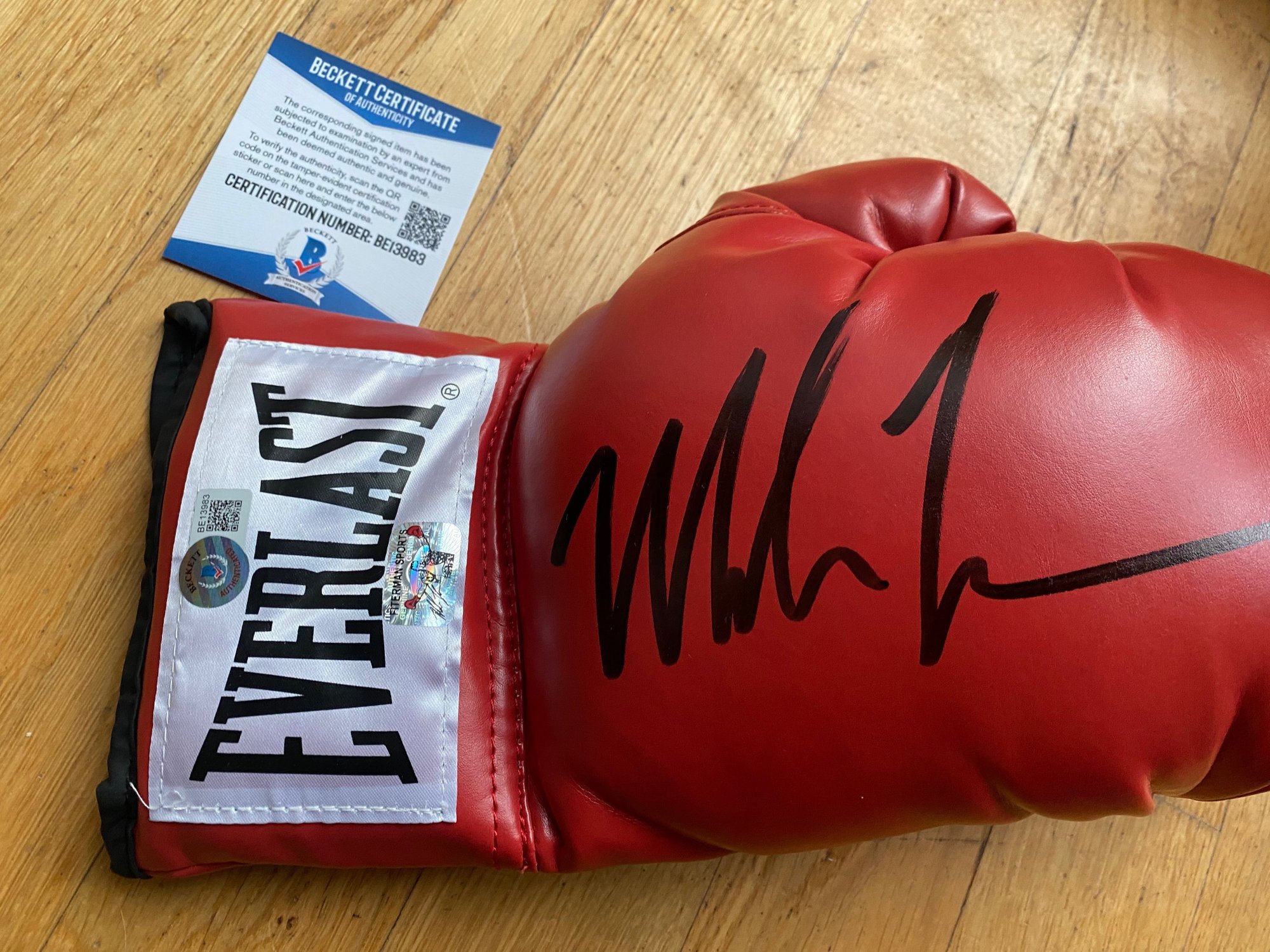
If you are buying signed sports memorabilia, the authentication behind the autograph matters just as much as the signature itself. A trusted authentication service can dramatically increase buyer confidence, resale value, and long-term collectibility. In today’s market, the three names collectors encounter most often are PSA/DNA, Beckett Authentication Services (BAS), and James Spence Authentication (JSA).
All three companies are respected throughout the hobby. All three use expert analysis, tamper-evident labels, and online verification systems. And all three have authenticated millions of autographs across sports, entertainment, and historical memorabilia.
Despite their similarities, they are not viewed exactly the same by collectors. Each company has developed its own reputation, strengths, and market perception over the years.
PSA/DNA: The Industry Benchmark
PSA/DNA is widely considered the most recognized autograph authentication brand in the hobby. PSA itself dominates the graded card market, and that brand recognition carries over heavily into signed memorabilia as well.
PSA/DNA uses a multi-step authentication process that includes autograph structure analysis, handwriting comparison, exemplar matching, ink examination, and advanced forensic tools such as Video Spectral Comparator technology. Every autograph is reviewed by multiple authenticators before a final decision is made.
One of PSA/DNA’s most unique security features is its tamper-evident holographic label containing a synthetic DNA marker. According to PSA, the odds of randomly replicating the specific DNA sequence embedded into their labels are astronomically low.
Each authenticated item receives a unique certification number permanently stored in PSA’s online database. Older PSA/DNA items may include physical certification cards, while newer submissions primarily rely on digital COA verification tied directly to the cert number.
Among collectors, PSA/DNA often carries the strongest secondary-market confidence. High-end collectors, auction houses, and investors frequently view PSA/DNA as the hobby standard, especially for premium memorabilia and investment-grade items.
Beckett Authentication Services
Beckett Authentication Services has built an extremely strong reputation over the past decade and remains one of the most respected authentication companies in the industry.
Backed by the long history of Beckett Media, BAS combines autograph authentication with Beckett’s established presence in trading cards and grading.
Their authentication process includes handwriting analysis, exemplar comparison, microscopic inspection, forensic evaluation, and advanced imaging technology. Beckett-authenticated items receive a tamper-evident certification sticker and can be verified instantly through Beckett’s online database.
One reason many collectors prefer Beckett is presentation. A large portion of the hobby community likes the look and feel of Beckett slabs and encapsulation over PSA’s design. Beckett also offers combined card grading and autograph authentication services within the same holder.
Experienced collectors often describe BAS as highly accurate and consistent. Many longtime submitters report positive experiences with Beckett over many years of authentication submissions.
JSA: Deep Expertise and Collector Trust
James Spence Authentication, commonly known as JSA, is one of the hobby’s most trusted autograph authentication companies.
Founded by longtime autograph expert James Spence Jr., JSA built its reputation through decades of hands-on autograph authentication work for major dealers and auction houses.
JSA authenticators examine signature flow, pressure patterns, ink characteristics, historical exemplars, and handwriting consistency. JSA is especially respected for difficult vintage signatures and high-profile celebrity autographs.
Unlike PSA and Beckett, JSA traditionally focused more heavily on authentication itself rather than slabbed encapsulation. Many collectors still view JSA as one of the strongest pure autograph authentication services in the hobby.
JSA-certified items feature tamper-evident holograms and online cert verification through their database.
Witnessed vs Authenticated Autographs
One important distinction many newer collectors overlook is the difference between witnessed and authenticated autographs.
A witnessed autograph means a representative from PSA/DNA, Beckett, or JSA physically observed the item being signed in person. Because of this, witnessed autographs generally carry a higher level of confidence than signatures authenticated years later through handwriting analysis alone.
Many experienced collectors actually prioritize witnessed signatures over traditional authentication regardless of the company involved.
Traditional authentication is still highly respected, but collectors understand that autograph authentication is ultimately based on expert opinion, comparison analysis, and probability rather than absolute certainty.
This is one reason witnessed authentication programs have become increasingly important in the modern memorabilia market.
No Authentication Company Is Perfect
Even the best authentication companies are not infallible.
Autograph authentication remains partly subjective because signatures naturally change over time. Athletes and celebrities may sign differently depending on age, signing conditions, speed, or even mood.
Many experienced collectors acknowledge that authentic autographs can sometimes fail authentication, forged autographs can occasionally pass, and disagreements between experts do happen.
This is why reputable authentication companies rely on teams of experts rather than a single opinion.
Collectors should also understand that authentication itself has become a target for counterfeiters.
Fake COAs and Counterfeit Authentication Are Increasing
Modern counterfeiters are no longer only faking autographs. They are now replicating fake holograms, copied certification numbers, cloned QR codes, counterfeit PSA slabs, forged letters of authenticity, and fake tamper-evident stickers.
Some fake memorabilia even uses legitimate certification numbers copied from authentic items.
Because of this, buyers should always verify cert numbers directly on official databases, compare label quality carefully, inspect holograms closely, and compare signatures with known authentic examples.
If a deal appears dramatically below market value, collectors should proceed carefully.
Which Authentication Service Is Best?
The honest answer is that PSA/DNA, Beckett, and JSA are all legitimate and highly respected authentication companies.
For many collectors, PSA/DNA carries the strongest overall market premium because of its broader market recognition and dominance within the collectibles industry. Beckett offers excellent modern authentication combined with highly popular slab aesthetics. JSA remains one of the hobby’s most trusted autograph specialists and continues to hold enormous respect among longtime collectors.
In real-world collector circles, personal preference often plays a major role.
Some collectors strongly prefer Beckett because of positive long-term submission experiences. Others gravitate toward PSA/DNA because of stronger resale confidence and wider recognition from buyers and auction houses. Many autograph specialists continue to trust JSA for difficult or vintage signatures.
At the highest level, all three companies add substantial legitimacy and long-term value to signed memorabilia.
Why Smaller Memorabilia Companies Often Use PSA, JSA, or Beckett
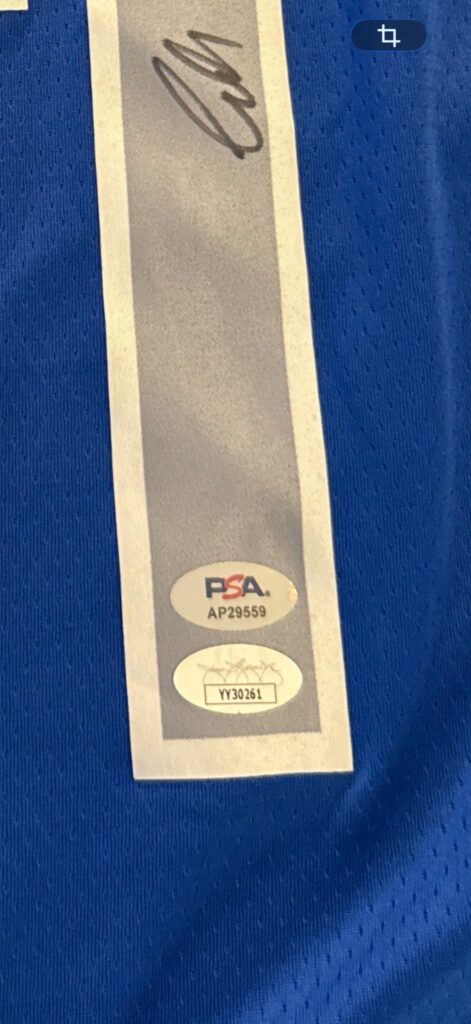
As you can see in the image above, many smaller memorabilia companies rely heavily on larger authentication houses such as PSA/DNA, JSA, or Beckett to increase buyer confidence and long-term market credibility.
Because of this, it is very common to see memorabilia that comes with both the original company COA and an additional authentication from one of the major industry authenticators. The larger authentication company essentially acts as an added layer of trust for collectors and buyers.
Similar developments have happened with companies like Tristar, which spent years as the exclusive memorabilia partner for Tom Brady and his signed collectibles.
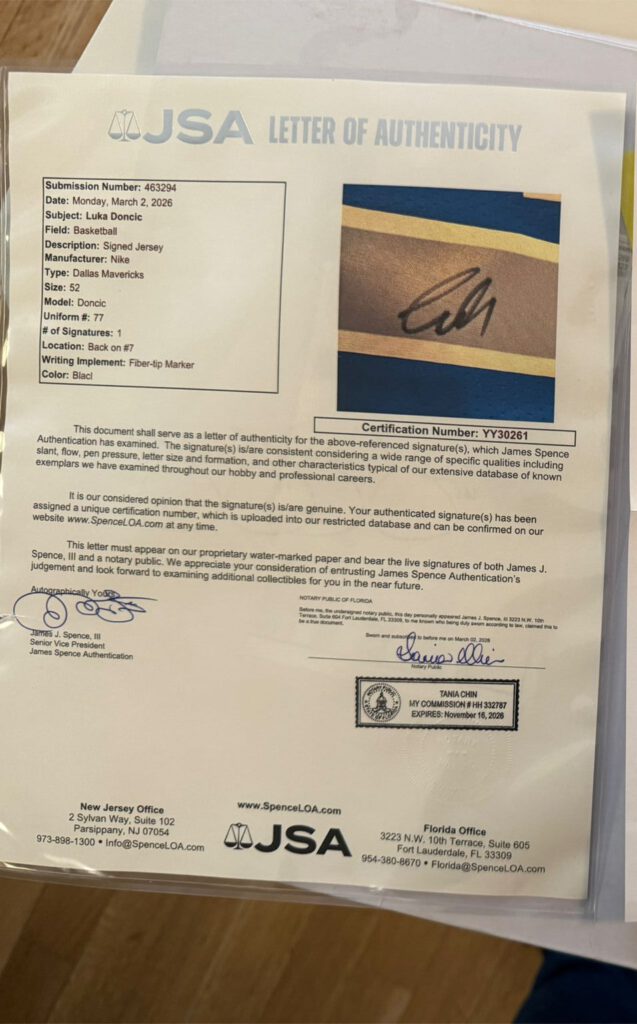
Last year, I purchased a Dallas Mavericks Nike Swingman jersey that came with both a PSA and JSA COA. The original JSA Letter of Authenticity was missing, so I paid around 60 USD to have a replacement LOA issued.
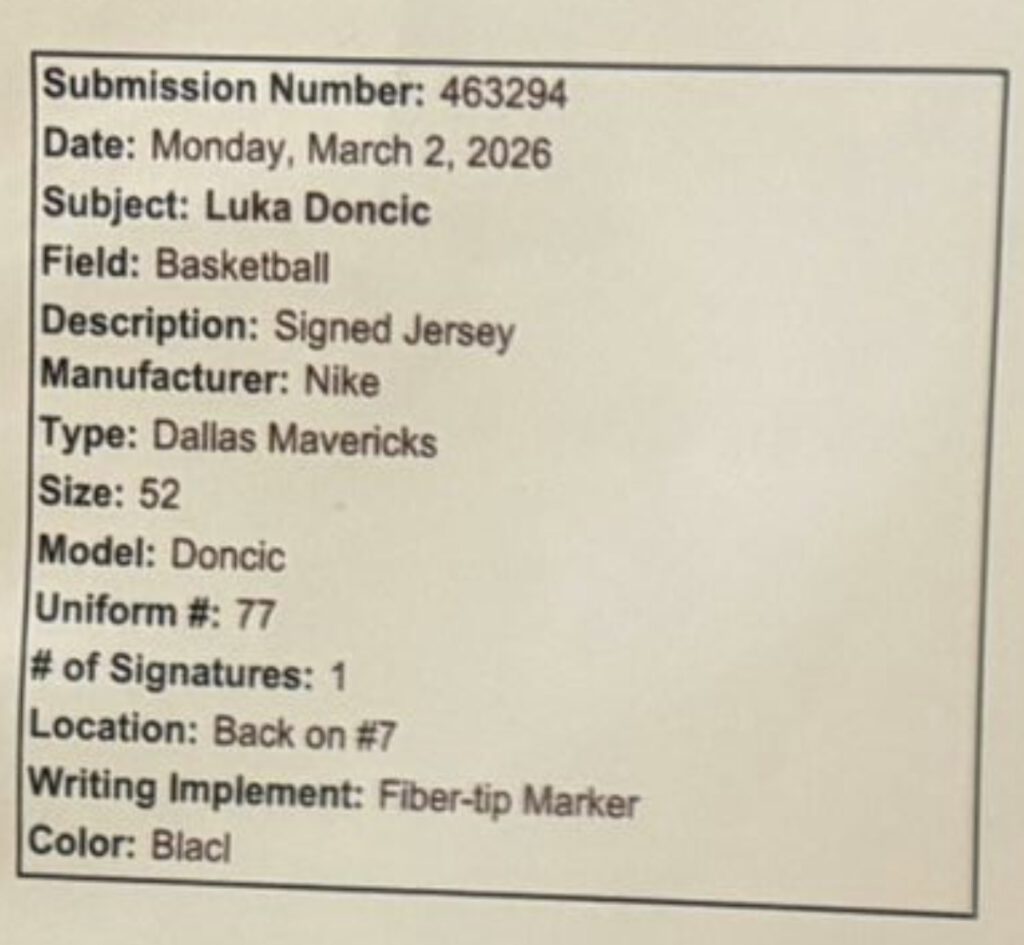
Interestingly, the replacement letter also showed that even the biggest authentication companies are not immune to mistakes. Instead of listing the autograph ink color as “black,” the LOA actually misspelled it as “blacl.”
Small details like this are a good reminder that authentication companies are still operated by humans. Even the most respected authenticators in the hobby can occasionally make clerical errors despite their strong overall reputation and expertise.
This essay is part of Sports Memorabilia: The Ultimate Guide.