
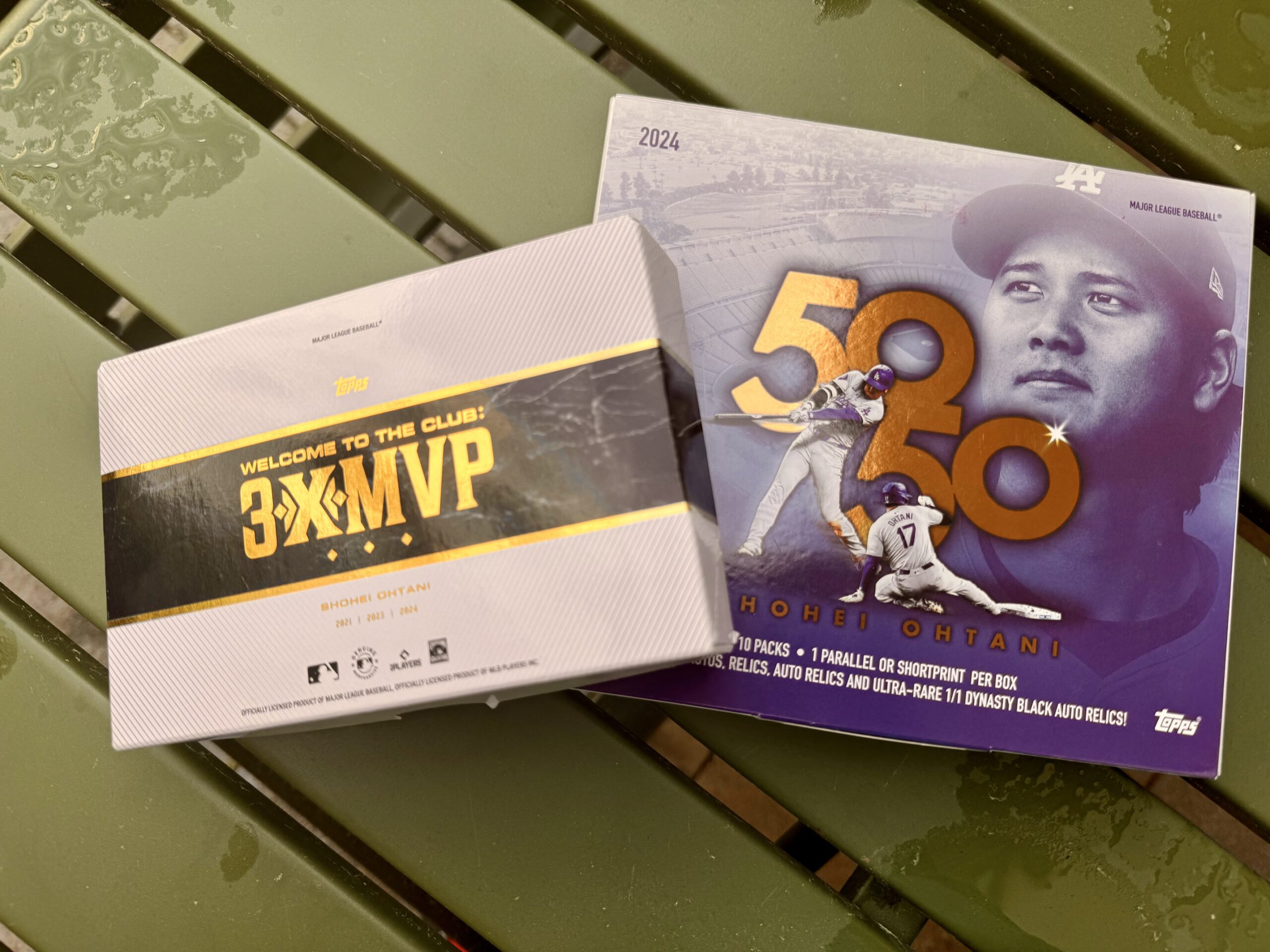
Exclusive autograph deals with names like LeBron James and Shohei Ohtani have changed the feeling around modern sports card products.
Not everything, of course. You can still collect cheap cards. You can still build sets, collect teams, buy vintage, search dollar boxes, chase weird inserts, whatever. The hobby is still big enough for all of that.
But the loudest part of the hobby is somewhere else now.
YouTube, Whatnot, Instagram, Reddit, Facebook — what gets attention there? Big boxes. Big hits. Low-numbered cards. Superfractors. Exclusive autographs. People screaming because a LeBron, Ohtani, or Wembanyama card just came out of a product most normal collectors will never open in volume.
That is where the pay-to-play feeling starts. The card is visible to everyone. The product is marketed to everyone. The chase is talked about everywhere. But the real access is often expensive.
The Deals Are Not the Main Problem
I do not blame Topps or Fanatics for wanting LeBron or Ohtani. LeBron sells attention. Ohtani sells attention. Wembanyama sells attention. If a company can put those names into a product, collectors will talk about it. Breakers will sell spots. Shops will move boxes. Clips will spread.
The problem comes later, when the best names mostly sit inside expensive products. Then the casual collector can still watch the chase, still talk about the chase, still buy a few packs, but he is not really playing the same game as someone opening thousands of dollars of product.
A kid with a blaster is technically in the same hobby. But not really. Not when the biggest hits are being chased by people ripping cases.
Breakers and the “Better Boxes” Theory
Collectors love saying breakers get better boxes. You see breakers hit monsters all the time. Huge autos, superfractors, low-numbered parallels, Ohtani, LeBron, Wemby, whatever the chase name is that week.
But I do not think the secret “breaker boxes” theory is the main explanation. Breakers open absurd volume. That alone changes everything.
If I open two boxes and a breaker opens two hundred, who is more likely to show a huge hit online? Exactly. And then the hit becomes a clip, the clip becomes proof, and suddenly people say: see, breakers always hit.
Also, YouTube is not real life. Or at least not the full version of it.
A YouTube video is edited. Cut down. Built around the reaction. Built around the thumbnail. Nobody wants to watch every boring autograph, every stack of base, every dead box that paid for nothing.
Live breaks are more transparent, yes. But even there, you have to ask: how many boxes are being opened? How many spots missed? How much money went in before the big card came out?
That part is not as fun, so it disappears from memory.
I Have Hit Cards Too
This is why I am careful with the breaker argument. I am not a breaker. I do not open cases every week. I do not have a warehouse of boxes behind me. Still, I have hit some nice cards.
I bought three boxes of Topps Series 2 2025 and pulled a Nick Kurtz card that I would call a real case-hit type pull. I also pulled my Greg Maddux die-cut autograph after buying two hobby boxes from a German retailer.
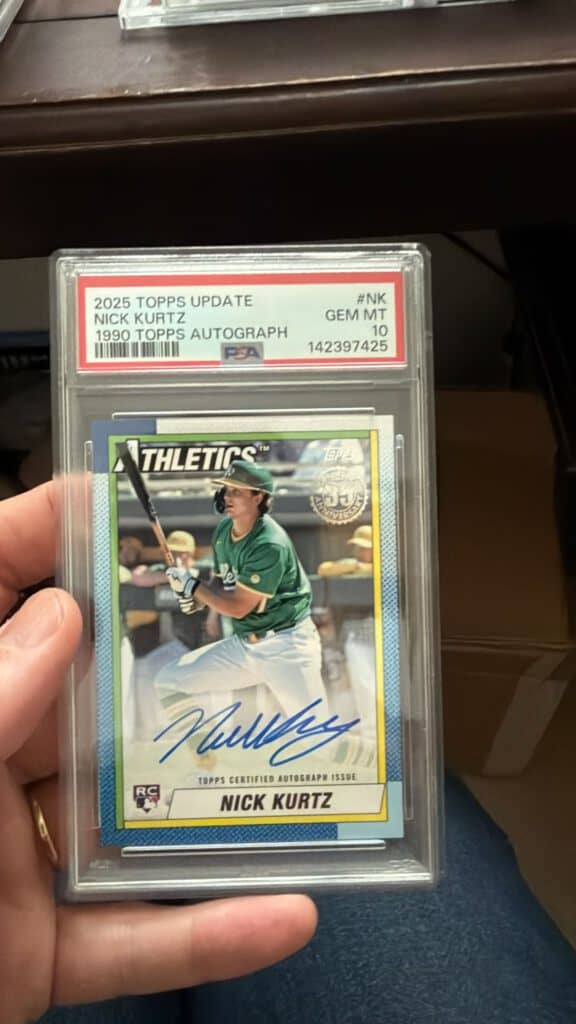
Then there was the Ben Rice card. I graded it with PSA, it came back PSA 9, and I sold it for $140 through Pristine.
So what does that prove? Honestly, not much.
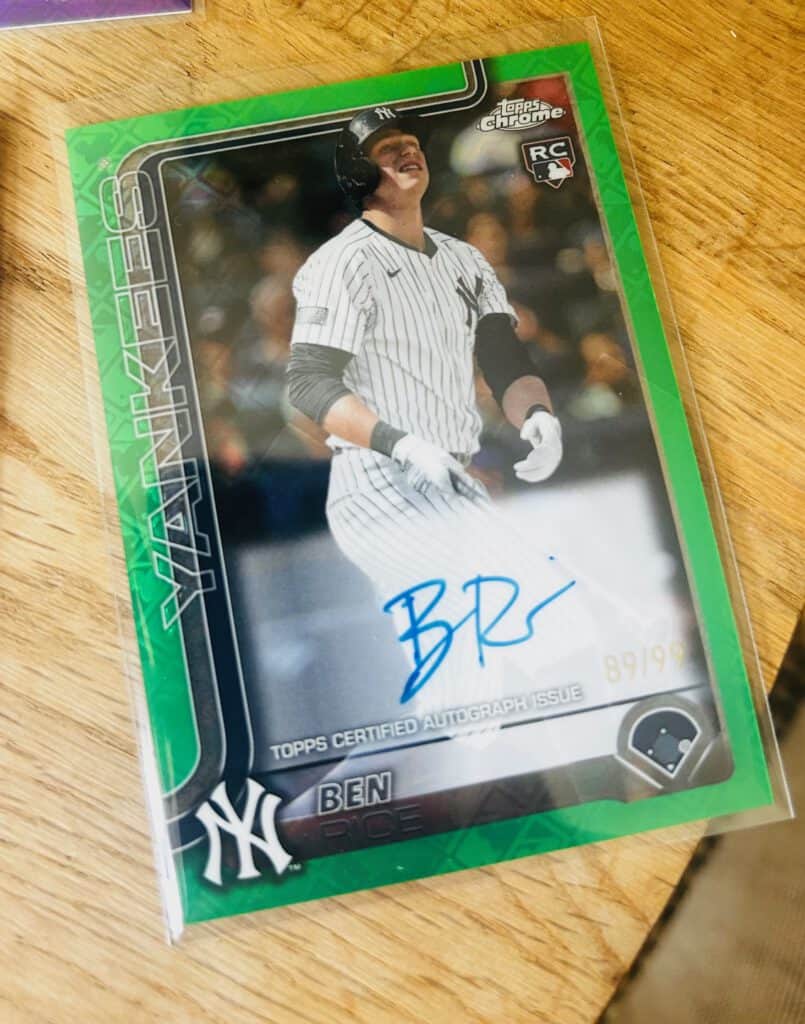
I got lucky. Someone else could buy the same amount and get nothing. A breaker could open fifty boxes before hitting something really strong. That does not prove the breaker was favored. It proves ripping is random and ugly and exciting and stupid all at the same time.
And yes, once you hit something yourself, the chase gets more believable. That is also part of the trap.I opened the Shohei Ohtani 50/50 box and the 3x MVP box shown in the photos. Both were good to me. The Ohtani 50/50 box had an Ohtani Super Short Print. The 3x MVP box had a Barry Sanders numbered hit and an Ohtani numbered card out of 150.
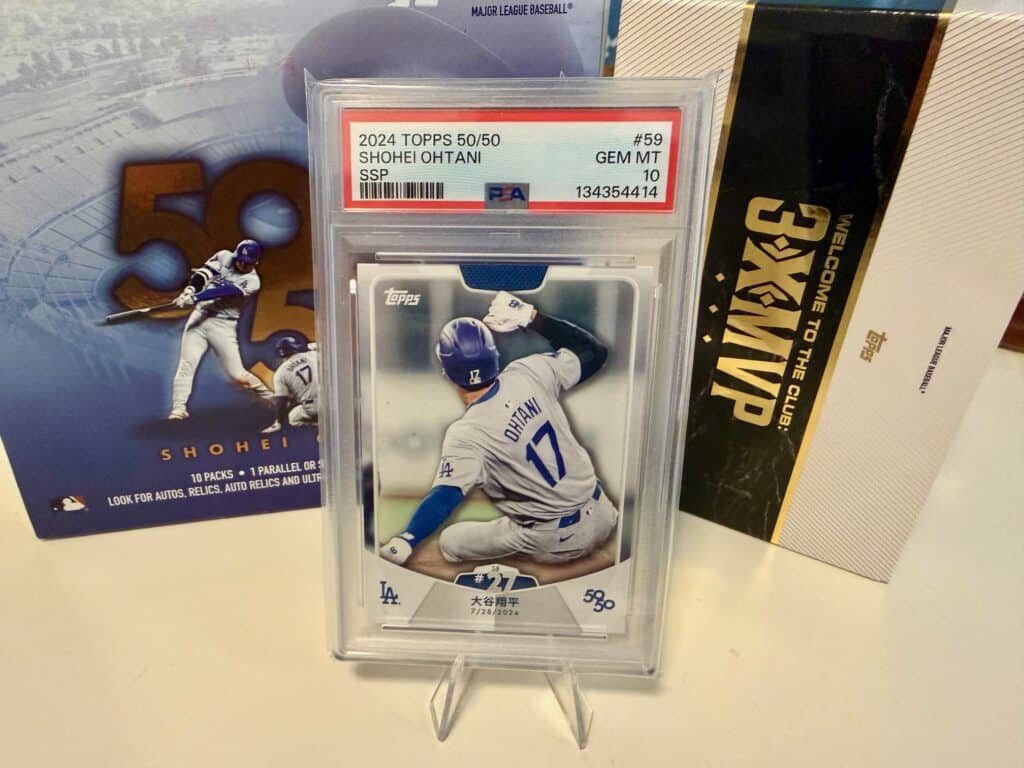
Those boxes more or less paid for themselves.
The Box Matters More Than People Admit
A lot of collectors talk about hits without talking enough about product structure.
A hanger can hit. A blaster can hit. We all know that. People post those hits every day.
But most retail is entertainment first. Rip a few packs, have fun, maybe hit something. Nothing wrong with that. But expecting the same experience as a jumbo box or a premium hobby product is asking for disappointment.
If I am actually chasing autographs or bigger cards, I would rather know what I am buying into. Hobby. Jumbo. Products with clearer hit structures. Products where the checklist makes sense.
Still no guarantee.
A guaranteed autograph can be terrible. A numbered card can be worthless. A good-looking parallel can have no buyers. A big name on the checklist does not mean your box will care.
That is what people forget when they only look at the monster hits.
The Casual Collector Gets the Trailer
The casual collector sees the dream version.
He sees the LeBron autograph. The Ohtani chase. The Wemby pull. The breaker screaming. The chat exploding. The clip getting shared.
Then he buys a few packs. Base cards. Inserts. Maybe a parallel. Maybe something decent. Maybe nothing. Was he cheated? No. But he watched the movie trailer and then bought a lottery ticket.
The product line contains the big cards. So technically the dream is real. But how reachable is it for someone buying one or two boxes? That is the part nobody wants to put in the marketing.
The gap was always there. It just feels bigger now because the boxes are more expensive, the athletes are more exclusive, and the content machine is louder.
Whatnot Makes Everything Louder
Whatnot did not create this, but it makes it faster.
Breaks are built for energy. Spots sell, teams get assigned, boxes open, chat reacts, breaker keeps talking, music maybe, shouting maybe, pressure always. When a huge card comes out, it feels massive.
But the format makes the hobby feel hotter than it might be for the average collector sitting at home with two boxes on the table. The misses are spread out across buyers. The big hit becomes the story. The weak spots disappear into the background.
The Hobby Is Splitting
The hobby is not dead. Not even close.
You can still collect cheaply. Dollar boxes. Raw cards. Team lots. Vintage. Signed photos. Sticker albums. Oddball stuff. Lower-end rookies. There is plenty of hobby left outside the premium chase.
The attention goes to premium products, giant hits, exclusive autographs, breakers, and cards that look good in a thumbnail. That creates two different hobbies living next to each other. One is collecting. One is chasing. Sometimes they overlap. Sometimes they barely feel related.
So What Now?
I still buy boxes. So I am not going to sit here and pretend I am above it. I like the rip. I like the chance. I like opening a box and thinking maybe something stupid is hiding in there. I also know that is not a rational investment process most of the time.
I do not think breakers are secretly handed magic boxes. I do not think Topps or Fanatics are wrong for signing big athletes. I do think the best chase cards are moving further behind expensive access, and that changes the hobby.
Not for everyone. But for enough collectors that it is worth saying. The chase is still fun. It is just more expensive now.