
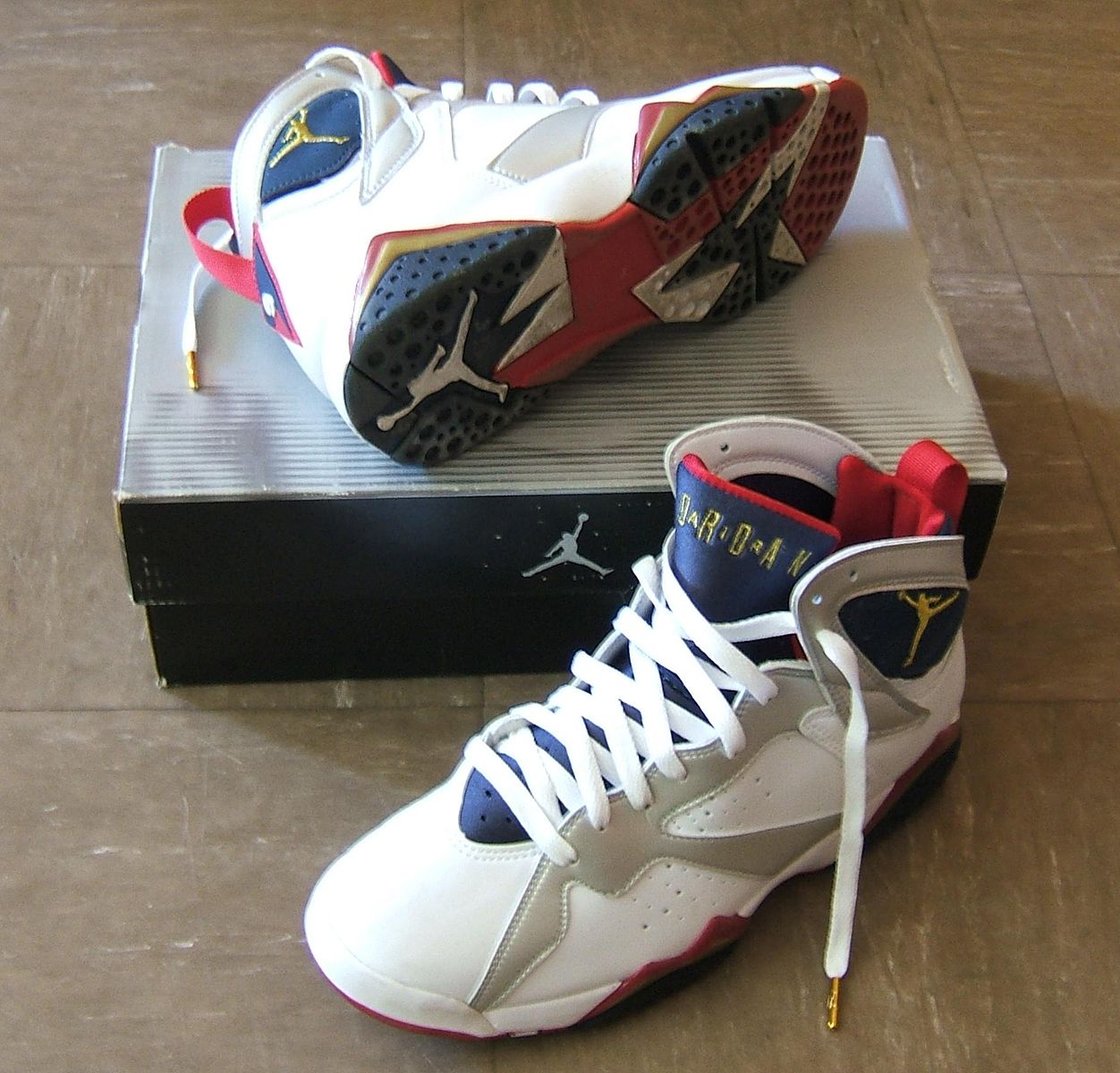
The Air Jordan 7 is not just another retro sneaker. It was a shoe Michael Jordan actually wore during one of the most important stretches of his career. Jordan played in the Air Jordan 7 during the 1991–92 NBA season, won his second straight championship with the Chicago Bulls, and also wore the model during the 1992 Summer Olympics in Barcelona.
A lot of sneakers today are treated mainly as fashion items. People wear them casually, collect them, display them, or keep them deadstock in the box. But the Air Jordan 7 started as a real basketball performance shoe. It was built for the court, not just for outfits.
The Air Jordan 7 Was a Real NBA Shoe
Designed by Tinker Hatfield, the Air Jordan 7 debuted when Michael Jordan was already at the top of basketball. This was not an early experiment from the Jordan line. The Bulls were becoming a dynasty, Jordan was the face of the league, and the Air Jordan brand was no longer just a shoe line. It was already becoming part of basketball culture.
The AJ7 had a very recognizable look. It featured a higher cut, a bold tongue design, a distinctive heel tab, and a shape that still stands out today. It also moved away from some of the visible Nike branding that earlier Jordan models had used, which helped push the Air Jordan line further into its own identity.
That gives the AJ7 a very specific place in Jordan history: the second championship season and the Dream Team summer.
From Performance Shoe to Fashion Sneaker
What I find interesting is how differently people look at shoes like the Air Jordan 7 today. In 1992, this was a basketball shoe. Michael Jordan actually played in it. It was designed for professional competition and serious court use.
Today, most people would not really think about playing competitive basketball in an Air Jordan 7. The shoe can still be worn, of course. You can move in it, shoot around, and use it casually. But compared with modern basketball shoes, the technology is old. Cushioning, traction, materials, lockdown, and ankle support have all moved on.
That does not make the AJ7 a bad shoe. It just means it belongs to a different era. You probably would not want to run a marathon in it either, but that was never the point. The point is that a shoe once designed for Michael Jordan’s NBA career has become a fashion and collector item decades later.
The Olympic Connection
The Olympic connection makes the Air Jordan 7 more interesting. Jordan wore a version of the AJ7 during the 1992 Summer Olympics in Barcelona, where the Dream Team became one of the most famous teams in sports history. That team changed basketball globally, and Jordan was right at the center of it.
Because of that, Olympic-themed Air Jordan 7 releases have a different meaning than many normal colorways. They connect the sneaker to one of the biggest basketball moments of the 1990s.
What Makes the Air Jordan 7 Collectible?
The AJ7 is tied to Michael Jordan’s playing career, a championship season, the 1992 Olympics, Tinker Hatfield, and a design that still looks different from many other Jordan models.
Original 1992 pairs, especially in strong condition, are the most historically interesting. Retro releases are more accessible and easier to wear. Limited editions, collaborations, player exclusives, and signed pairs can move into much higher price ranges depending on condition, rarity, and authentication.
A Signed Olympic AJ7 at Auction
A signed AJ 7, worn during the 1992 Olympic Games, was offered at auction by Christie’s in December 2022. However, it remained below its price estimate. The pair realised USD 18,900 against an estimate of USD 20,000 to USD 26,000.
It is also interesting that JSA authenticated the signature. For years, Upper Deck has effectively dominated the market when it comes to authentic signatures. Recently, however, certifiers such as GOAT Authentics have been gaining traction. These are collectors who specialise in a small number of athletes, in this case Wayne Gretzky, Tom Brady and, of course, Michael Jordan, and claim to have identified many autographs over the years that come with a COA. They form their own assessment and have therefore introduced their own COA. This is increasingly being accepted by the market. Pristine Auction, for example, works with GOAT.
But collectors should still be careful. Not every Air Jordan 7 is automatically valuable. A common retro pair is not the same as an original 1992 release. A worn pair is not the same as deadstock. A signed pair without strong authentication is risky. And a game-worn or player-issued pair would be in a completely different category from a normal retail sneaker.
A common AJ7 retro can still be mostly fashion. An original 1992 pair, an Olympic version, a signed pair with strong authentication, or anything connected to actual game use is a different discussion.