
When people think about valuable trading cards, they usually think about Mickey Mantle, Babe Ruth, Michael Jordan, or the T206 Honus Wagner. That makes sense. Those are the names that make headlines when cards sell for huge money.
But there is another older part of the card market that is easy to overlook: cigarette cards, tobacco cards, coffee cards, soup cards, and other early promotional cards. In German, many of these are often called Zigarettenbilder, even though they were not only included in cigarette packs. Some cards came with coffee, some with food products, and some were distributed through vending machines or promotional programs. That makes the category more complicated than the name suggests.
Why Cigarette Cards Existed
Cigarette cards were originally included in cigarette packs for two reasons. First, they made the product more interesting. A buyer did not only get cigarettes, but also a small collectible picture card. That created a reason to buy again and complete a set.
Second, the cards helped make the cigarette packs more stable. That sounds strange today, but the small cards gave the packaging more structure and protection. Over time, these cards became collectibles in their own right. Collectors saved them, sorted them, pasted them into albums, traded them, and built complete sets around sports, military history, animals, landmarks, film stars, flowers, famous people, or major events.
Not Everything Was a Cigarette Card
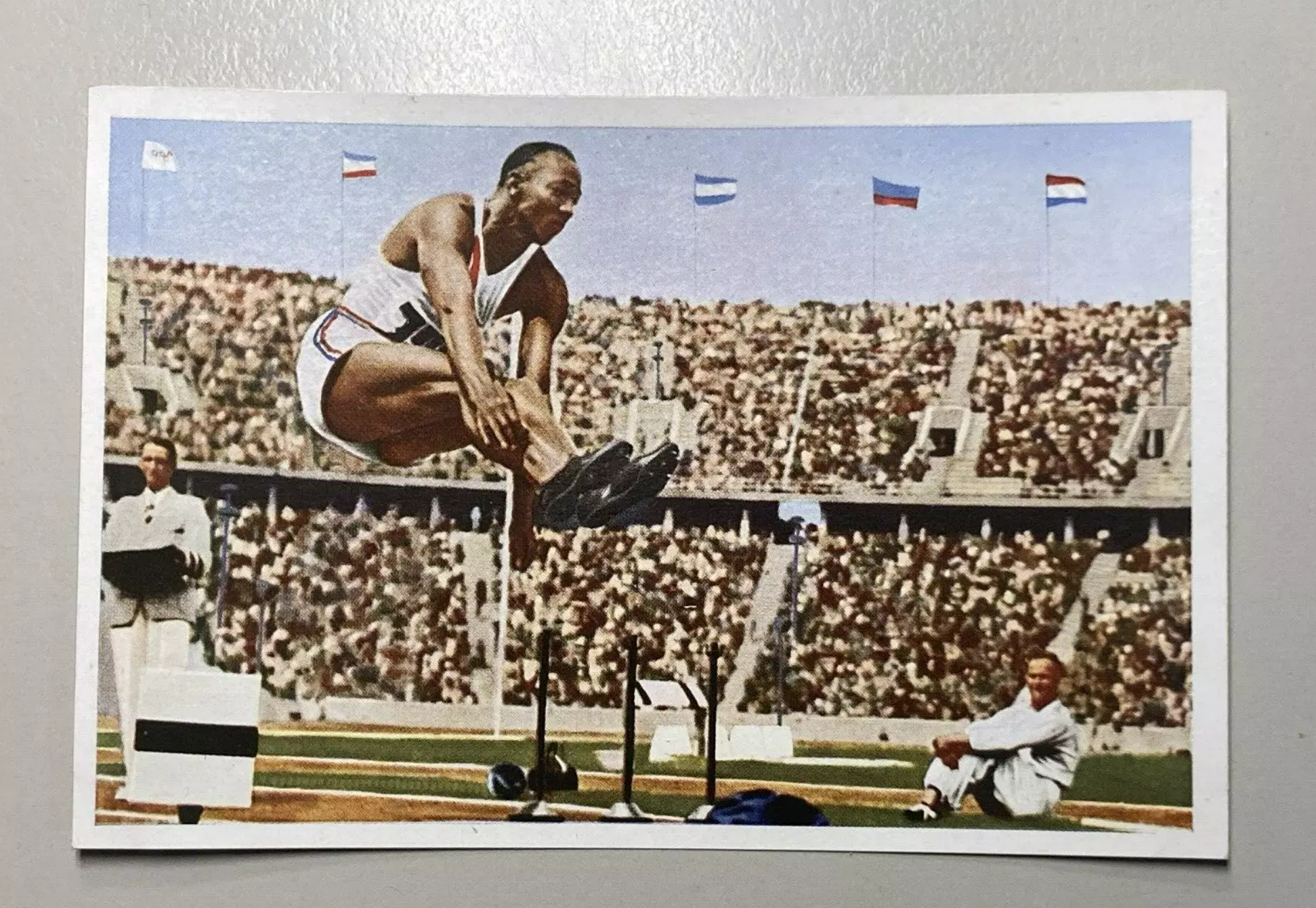
The term “cigarette card” is often used very broadly. But not every old promotional card came from a cigarette pack. One important example is Mühlen Franck. Some of the famous cards connected to Jesse Owens and the 1936 Olympic Games in Berlin were not cigarette cards in the strict sense. They were coffee-related promotional cards.
That matters because collectors should understand what they are actually buying. There are also cards connected to other food and consumer brands. Knorr, for example, issued collectible images as well. In German and European collecting, these promotional cards can be very interesting, even if they do not fit neatly into the modern sports card world.
The Jesse Owens and 1936 Olympic Cards
The 1936 Berlin Olympic cards are a strong example of why this market still matters. Cards featuring Jesse Owens from that era can be extremely desirable because they connect sports history, political history, and Olympic history in one object.
Owens is not just another athlete on a card. His performance at the 1936 Olympics became one of the most important moments in sports history. That is why some Jesse Owens cards and Olympic-related cards from that period can command serious prices, especially in strong condition or with grading. This is the type of vintage card where the story behind the image matters almost as much as the image itself.
Franz Beckenbauer Rookie Cards
Another strong European example is Franz Beckenbauer. Beckenbauer rookie cards from around 1965–66 are among the most interesting football cards in the European vintage market. But there is an important distinction collectors need to understand.
Not every similar-looking Beckenbauer card from that period carries the same value. The card usually considered the more important and valuable rookie version is the one with number 259 on the back. There are similar-looking versions with number 85 on the back, but the real market attention is on the No. 259 card. That small detail matters a lot.
At peak moments during the pandemic-era collectibles boom, high-grade examples of the correct Beckenbauer rookie card were sometimes valued at more than 20,000 euros. Prices have cooled since then, but strong examples can still sell for several hundred to several thousand euros, depending on condition, grading, scarcity, and the specific issue.
Timeless, for example, has offered fractional shares of a Beckenbauer card for the European market. That alone shows how far some of these vintage European cards have moved from simple album pictures into the investment and alternative asset space.
The Big Misunderstanding
The biggest mistake is thinking that all old cigarette cards or promotional cards are valuable. They are not. Some are valuable, but many are not, and that distinction matters.
There are countless old cards showing animals, flowers, landmarks, military scenes, famous buildings, or general cultural themes. Many of them are beautiful and have historical charm, but that does not automatically make them expensive.
I looked through eBay examples, and many of these animal cards, landmark cards, and general printed promotional cards showed little major price movement. Some complete sets can still be collectible, but most ordinary examples do not behave like high-end sports cards. Age alone is not enough. A card can be old and still not be worth much.
What Actually Creates Value?
For these older cards, value usually comes from a combination of factors. The subject matters. A Jesse Owens card is different from a random landscape card. A Franz Beckenbauer rookie is different from a generic animal image.
Condition matters as well. These cards were often handled, pasted into albums, stored poorly, or damaged over decades. Completeness can also matter, because some collectors want full sets, not just single cards. Historical importance matters too. Cards tied to major athletes, Olympic moments, early football history, or culturally important subjects can be much stronger.
Grading also matters, especially for the cards that have crossed into serious collector demand. A high-grade vintage card can move into a completely different price range from a worn raw example. But grading alone does not turn every old card into a valuable card. The underlying subject still has to create demand.
Cigarette Cards vs Modern Sports Cards
Modern sports cards are often built around parallels, autographs, numbered cards, refractors, rookies, and grading. Cigarette cards and older promotional cards work differently. There are no shiny parallels, no sticker autos, no case hits, and no modern box odds.
The appeal is history, scarcity, subject matter, condition, and sometimes complete set collecting. That is why the market can feel harder to read. With a modern Topps Chrome card, you can often compare recent sales. With older European promotional cards, the market may be thinner, less standardized, and harder to price.
That does not make the cards bad. It just means collectors need to be careful. You have to understand whether you are buying a truly desirable vintage sports collectible or simply an old printed card with limited demand.
Should You Collect Them?
I think these cards can be interesting, but I would not treat the entire category as an automatic investment opportunity. If you are buying random cigarette cards only because they are old, you may be disappointed.
The market becomes much more interesting when you focus on historically important athletes, early football cards, Olympic subjects, rare complete sets, or strong graded examples. A Jesse Owens Olympic card, a high-grade Franz Beckenbauer rookie, or a rare sports-related promotional card can be a serious collectible. A random animal or landmark card may simply be a nice old picture.
Both can be worth owning, but only one of them is likely to attract serious buyer demand.