
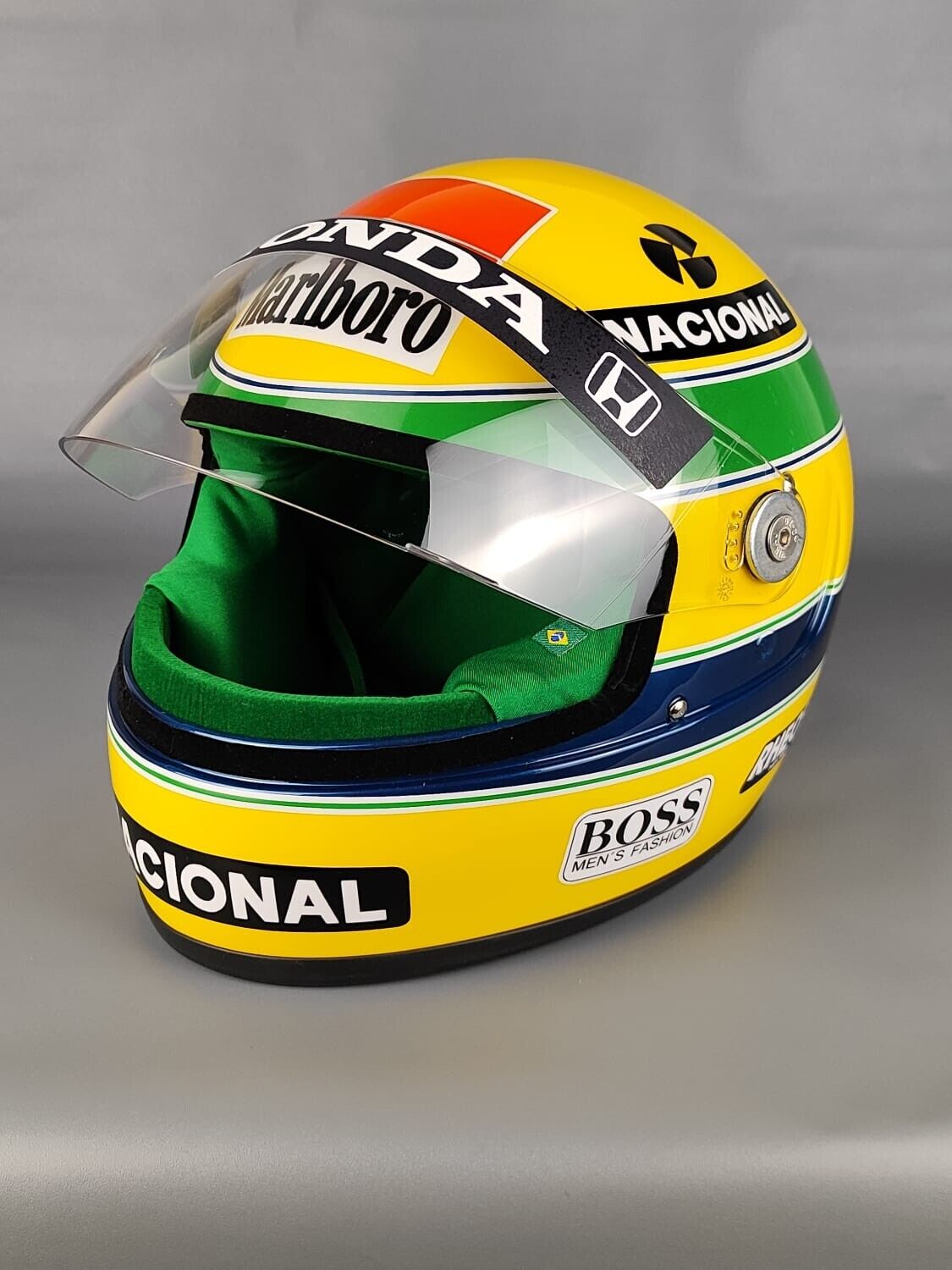
Long before fans could read the sponsor logos, they already knew who was coming. A bright yellow helmet with green and blue stripes appeared in the distance — and everyone instantly recognized Ayrton Senna.
Even decades after his final season in Formula 1, the design remains one of the most iconic visual symbols in motorsport history. The helmet continues influencing collectors, artists, and racing fans around the world, becoming far more than just part of a racing suit. For many fans, it became the identity of Senna himself.
What many younger fans do not realize, however, is that the helmet was never created by a major corporate design agency. Its origins were far more personal.
The design was first developed during Senna’s karting years by legendary Brazilian helmet painter Sid Mosca, whose work would later become inseparable from Senna’s public image. Mosca was already highly respected within Brazilian motorsport circles and had also worked with world champions Emerson Fittipaldi and Nelson Piquet.
According to Alan Mosca, Sid Mosca’s son, the famous design first appeared in 1978 when the Brazilian karting team prepared for the Karting World Championship. The team wanted helmets that reflected the national colors of Brazil while still allowing each driver to remain visually identifiable on track.
Sid Mosca believed a helmet should become part of a driver’s identity.
His concept for Senna was simple but unforgettable: the stripes should appear as if they were flowing directly from Senna’s eyes. The green stripe represented energy and intensity, while the heavier blue section symbolized focus and precision behind the wheel. Even at a young age, Mosca reportedly believed Senna possessed something different compared to other drivers of his generation.
When Senna returned from the championship, he insisted on keeping the design permanently.
Over time, the helmet evolved into one of the most recognizable symbols in all of sports. Long before modern branding transformed Formula 1, fans could instantly identify Senna simply by spotting the bright yellow helmet approaching in the distance.
That emotional connection still explains why Ayrton Senna helmet replicas remain among the most desirable collectibles in motorsport memorabilia today.
What Serious Collectors Look For
Authenticity remains one of the most important factors when purchasing a Senna helmet replica. Many experienced collectors specifically search for helmets connected to the Mosca family because of the direct historical link to Ayrton Senna himself.
While countless replica painters and custom helmet artists now exist around the world, collectors usually place far higher value on pieces associated with Sid Mosca’s original workshop or officially licensed productions.
The market has also changed dramatically in recent years.
Today, inexpensive full-scale Senna replicas can easily be found online, including mass-produced versions from Asia that sometimes sell for under $500. Some independent painters actually produce surprisingly accurate work and often use respected helmet brands such as Bell or Shoei while carefully recreating original sponsor layouts and certification markings.
However, longtime collectors usually notice the differences immediately.
One of the most common mistakes involves using standard motorcycle helmets instead of proper racing shells that match the proportions and specifications of the original Formula 1 designs. To casual fans the differences may appear minor, but for serious memorabilia collectors, historical accuracy and authenticity matter enormously.
That distinction also affects long-term resale value.
A professionally produced replica tied to the Mosca family, an officially licensed manufacturer, or a recognized motorsport artist will almost always maintain stronger collector demand compared to generic replicas with no historical connection to Senna’s racing career.