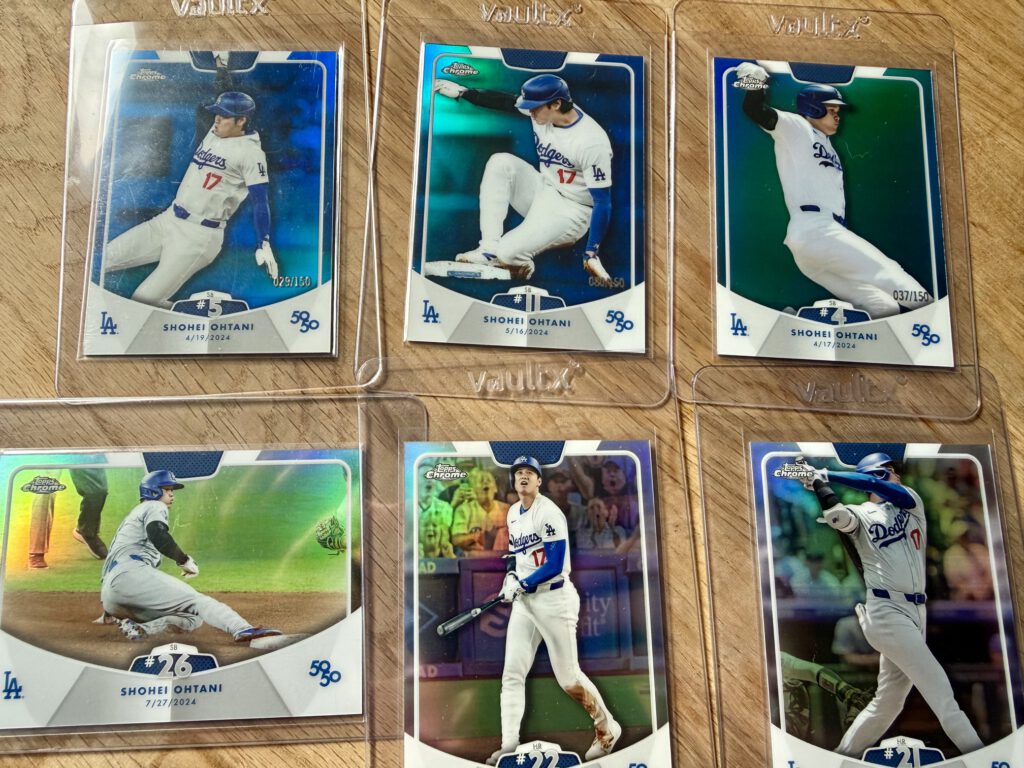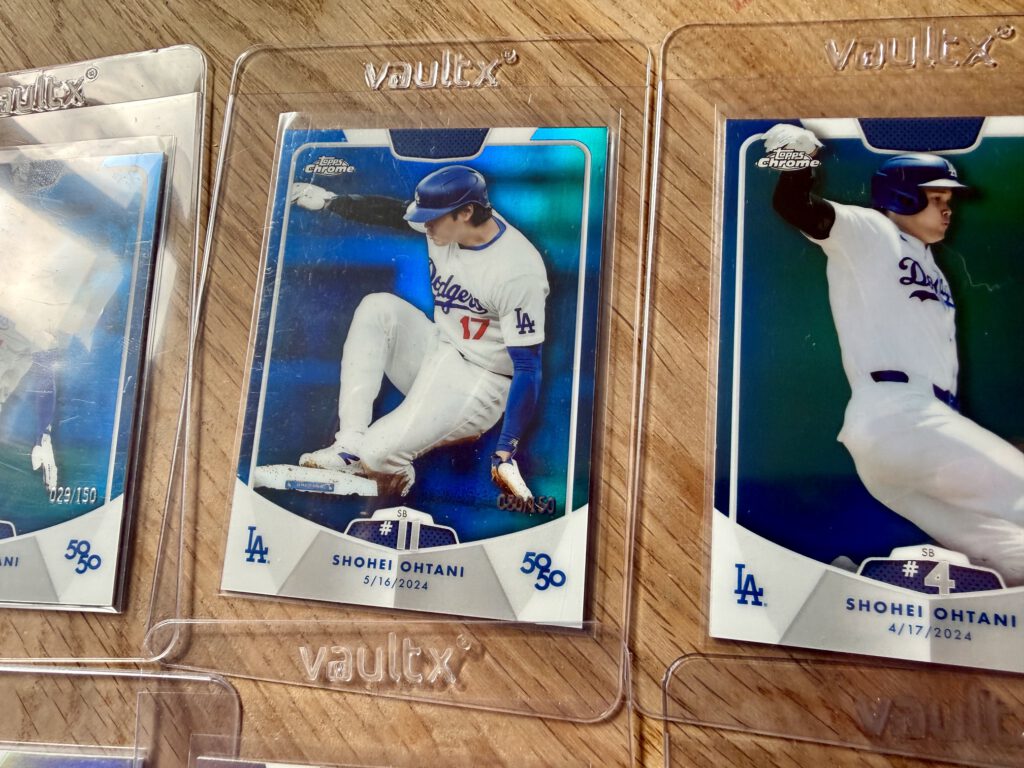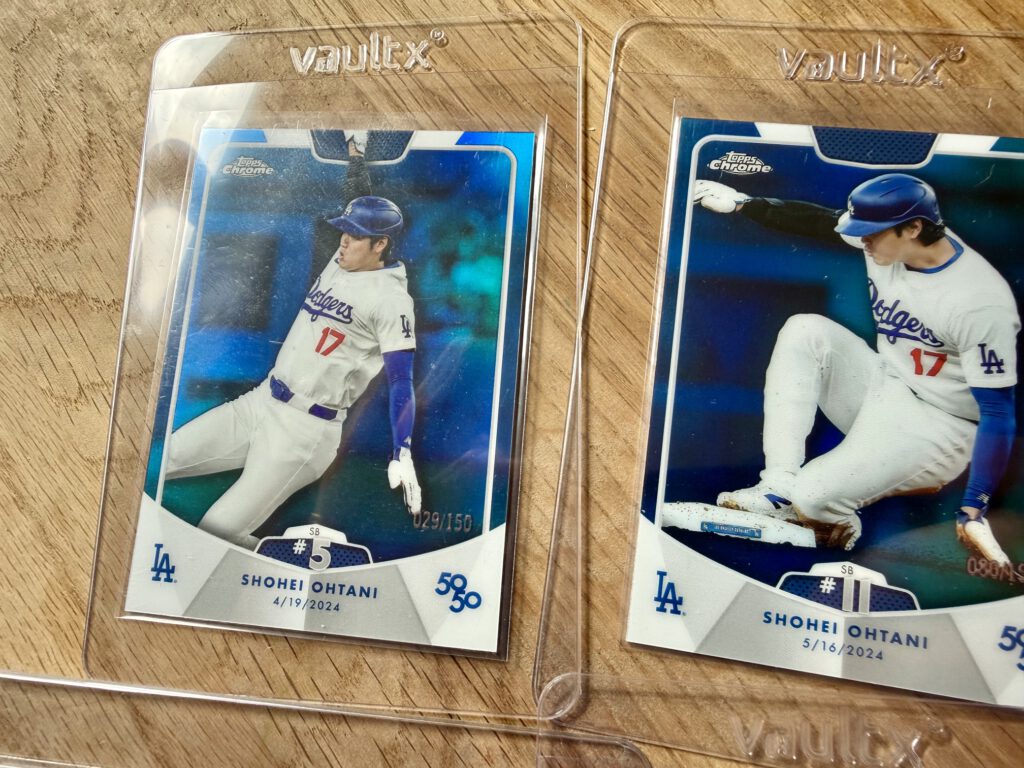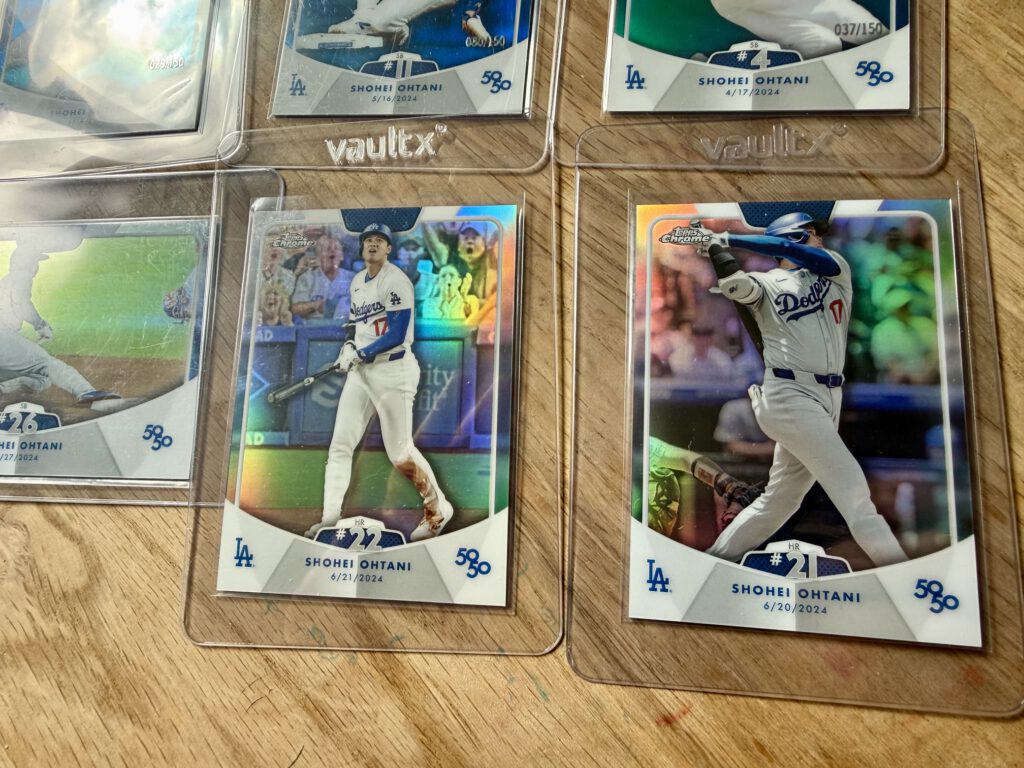
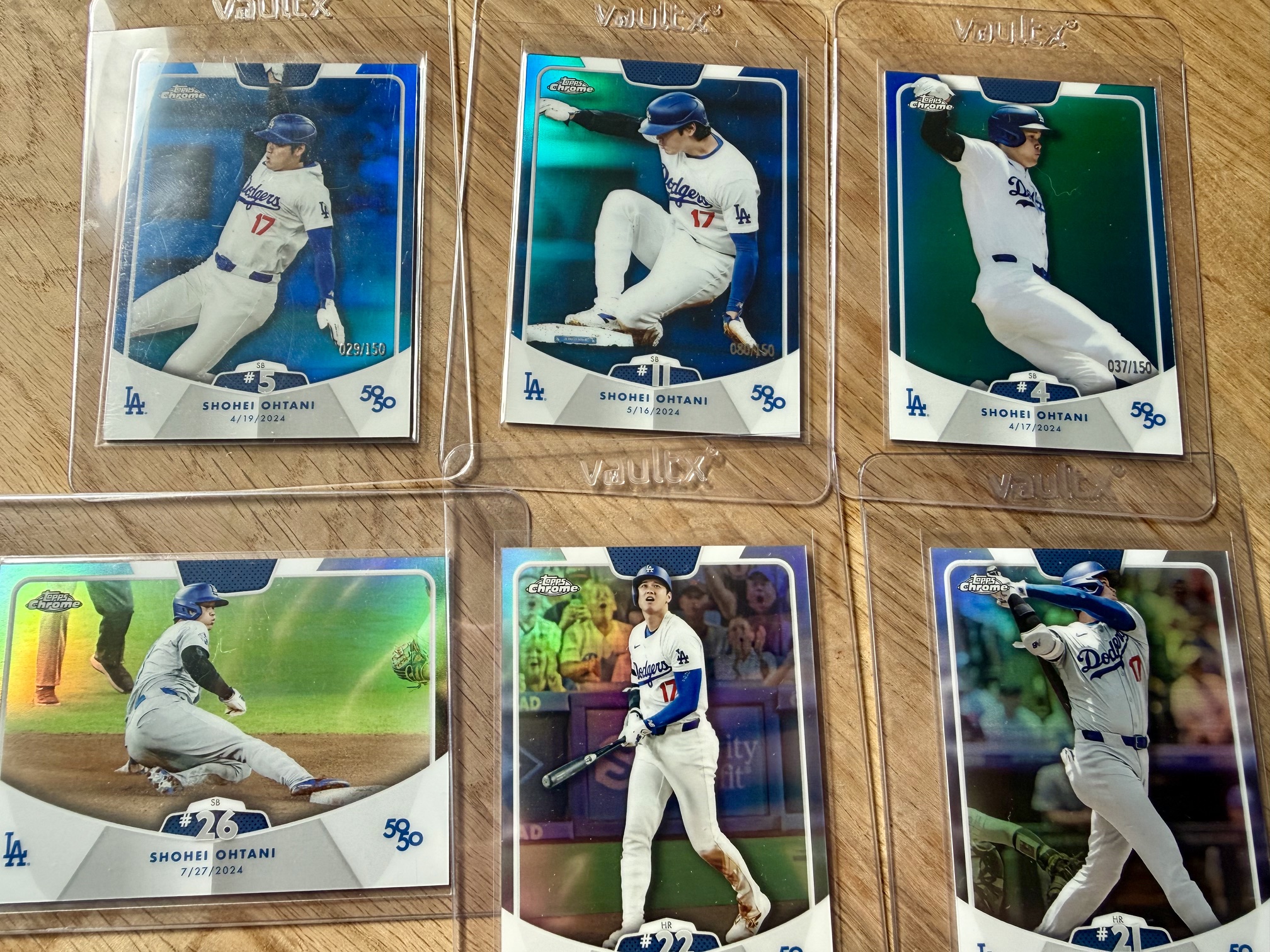
When Topps released the limited Shohei Ohtani 50/50 boxes directly through its website, demand exploded almost instantly. Collectors were allowed to purchase up to 20 boxes per customer, and many sold out within minutes as buyers rushed to secure what already felt like a historic release tied to Ohtani’s legendary 2024 season with the Los Angeles Dodgers.
The product celebrated Ohtani becoming the first player in MLB history to record 50 home runs and 50 stolen bases in a single season, a milestone that immediately elevated the release beyond a normal Topps NOW drop.
At launch, the 10-pack boxes retailed for $239.99. Today, sealed boxes are regularly selling for $1,200 or more on secondary marketplaces such as StockX, showing just how aggressively demand has grown in only a short period of time.
And collectors are not simply chasing sealed wax for speculation alone. The hits inside the product have already created major excitement across the hobby.
SSPs, Refractors, and Grading Potential Fuel the Hype
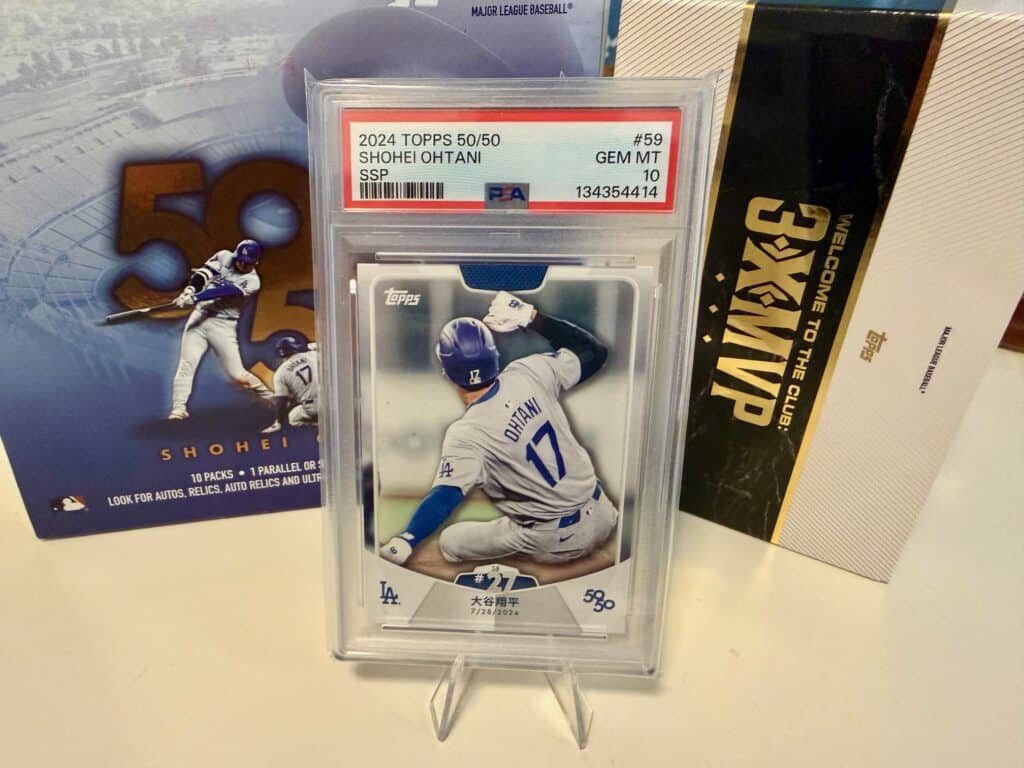
One reason the product has gained such a strong following is the mix of chase cards included throughout the release. Collectors continue hunting for low-numbered parallels, rare refractors, autographs, and especially the highly discussed Kanji SSP variations.
I personally pulled one of the Kanji SSP cards, sent it for grading, and later sold it through Pristine Auction for more than $500. Considering the original box cost, that return alone made the rip memorable.
Even some of the refractors included in the product have performed surprisingly well after grading. Strong PSA 10 or high-grade examples are already reaching $500+ prices depending on rarity and player variation.
That dynamic is one reason many collectors still believe unopened boxes may have room to rise.
The Secondary Market Is Still Active
Beyond sealed boxes, individual numbered cards from the release continue appearing on platforms like eBay almost daily. Some of the lower-numbered parallels remain surprisingly affordable compared to the sealed wax prices, which creates another interesting angle for collectors who prefer grading singles instead of gambling on unopened boxes.
I’ve personally picked up several numbered singles with the intention of sending them for grading. Nothing is guaranteed in this hobby, especially with modern print runs and grading variability, but the early market activity around these cards has been difficult to ignore.
More Than Just Another Topps NOW Product
Part of what makes this release different is the cultural weight behind Ohtani’s season itself. The 50/50 milestone already feels like one of the defining baseball moments of the modern era, and collectors seem to be treating these cards accordingly.
The product also connects naturally with the premium reputation of Topps Dynasty-style memorabilia releases, where low-numbered autographs, patches, and SSPs often become centerpiece cards for modern collectors.
Meanwhile, Ohtani’s broader card market continues moving upward. His 2018 Topps Chrome Sapphire Rookie Superfractor Auto previously sold for $336,000, and collectors are already speculating that future 50/50-related one-of-one cards could eventually challenge some of his biggest sales.
Are Ohtani Cards Becoming Modern Hobby Cornerstones?
Already now, many collectors are starting to ask whether Shohei Ohtani cards are becoming true cornerstone assets of the modern hobby in a way that very few active players ever achieve.
We’ve seen similar cycles before. Mike Trout dominated much of the 2010s, and for years his cards were viewed as untouchable long-term holds. But as the Los Angeles Angels star moved deeper into the later stages of his career, injuries increased, the historic statistical pace slowed, and parts of the market gradually cooled.
That’s what makes Ohtani so fascinating right now.
Unlike many modern stars, Ohtani feels bigger than a traditional baseball market cycle. His global popularity, two-way legacy, international fanbase, and historic achievements have created a level of mainstream relevance that even elite names like Aaron Judge sometimes struggle to match in the collectibles space.
Whether Ohtani cards ultimately become true long-term cornerstone pieces remains to be seen, but releases like the 50/50 box already show how differently the market reacts when collectors believe they are witnessing a genuinely historic career in real time.
Personal Pickups and Why I’m Still Buying Singles
Here are a few of the cards I personally picked up through auctions in roughly the $40 to $80 range after the initial hype wave settled down a bit. For me, the prices simply felt too attractive to ignore considering how strong the overall market for this release has remained.
Of course, buying singles always comes with some risk, especially when you are planning to grade cards you did not pull yourself. It is never completely clear whether a card is truly PSA 10 material until it is in hand under proper lighting. Surface issues, soft corners, print lines, or centering problems can easily change the outcome.
Still, that uncertainty is also part of what makes modern card hunting interesting.
In my opinion, some of these numbered parallels and refractors still look undervalued compared to the sealed box prices we are now seeing across the secondary market. If even a few of these submissions gem, the upside could be very strong relative to the original purchase price.