
Topps announced an exclusive trading card, sticker and trading card games partnership with England’s Football Association, but the interesting part is not only the FA logo on future products. It is the date. The deal starts in 2031, which makes the whole thing feel less like a product announcement and more like a land grab with a long fuse.
England is not just another license. The national team travels globally, the shirts are everywhere, the Premier League sits right next to it in the football economy, and collectors already understand the names, the badge, the history and the heartbreak. If Topps has England, Premier League, FIFA, UEFA club competitions, Bundesliga, MLS and more sitting in the same wider network, it starts to look less like a card company chasing another property and more like Fanatics trying to own the roads before the traffic gets there.
Panini Used to Own the Childhood Part
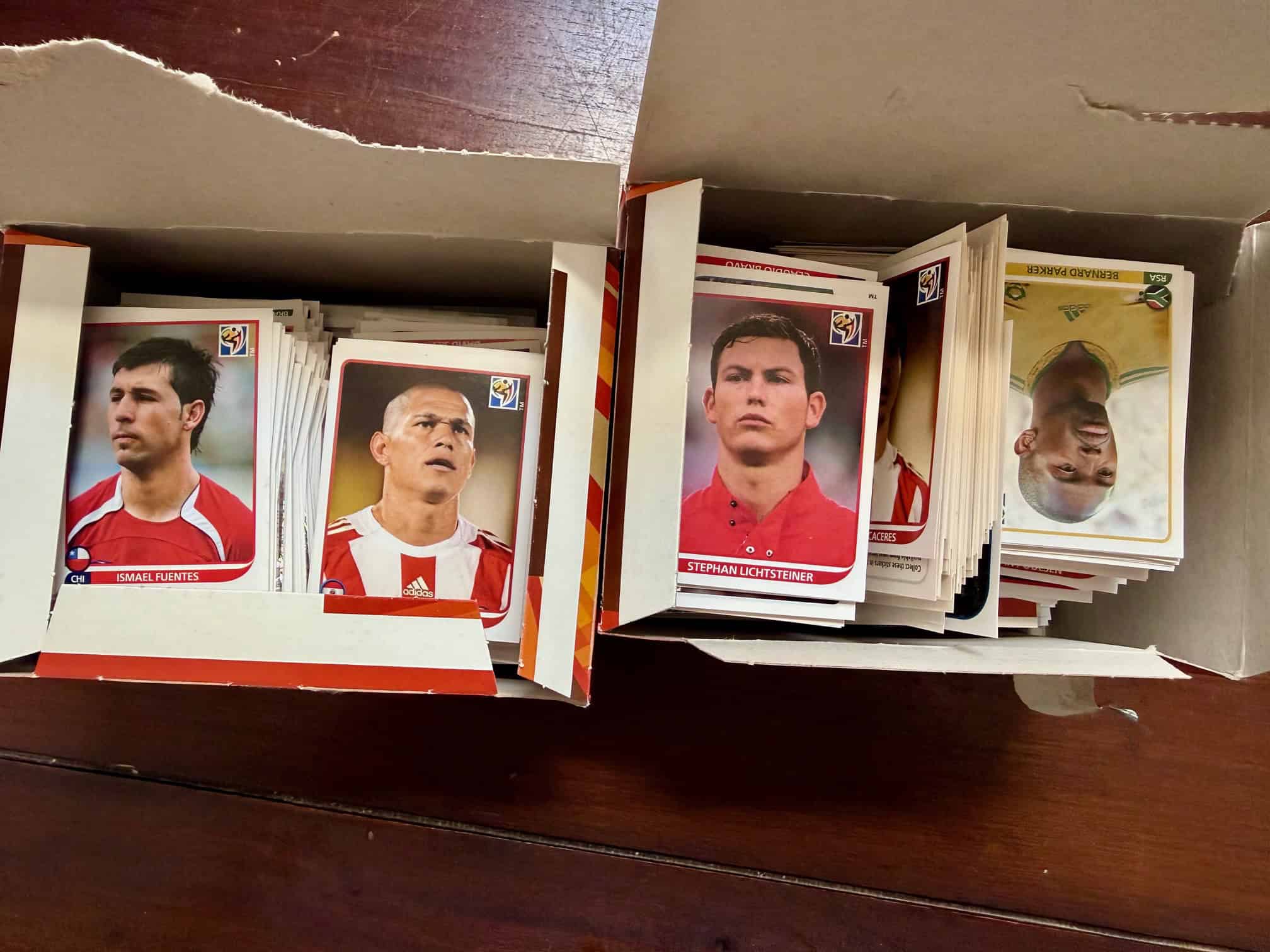
This is where it gets awkward for European collectors. Football stickers were Panini for decades. Albums in school bags, swaps in the playground, missing numbers scribbled on paper, the weird pride of finishing a World Cup album. That was not some premium-investor thing. It was cheap, messy, repetitive, and very European.
Topps and Fanatics are not only going after expensive Chrome boxes and breakers. They are going after the habit layer too: stickers, trading card games, retail, kids, parents buying packs at normal shops, future collectors before they even think of grading. That is probably the part Panini should hate most. Losing premium rights hurts, but losing childhood muscle memory hurts more.
Soccer Has the Fans, but Cards Are Another Game
Football does not have an audience problem. England, Premier League, Champions League, World Cup, Bundesliga, national teams, all of it is massive. The harder question is whether that attention turns into card money the way it has in the United States.
American collecting has already built the monster version of this economy around Jordan, Brady, LeBron, Ohtani, Mahomes, Mantle, and the rest. Big cards, big grading, big auction results, big flex culture. Soccer has had big sales too, especially for the right vintage pieces and elite modern names, but it still feels uneven. A Beckenbauer Bergmann rookie can matter a lot in football-card terms and still live in a different financial universe than the biggest American grails.
That gap is what Fanatics is staring at. Not today’s soccer card market, but the version that might exist if more European collectors start grading, vaulting, breaking, speculating and treating football cardboard the way American collectors treat their sports.
The Wording on These Deals Matters
The FA deal is about trading cards, stickers and trading card games. That mix is not random. It covers the old sticker collector, the modern card buyer, the kid who plays, the parent who buys retail, and the future adult who may one day decide that an England rookie, a Jude Bellingham parallel, or a women’s national team autograph belongs in a slab.
This is not just about one England release in 2031. It is about owning the pipeline before the collector even knows which part of the hobby he or she will care about. Match Attax, Chrome, stickers, autographs, numbered parallels, retail tins, premium boxes, international tournaments, national pride. Once the rights sit in one place, the product machine has room to experiment.
Collectors Are Right to Be Nervous
There is a good version of this. Better design, better autograph checklists, more consistent distribution, stronger global releases, maybe less of the licensing mess that makes football collecting feel fragmented. A proper England product under Topps could be fun. A deep women’s national team checklist could be interesting. Tournament-year releases could actually feel coherent.
But nobody should pretend monopoly-style licensing is automatically good for collectors. When one company controls too much, prices usually do not get friendlier. Product calendars get crowded. Boxes get stretched. Retail gets weird. Breakers get fed. Collectors get told every release is important until half of them are sitting discounted later.
That is the part people are reacting to. Not just “Topps got England.” More like: how much of football collecting is Fanatics going to control by the time 2031 arrives?
Panini Is Not Just Losing Logos
The Panini part is bigger than corporate competition. In Europe, Panini is memory. Topps may have rights, money, distribution and Fanatics behind it, but Panini has decades of emotional residue stuck to football collecting. That does not automatically save Panini, but it does mean Topps has to do more than print badges on shiny stock.
Collectors will forgive a lot if the products feel good. They will complain anyway, because that is the hobby, but they will buy if the checklist, design, price and chase make sense. If Topps turns everything into another overproduced, expensive, parallel-heavy machine, the backlash will not stay quiet.
2031 Is the Tell
The FA products are years away, and that is exactly why the announcement matters. Fanatics is not waiting to see whether European football cards become huge. It is buying the shelves, the licenses, the tournament windows and the national-team access early.
Maybe the European market grows into American-style card prices. Maybe it does not. Maybe stickers remain the emotional center while premium soccer cards stay more niche than Fanatics hopes. Maybe the next generation, raised on Topps products instead of Panini albums, changes the math completely.
That is the strange part of this deal. It is about England, but not only England. It is about 2031, but really about the next decade of football collecting. The fan base already exists. The rights are being locked up now. The uncomfortable question is what collectors will be asked to pay once the lock is complete.
This essay is part of Sports Cards: The Ultimate Guide.