
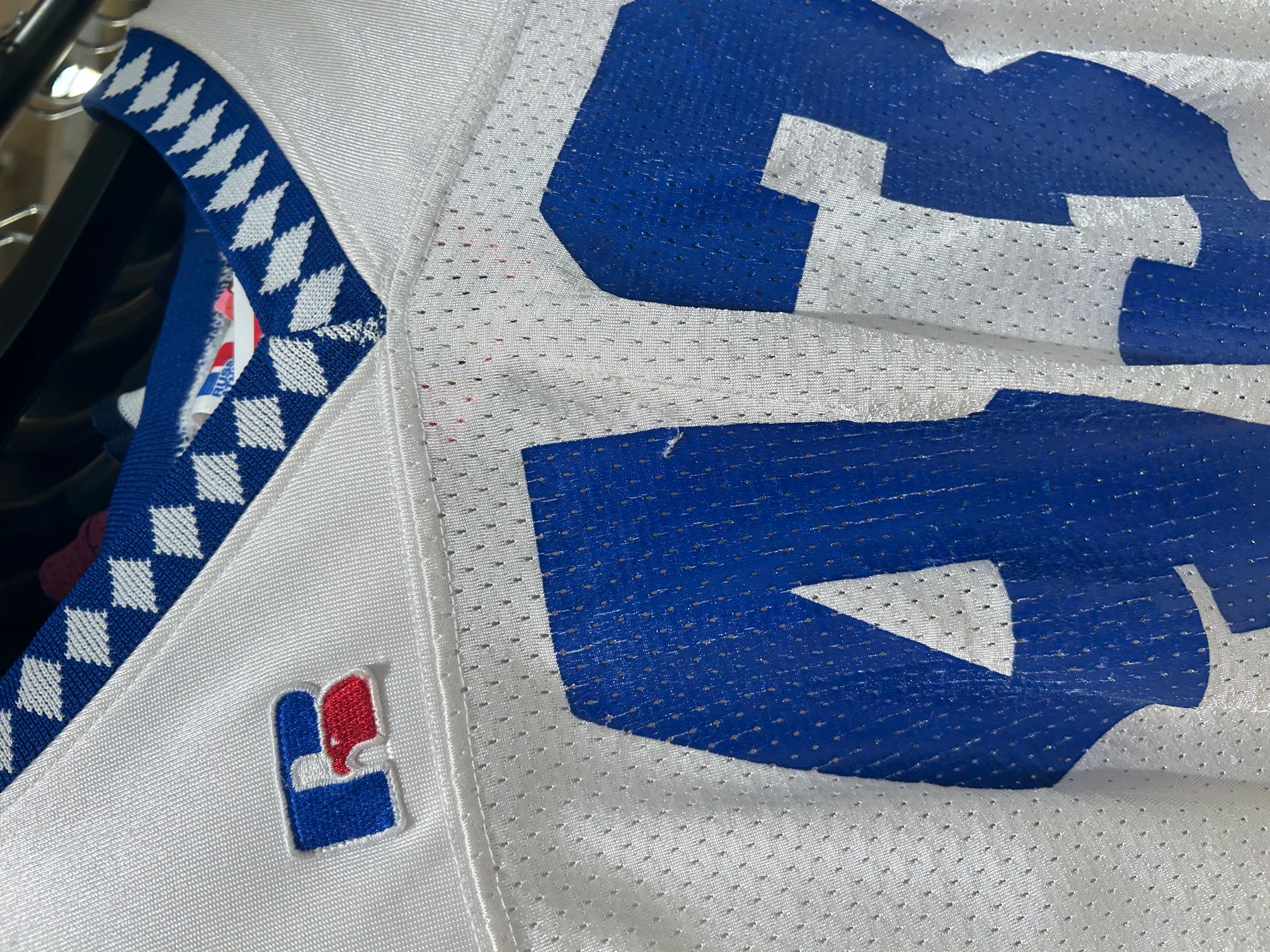
Photomatching is still one of the strongest ways to verify game-used sports memorabilia. A jersey, shoe, helmet, bat, glove or ball can sometimes be matched to a real game photo by looking at details that are unique to that item. That can include stitching, stains, loose threads, wrinkles, dirt marks, scuffs, manufacturer quirks, number placement, logo placement or wear patterns. When the match is strong, the item is no longer just described as “game-used.” It can be tied to a specific game, player or moment.
Why Photomatching Became So Important
Collectors want proof. A certificate can help, but a certificate alone does not always tell the full story. Photomatching gives collectors something more direct because it connects the physical item to visual evidence from the game. If a jersey has a specific loose thread near the number, and that same loose thread appears in a game photo, the item becomes much easier to trust.
This is why companies such as MeiGray Group and Resolution Photomatching have become important in the market. Auction houses also rely on photomatching when they sell high-end game-used memorabilia. Sotheby’s, for example, has entered the sports memorabilia space and uses authentication methods that include visual verification. For collectors, the difference is simple: “possibly used” is one category, “matched to this game” is another.
What a Real Photomatch Actually Proves
A photomatch proves that the item matches visible details from a specific image or video source. A photomatch can show that a jersey, shoe or piece of equipment was used in a specific game or moment. It does not automatically prove how many games the item was used in. It does not always prove full season use. It also does not explain the full history of how the item left the team, player or locker room.
The strongest matches usually come from clear, traceable images. Broadcast footage, Getty Images, AP photos, official team photos, league archives, auction house archives and other established sources are much stronger than a random image sent by a seller. The match itself matters, but the source of the image matters just as much.
The Weak Point: Seller-Provided Images
The problem is not photomatching itself. The problem is weak photomatching based on images that cannot be traced. A seller can claim that a photo proves the match, but the first question should be where that photo came from. Was it taken from a real broadcast? Was it from Getty or AP? Was it from an official team gallery? Was it already part of an old auction listing? Or did the seller simply provide it without a clear source?
That is especially important in private sales, Facebook groups, Reddit forums and smaller online marketplaces. These places can have good items, but they are not controlled in the same way as major auction houses or established authentication companies. A strong photomatch should not rely only on the seller’s word. The image should come from somewhere that can be checked independently.
How AI Changes the Risk
AI creates a new problem for photomatching because it can attack the evidence around the item. In the past, a fraudster mainly had to fake the item, the certificate or the story. Now there is another possibility: fake the match image itself.
AI image tools can create very realistic pictures. That is a risk in markets where buyers rely on screenshots, cropped images, low-resolution photos or seller-provided “proof.” A fake image could be made to show the right stain, crease, scuff or loose thread. If that image is not tied to a real broadcast, a known photo agency, an official archive or a trusted source, the buyer may be looking at evidence that never existed.
That does not mean photomatching is finished. It means the source image has become more important. A match to a Getty image is different from a match to an image that only appears in a private message. A match to broadcast footage is different from a match to a cropped screenshot. A match to an old auction archive is different from a match to an image no one can verify.
Why Broadcast Footage and Archives Matter More Now
Video and archived images are becoming more important because they give collectors more ways to check the item. A still image can be manipulated. A screenshot can be cropped or taken out of context. But full broadcast footage, multiple camera angles and archived agency photos are harder to fake convincingly, especially when the same details appear in more than one source.
A jersey matched to one Getty photo is good. The same jersey also visible in broadcast footage is stronger. A pair of cleats matched to a close-up photo and also visible in match footage is stronger than a pair matched only to one unclear image. The more independent visual sources there are, the harder it becomes to fake the story.
What Collectors Should Check
Before trusting a photomatch, collectors should ask where the match image came from and whether it can be checked. Is it from Getty, AP, a team source, a league source, broadcast footage or a known auction archive? Is the date clear? Is the game or event identifiable? Does the item match more than one feature? Are the marks unique enough, or is the match based only on general similarity?
The seller’s story should also be checked. Does the item have provenance beyond the photo? Has a reputable photomatching company reviewed it? Is the listing language precise? Is it described as game-used, photo-matched, player-issued, team-issued or style-matched? Those words are not the same. A photo-matched item is not the same as an item that only matches the style worn by a player.
What Makes a Photomatch Strong
A strong photomatch usually has several things working together. The image source is clear. The game or event is identifiable. The item has unique marks. The same marks appear in the image. The angle is good enough to compare details. The match is not based on guesswork.
For jerseys, collectors may look at number placement, stitching, loose threads, stains, fabric folds, nameplate alignment and tagging. For shoes or cleats, they may look at scuffs, dirt, sole wear, lace patterns, custom details, writing, tape, shape and player-specific modifications. For helmets, bats, gloves or balls, the same principle applies: the item needs visible characteristics that separate it from other similar items.
A clean item with no unique marks is much harder to photomatch. A heavily used item with distinctive wear is easier.
What Photomatching Cannot Do
Photomatching has limits. It usually proves use at a specific point in time. It does not always prove full season use. It does not always prove that the item was used for an entire game. It also depends heavily on the quality of the available images. Some games have excellent photography. Others do not. Some items are visible from many angles. Others are hidden, blurry or too generic to match with confidence.
Provenance, team letters, auction history, player sourcing, tagging, manufacturing details and seller reputation still matter. A strong photomatch can carry a lot of weight, but it should not make collectors ignore everything else.
Major Auction Houses Are Not Immune
Major auction houses usually have stronger review processes than private sellers. They often work with authentication experts and photomatching companies. That helps, but collectors should still read the details carefully. Who performed the photomatch? What image was used? Is the match described as conclusive, likely or only style-based?
Game-worn, game-used, player-issued, team-issued, photo-matched and style-matched are different categories. A player-issued item is not automatically match-worn. A style match is not the same as a true photomatch. A listing can sound impressive and still leave important questions open.
Private Sales Need Extra Caution
Private sales can be useful, but they carry more risk. On Facebook, Reddit, Instagram or direct collector deals, the buyer often has less protection. The seller may provide images, but the buyer needs to check whether those images are real, traceable and relevant.
A private seller who provides a match image should be able to explain where it came from. If the source is vague, that is a problem. If the match depends on one low-quality cropped photo, that is a problem. If the price assumes a strong photomatch but the evidence is weak, that is also a problem.
The New Standard for Photomatching
A serious photomatch should include clear image sourcing, specific matched features, date or event identification, and ideally more than one visual reference. For high-value items, collectors should prefer matches based on broadcast footage, established photo agencies, official team sources, league sources, old auction archives or recognized photomatching companies.
AI makes this stricter standard more important. The more money involved, the more careful the buyer should be. A strong photomatch is no longer just about whether the stain, loose thread, scuff or crease looks right. It is also about whether the image used for the match can be traced.
Photomatching is still one of the strongest tools in game-used memorabilia, but the source image now matters more than ever. A jersey, pair of boots, helmet or bat matched to broadcast footage, Getty, AP, an official team source or a known auction archive is in a different category from an item matched only to a seller-provided screenshot. In the age of AI, collectors should not only study the stains, threads, scuffs, creases or wear patterns on the item. They also need to ask where the match image came from, whether it can be verified, and whether the evidence would still hold up without the seller’s explanation.