
At the end of 2025, I ignored my own advice.
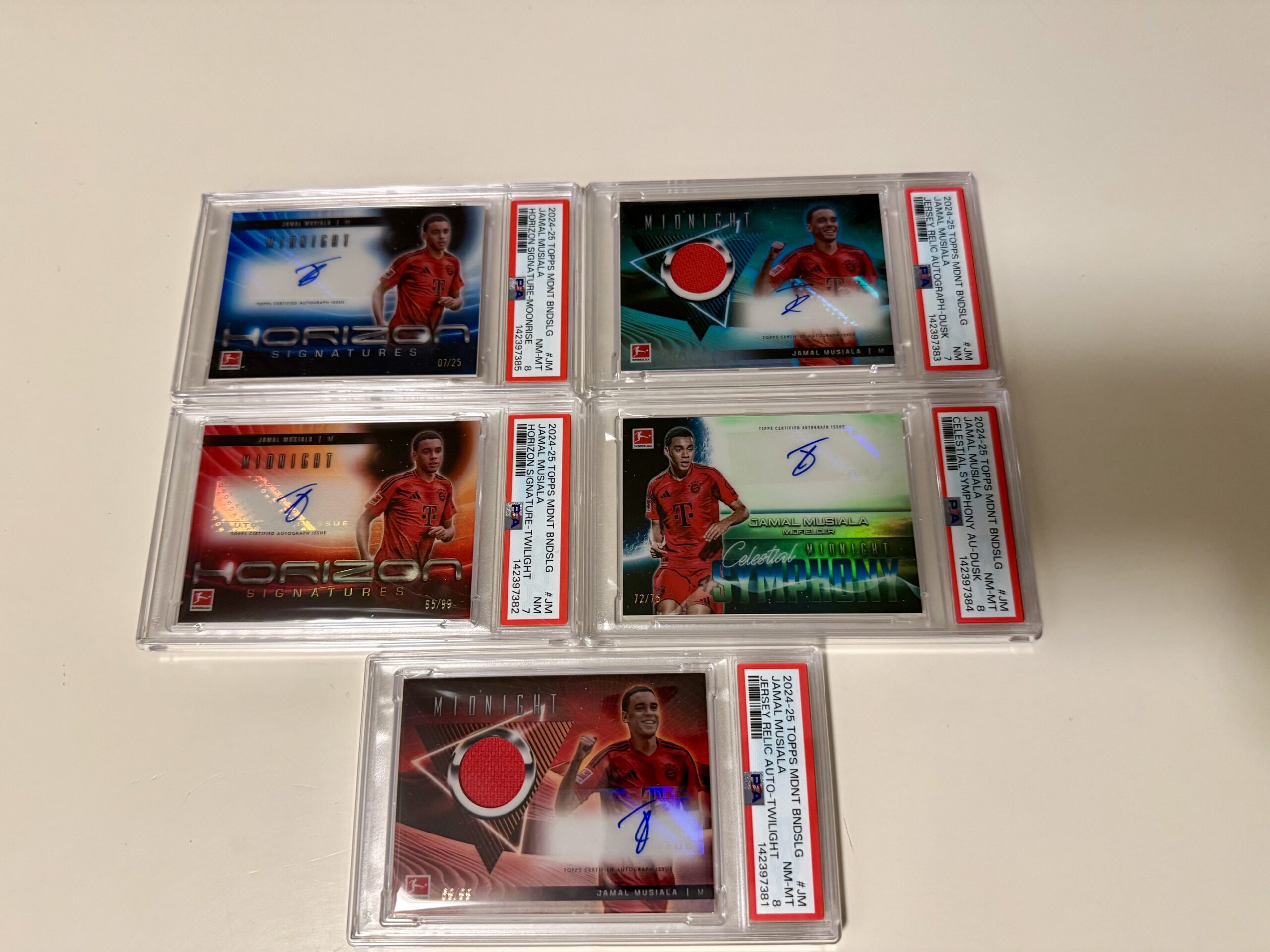
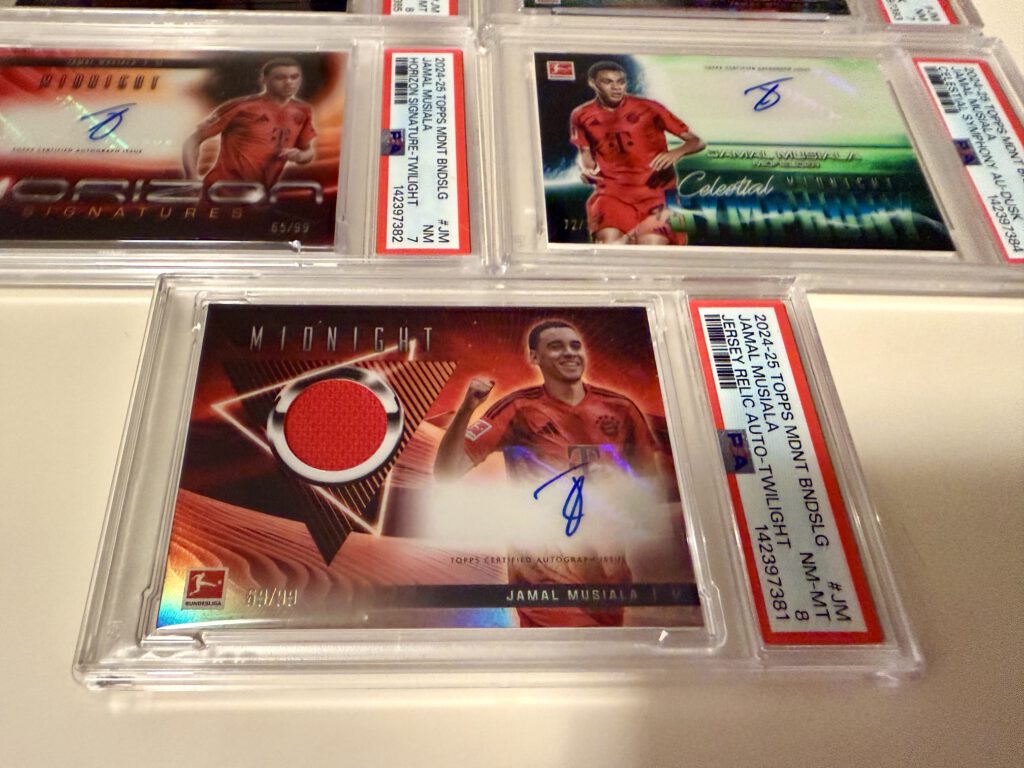
I bought five Jamal Musiala Topps Midnight autograph cards. All of them were numbered, some to 75, some to 99, and a few even lower. Some had patches, all were signed, and at the time I thought €350 for the lot was a pretty good deal.
And honestly, back then, I probably would have bought them again.
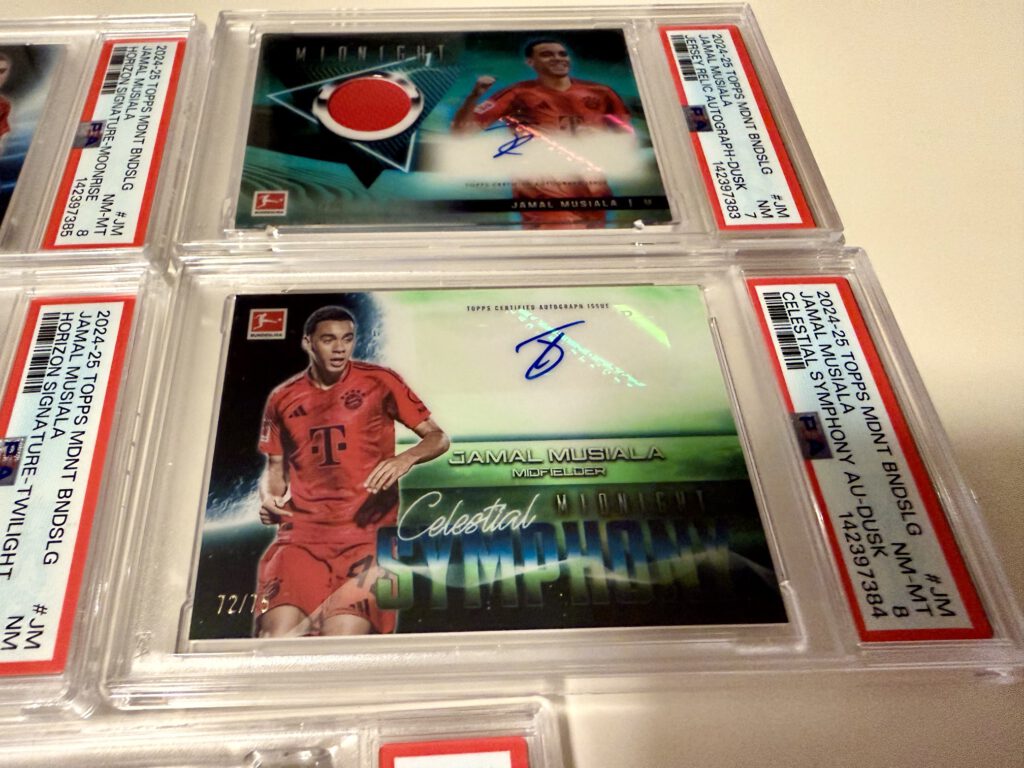
The cards looked great. Topps Midnight has that dark, premium design that immediately feels more special than a normal base card or standard parallel. Musiala is one of the most exciting young footballers in the hobby. Numbered autograph patch cards always feel like they should be valuable when you first hold them.
That part still has not really changed for me.
What changed is how I look at the exact card now.
And that is where these Jamal Musiala Topps Midnight autos became a good lesson.
The first problem was the autograph.
All five cards have sticker autos, not on-card autographs. That does not automatically make them bad cards, but it matters a lot more than I understood at the time.
For modern soccer card collectors, on-card autos usually feel more premium. The player actually signed the card. A sticker auto feels one step removed. It can still sell, especially if the player is strong, the numbering is low, or the design is great. But when collectors compare two similar Musiala autograph cards, the on-card auto usually has the advantage.
That was the first thing I underestimated.
The second problem was grading.
These are thick patch cards, and thick cards are difficult with PSA. Corners, edges, surfaces, patch windows — there are too many ways for the card to miss a high grade.
A PSA 10 is possible on thick modern patch cards, but it is not something I would ever expect now.
My results were exactly what you would expect from cards like this: PSA 7s and PSA 8s.
And that is the annoying part. The cards still look good in hand. If you showed them to someone outside the hobby, they would probably think they look perfect.
But the market does not treat them that way.
For modern collectors, the grade becomes part of the card’s identity.
The product also matters.
I still like Topps Midnight. I think the design is strong. The cards look clean, dark, and premium enough to feel special. But Topps Midnight is not a true high-end soccer card product.
It is not Dynasty. It is not Eminence. It is not one of those releases where the product name alone carries the card.
That makes a difference.
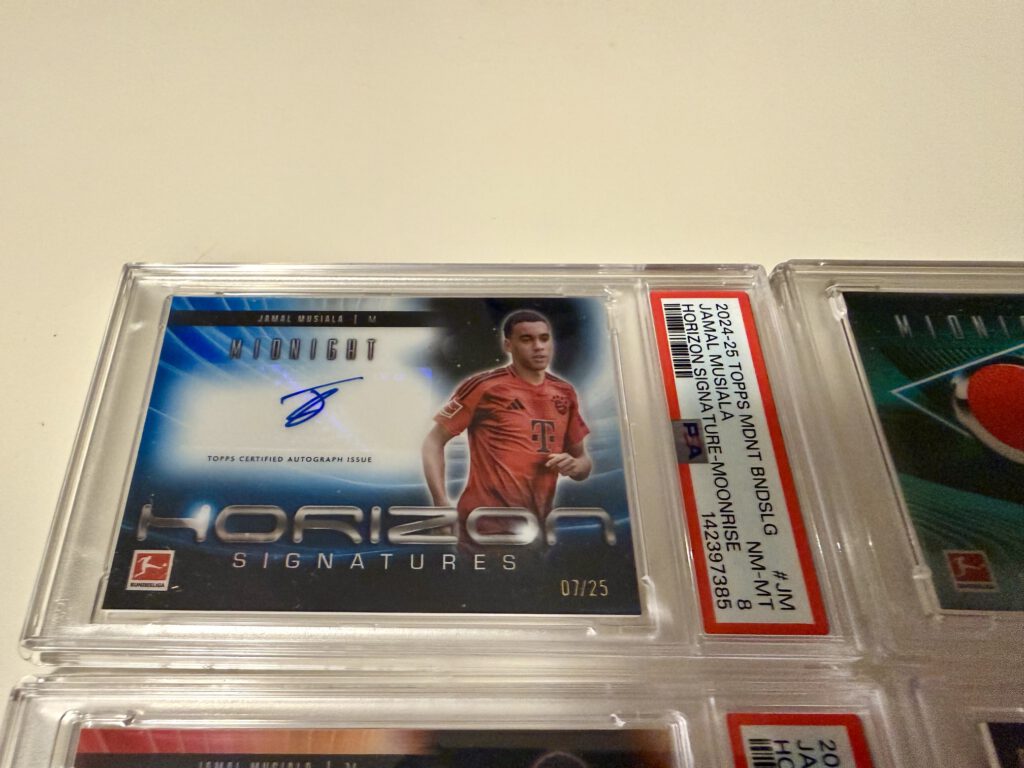
If a card has a sticker auto, thick stock, and a PSA 7 or PSA 8 grade, the set has to do a lot of work. And Midnight does not have enough hobby weight yet to fully overcome those issues.
Musiala’s injury after the Donnarumma collision at the 2025 Club World Cup did not help either. The market cooled off a bit after that.
He is slowly coming back now, and if he has a big World Cup in 2026, the conversation around Jamal Musiala cards could change again very quickly.
That is the strange part about sports cards.
Sometimes you can be right about the player and still be wrong about the card.
I still own the cards. They are listed on eBay right now. I had them around $850 before, and I would probably move closer to $950 now.
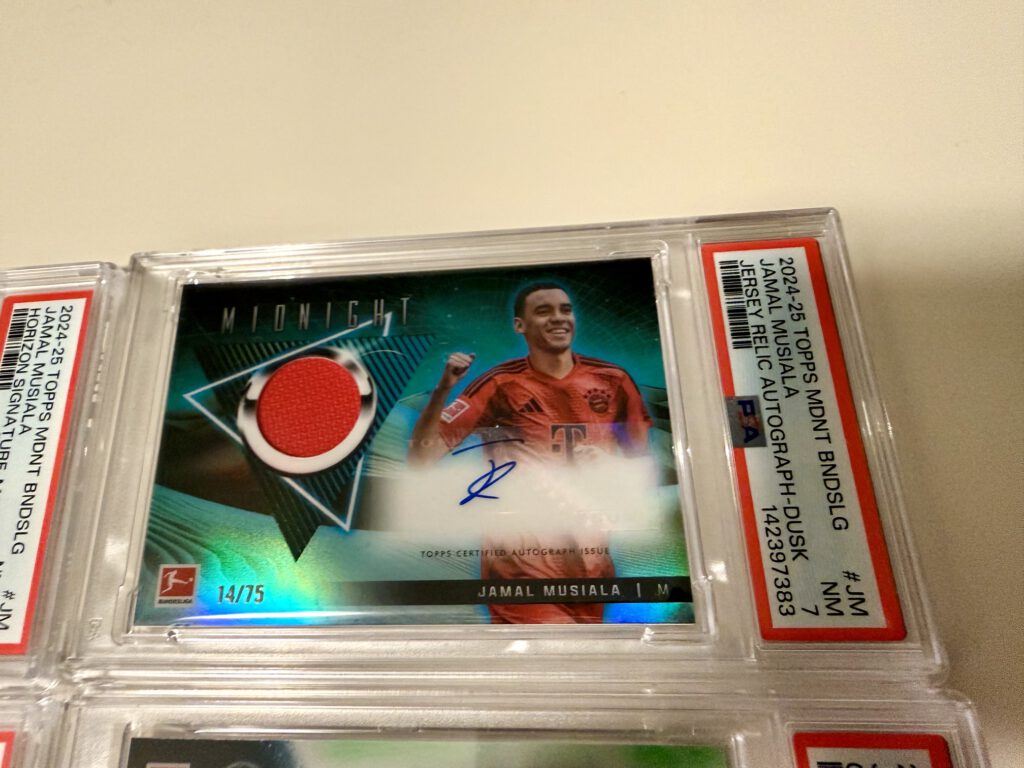
On paper, they check a lot of boxes.
Great player.
Numbered cards.
Autographs.
Patches.
Low serial numbers.
But sticker autos, thick stock, PSA 7s and 8s, and a mid-tier product do not exactly scream must-buy in today’s soccer card market.
That was the real lesson for me. A card can look incredible. It can be rare, signed, numbered, and have a patch. And it still might not be the card collectors actually chase.
You can see the same thing with players like Shohei Ohtani, Lionel Messi, or Victor Wembanyama. Big names help, obviously. But the exact card still matters more than people sometimes want to admit.
Star power opens the door. The card still has to walk through.