
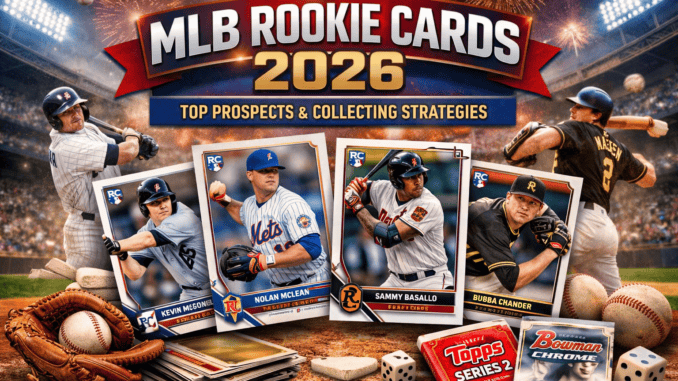
We’ve never seen this much top 100 prospect talent on Opening Day rosters before, and for baseball card collectors, that’s a very good thing. The 2026 MLB season is shaping up to be a true collision of prospect hype, real performance, and rookie card releases. You don’t need to be deep in the prospect weeds to feel it. This year, everything is happening at once.
A big reason for that is the Prospect Promotion Incentive. Teams are now rewarded for putting elite prospects on their Opening Day roster if those players go on to win Rookie of the Year. The reward is an extra draft pick after the first round. That matters. It has changed behavior across Major League Baseball, and it has led to more top prospects breaking camp with big league clubs than ever before. Since MLB Pipeline first introduced its Top 100 list in 2012, we have not seen a season like this.
For collectors, the impact is simple. More early debuts mean earlier rookie cards in flagship products from Topps. Instead of waiting, you can already start building positions now.
Series 1 Rookie Cards You Can Buy Right Now
There are already a few names in 2026 Topps Series 1 that collectors have been waiting on. These are players you can go out and buy today, and they are already contributing at the major league level.
Nolan McLean is one of the most interesting arms in this class. He brings power and command, and right now he is already slotted into the middle of a big league rotation. That is the kind of profile that gets attention quickly, especially if the early results are there.
Samuel Basallo offers a completely different profile as a catcher with real offensive upside. He has the kind of bat that could eventually sit in the middle of a lineup, but like most catchers, his early value may depend more on defense and game-calling than immediate offensive production.
Bubba Chandler is another arm that collectors already know well. He is electric, and pitchers like this can create fast spikes in the market. One strong outing, one big start, and suddenly everyone is paying attention.
The key here is not to chase everything. Base cards are fine, but if you are trying to build a collection on a real-world budget, you want to be more selective. Target lower-numbered flagship parallels, consider on-card autos, and pick one strong parallel you are comfortable holding for a few years. Topps Gold, numbered to 2026, remains a simple and effective option.
The Series 2 Wave Is Coming
While Series 1 gives you immediate access, Series 2 is where the next wave of rookie cards is likely to land. This is where planning ahead can give you an advantage.
Kevin McGonigle is one of the top names to watch. He is a hit-first player with advanced bat-to-ball skills, and while the power may take time to fully develop, that kind of profile often ages very well. If he starts slow, that could create a buying window.
JJ Wetherholt fits a similar mold as a polished hitter with versatility across the infield. He may not have a 40-home-run ceiling, but he is exactly the type of player collectors look back on and wish they had bought more of once the numbers start to accumulate.
Carson Benge has already made noise with early power, including a home run in his debut. That kind of start can drive immediate interest, especially in a market that reacts quickly to highlights.
Carter Jensen is a different case. As a young catcher, he has already reached the majors earlier than most at his position. That is impressive, but it also means patience is required. Catchers often take longer to produce offensively, and their value can lag behind other position players early on.
How to Think About Different Player Types
Not all prospects should be treated the same from a collecting perspective. Catchers, for example, are often more important to their teams than to the hobby early in their careers. Defense, pitch framing, and handling a staff matter more at first than offensive production, which can limit short-term card value.
Pitchers are exciting, but they come with risk. They can create strong flip windows because of highlight performances, velocity, and strikeouts. At the same time, they are difficult long-term holds. Even great careers do not always translate into lasting card value, with only a few exceptions like Clayton Kershaw or Justin Verlander.
Hit-first position players tend to be more stable. They may not generate immediate hype, but they build value over time through consistency and counting stats. These are often the players that end up being the best long-term holds.
Two Timelines Are Colliding
In baseball cards, there are always two timelines. The first is the prospect timeline, driven by projection and hype. That is where Bowman cards live, and that market often peaks before a player even reaches the majors.
The second is the rookie card timeline, driven by performance. That is where flagship Topps cards come into play, and that market builds as players produce at the big league level.
In 2026, those two timelines are overlapping in a way we do not usually see. Prospect lists, box scores, and card releases are all happening at the same time. That creates opportunity, but it also means the market can move quickly. It can also make sense to look a bit further ahead and start evaluating future rookie classes. Players like Spencer Jones of the New York Yankees could be on the verge of a major breakout within the next two years.
A Simple Collector Checklist
If you want to keep things simple and stay disciplined, there are a few easy steps to follow.
Pick two players from Series 1 and put them on your watch list. Pay attention to how they perform early in the season and decide in advance at what point you would be willing to sell if prices spike.
Pick two players you expect to see in Series 2 and plan to target one strong rookie card parallel of each. These are your longer-term plays.
Finally, pick one player you just enjoy. Even if the numbers or the market do not fully support it, collecting should still be fun. Having one player you follow simply because you like watching them keeps the hobby grounded.
The 2026 season is setting up to be something different. This is not just another year of prospects arriving. It is a year where incentives, talent, and timing have all lined up at once. For collectors, that means more rookie cards, earlier opportunities, and a faster-moving market than usual.
If you stay selective, understand the different player profiles, and keep a clear plan, this season has the potential to be one of the most rewarding in recent memory.

Leave a Reply